
Research
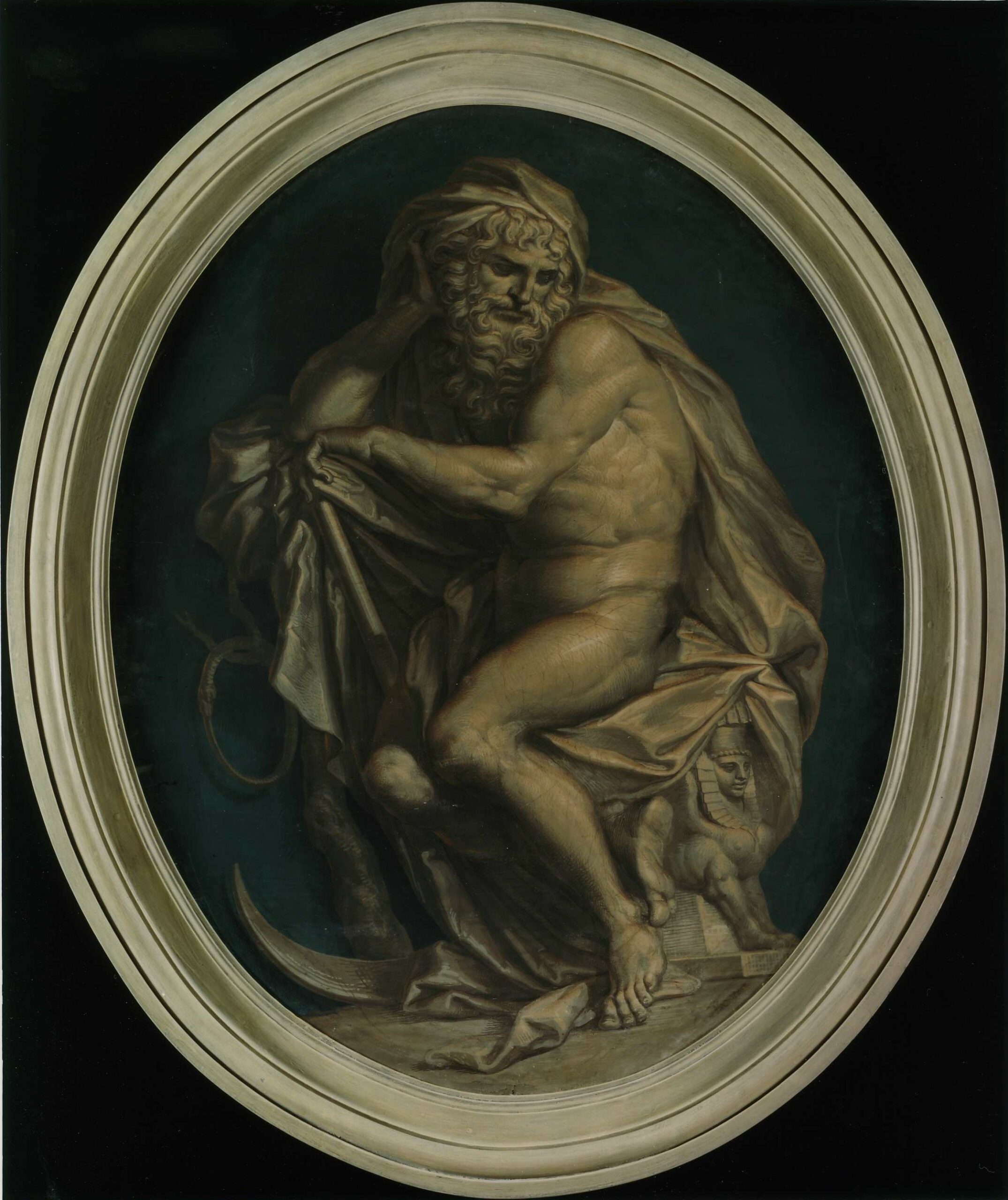
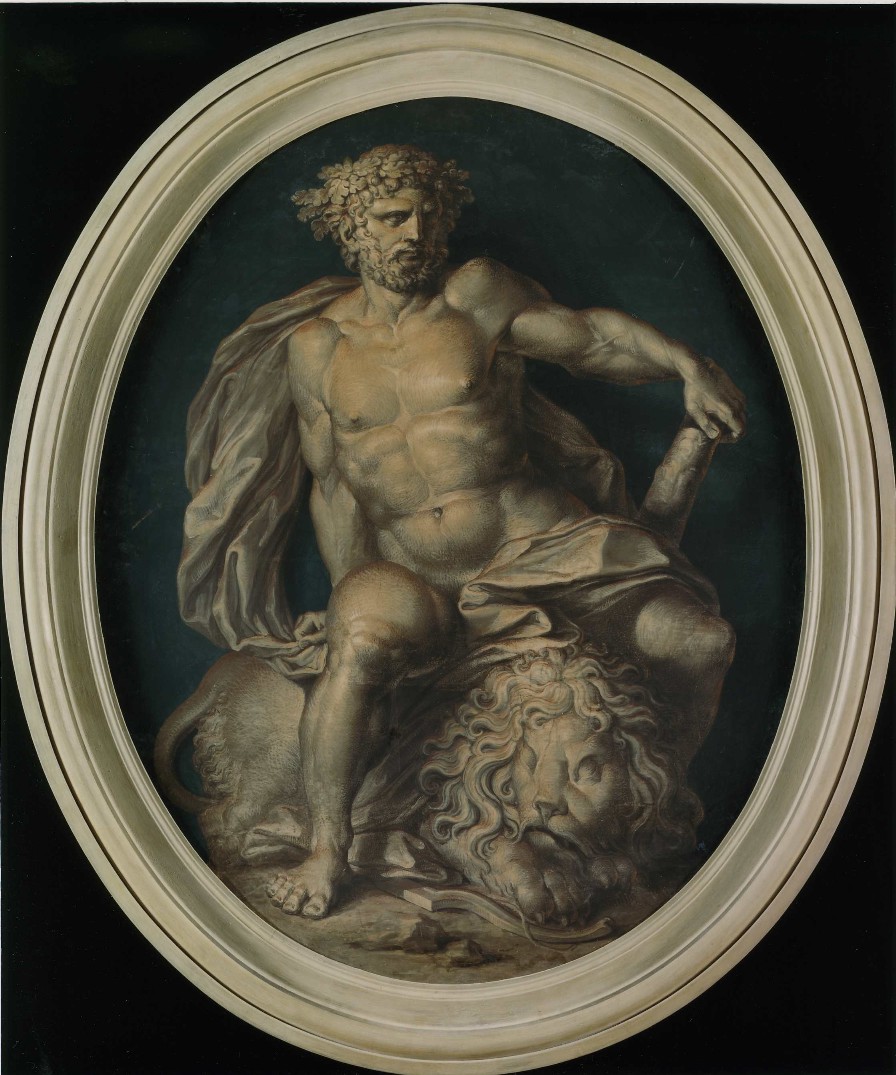
Of gouache on paper laid to canvas. Each picture with a molded oval frame, one depicting the classical figure of Hercules, astride a lion and resting a hand on a wooden club, with a short beard, a crown of oak leaves and with a flowing cloak, the second depicting the classical figure of Cronus, with a long beard and a flowing cloak, sitting on a sphinx sculpture and leaning on a scythe which rests against a decaying branch from which hangs a serpent consuming itself.The present oval paintings represent classic depictions of the mythological figures of Hercules (adapted from the Greek equivalent of Herecles) and Cronus (associated with the Roman deity Saturn). The composition of the paintings is closely related to the forms of antique sculpture, here given greater animation and a baroque sense of drama.
Hercules, son of Zeus and the mortal Alcmena, is shown here at the height of his powers with a massive, bulky presence and with the closely trimmed beard of a young man. He is often depicted in a similar pose, astride the Nemean lion, whose slaying was the first of his twelve labors. He is also depicted with his cloak, often replaced by the pelt of the lion in the portrayal of later labors, flying out behind him, and with his left hand resting on the most characteristic of his objects, his club.
The second painting depicts Cronus, or Saturn, the ancient god of agriculture who, in his Greek manifestation, features in the myth of creation and came to be associated with Time. As in typical representations of Cronus, he is shown here as a more aged man, with a long beard and without the strident virility of the younger Hercules. As the deity of agriculture and of time, he rests on a scythe with a serpent consuming itself, an ancient symbol of eternity, hanging from the withered branch on which he leans.
Full research available on request.