
Research
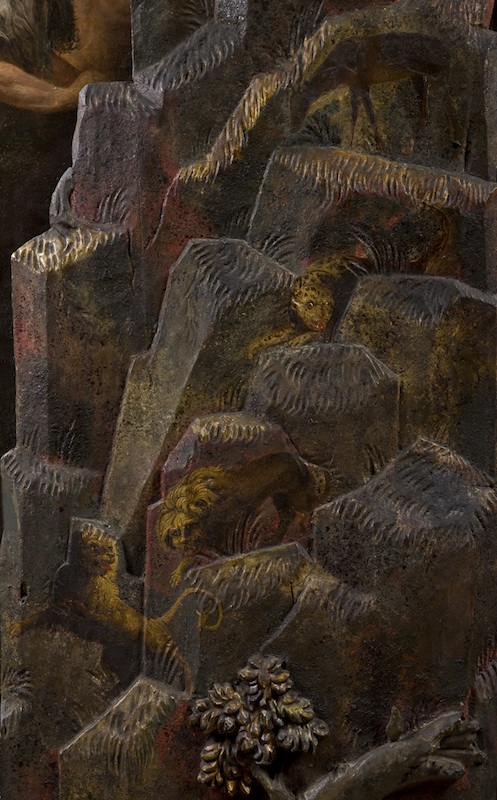
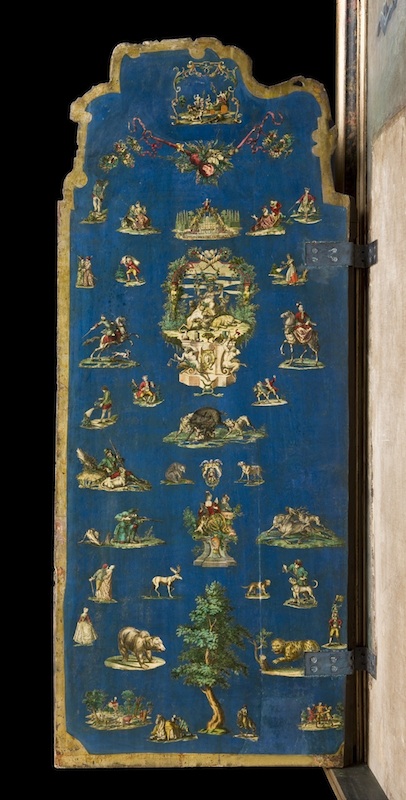
Oil on canvas, mounted to board, set with hinged carved polychrome panels with later molded marbleized frames.
Provenance:
Italian art market
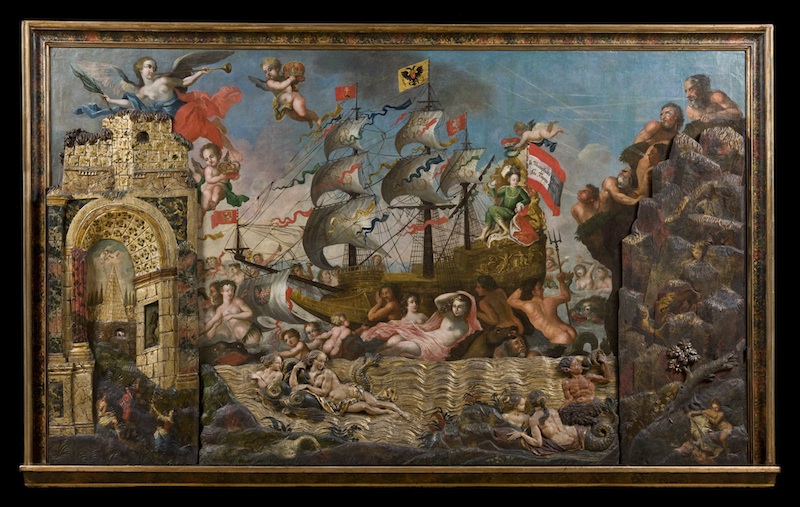
The present group of paintings belongs to a tradition of the use of allegory to represent events in the history of the Habsburg dynasty. The figure seated on the ship of the main painting, dressed in green regalia, has been identified by art historian Dr. Christian Steeb as Archduke Joseph of Austria (1678-1711). Joseph I was crowned King of Hungary in 1687, at just nine years of age.
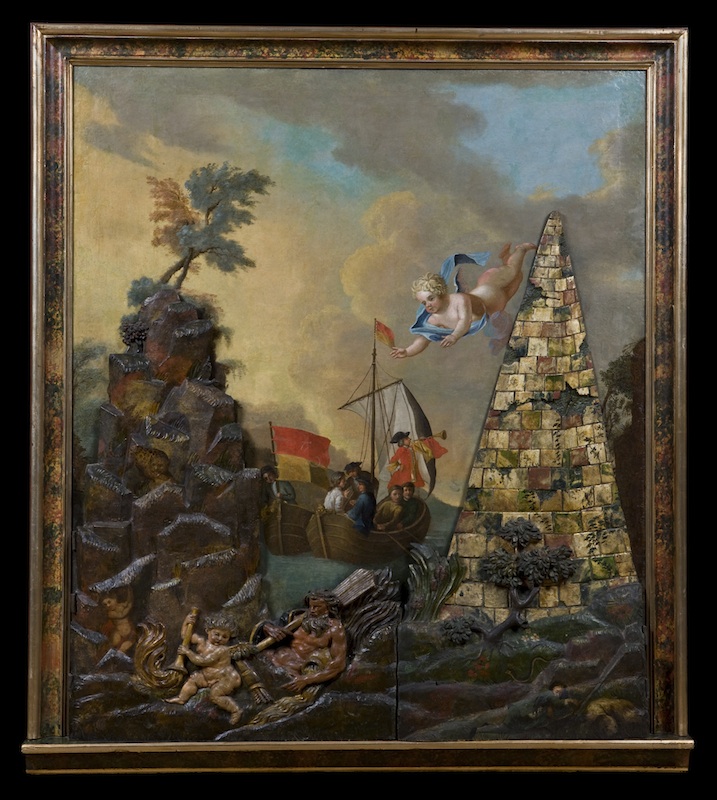
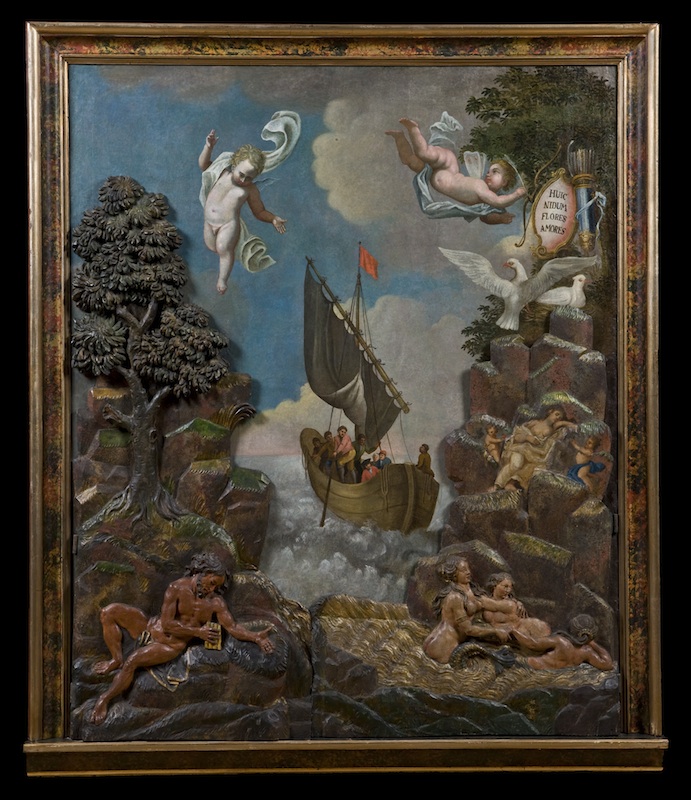
The paintings combine historic, heraldic, and mythological references. While the central painted portions appear to represent historic figures, the flanking painted areas and carved panels are reserved for mythological elements. All three pictures are rife with allusions to Roman mythology and Virgil’s Aeneid. Maximilian I Holy Roman Emperor (1459-1519) and his grandson, Charles V Holy Roman Emperor (1500-1558), began the precedent of tracing their genealogy to Troy, proclaiming a descendance from Aeneas.
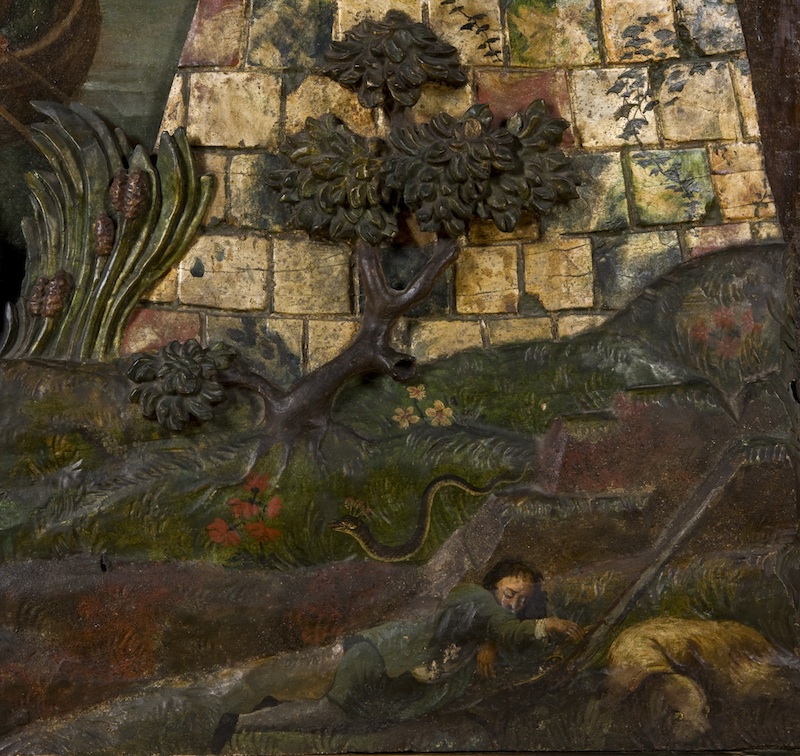
They are very unusual in their incorporation of hinged, carved polychrome panels that form part of the scenes.
Full research report available on request.