



Research
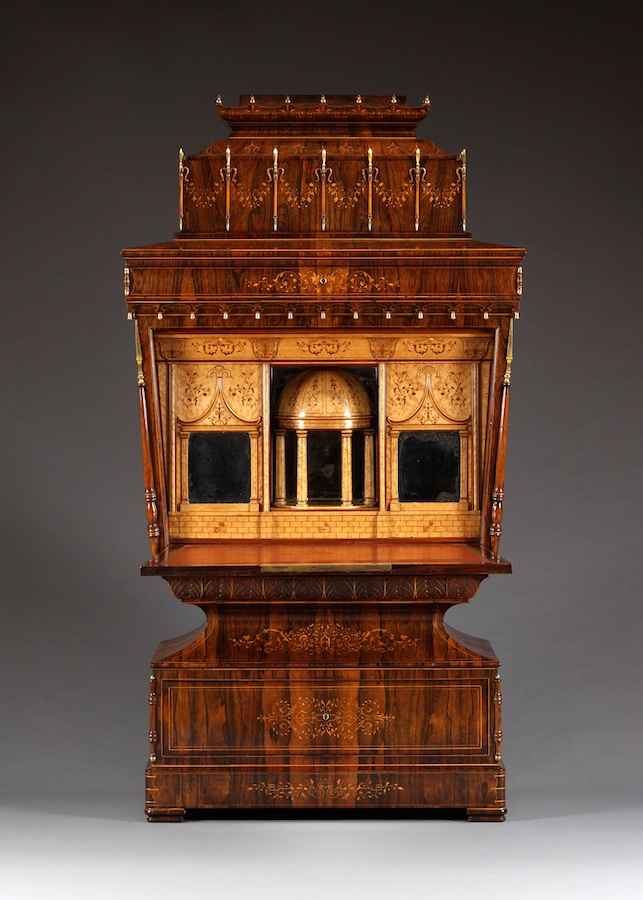
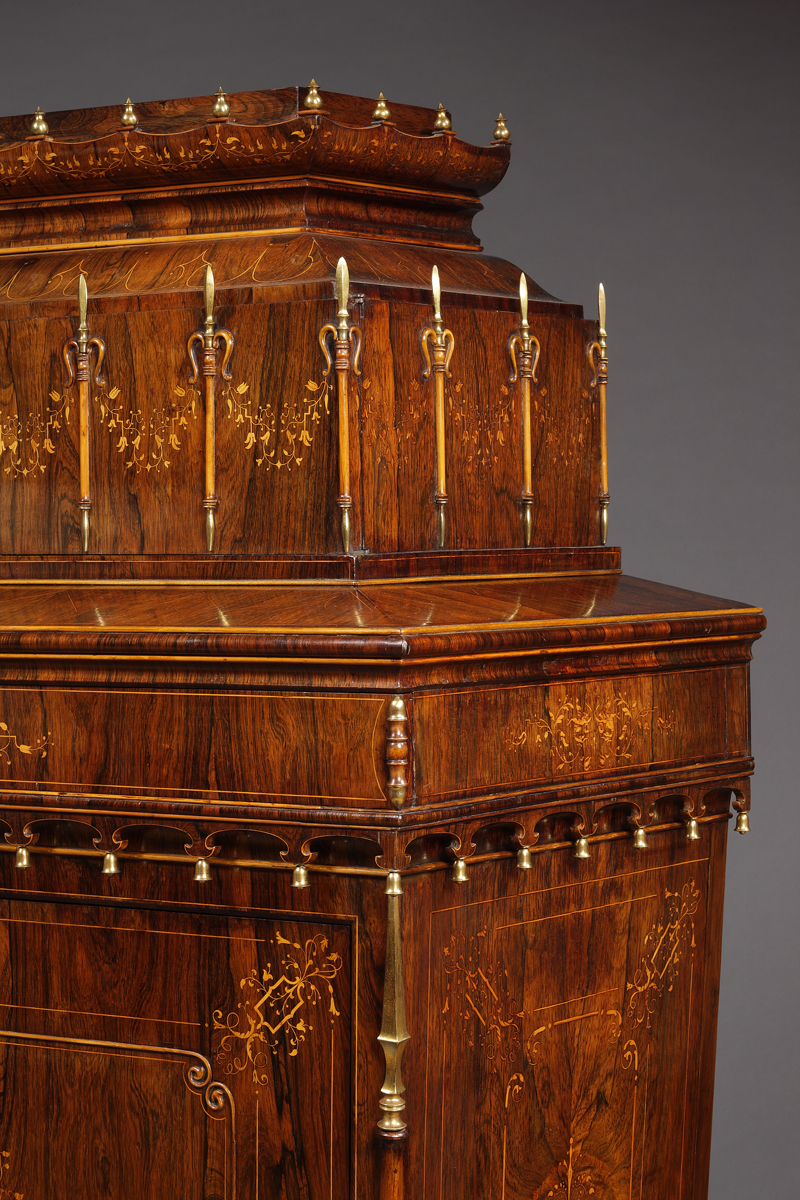
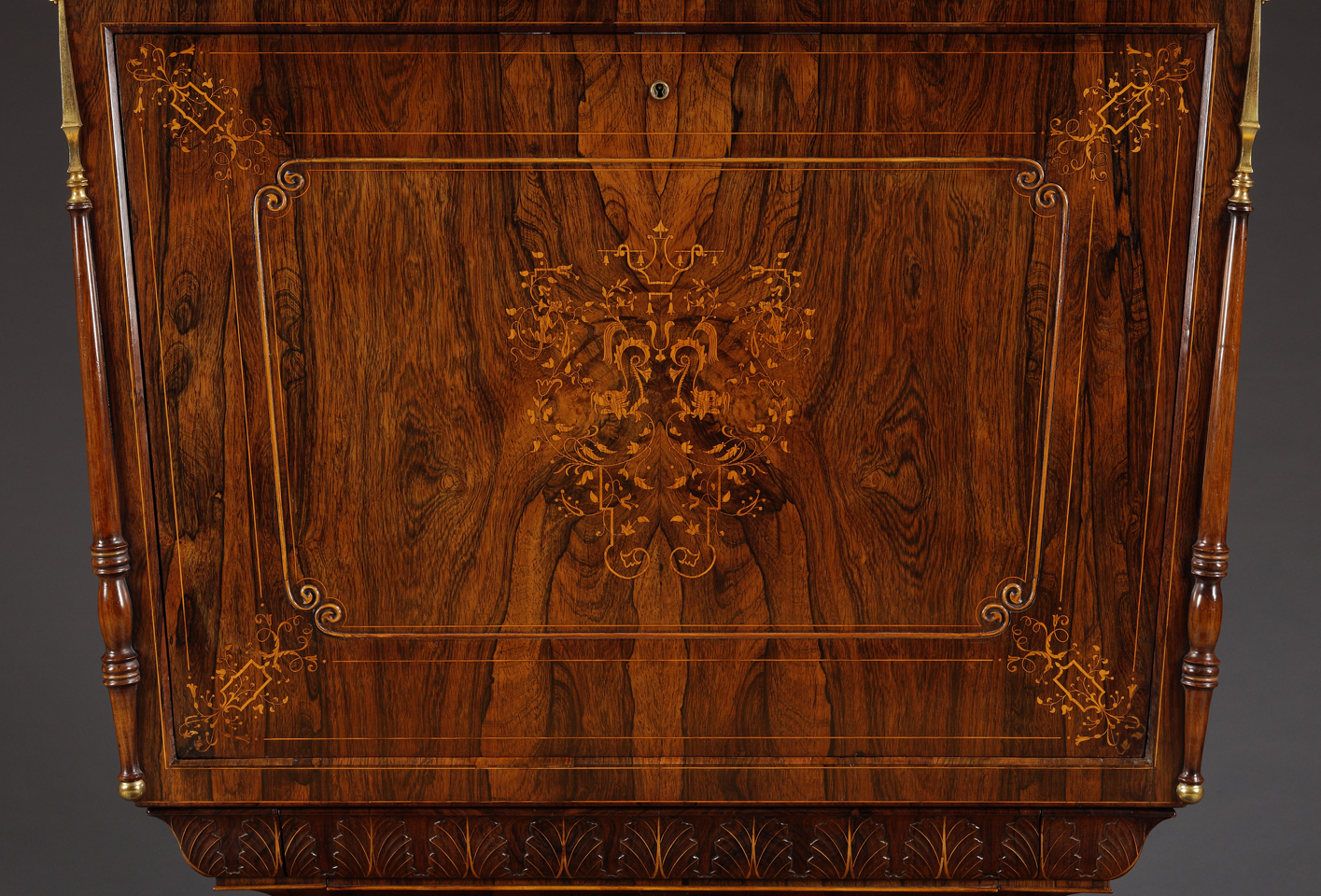
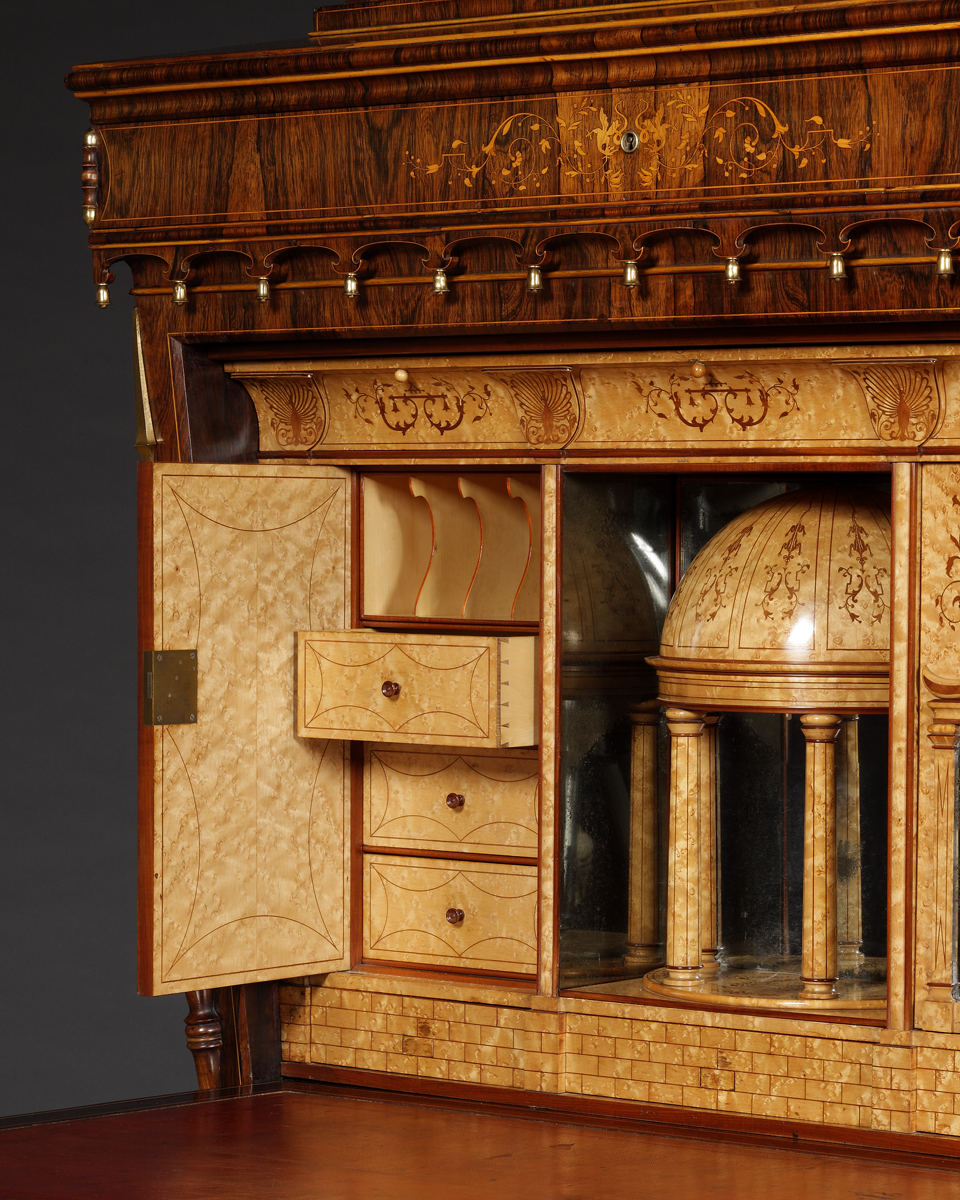
Of Brazilian rosewood, boxwood inlay maple and amaranth inlaid interior with gilt-bronze mounts. The superstructure of rectangular pagoda form with undulating roof mounted with double-gourd form gilt-bronze finials. Applied to the concealed spring-loaded door are a series of boxwood demi-poles with faceted gilt-bronze bladed tips and spikes to the bottom. The superstructure rests on a chamfered platform above a long single frieze drawer with foliate inlay and restored turned handles to its extreme ends. Below is a proud fretted arcaded apron from which a series of gilt-bronze “bells” are suspended. The paneled and inlaid fall flanked by two restored turned wooden shafted gilt-bronze tipped “spears.” The fall opening to reveal a fitted interior with recessed niche and demi-tempietto within an old but replaced mirrored surround. Flanking are mirror glass-filled pagoda pattern doors concealing drawers and pigeon holes. Above are three cavetto-shaped drawers with peacock-inlaid projections. To the base are secret drawers concealed within a brickwork inlaid façade. The lower waisted section with a drawer carved and inlaid with acanthus leaves. All resting on a rectangular base fitted with a single drawer terminating in compressed double-pad feet. The sides similarly inlaid and mounted. Small repairs to chipped edges of veneer.
Marks:
Signed and dated in three places, Jacob Helwig ébéniste de Worms à Paris 1845.
Locks stamped KOLB.
Provenance:
The Taylor Family, Beaver Falls, Pennsylvania.
This extraordinary monumental secretaire is a rare signed and dated example of a masterpiece in furniture made during the first flowering of the exotisme movement of the nineteenth century, which would really become a fully developed fashion after the 1851 Great Exhibition. For this grand event Owen Jones, one of the leading proponents of this taste, designed the interiors of the Crystal Palace in various historic non-Western styles, including Islamic and Chinese, as suitable background for the many exhibits from all over the world that furthered the same ideas. Although the basic architecture of this piece is that of the Germanic lyra form secretaire, its creator has, with much invention and dexterity, interwoven within its complex design overt oriental-inspired themes.
Full research report available on request.