
Research
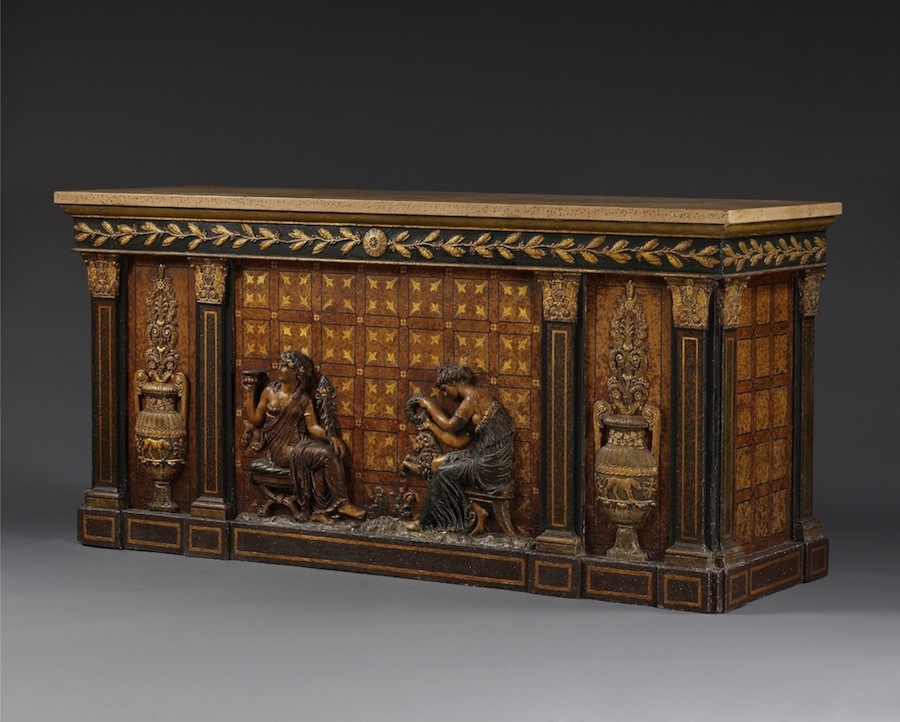
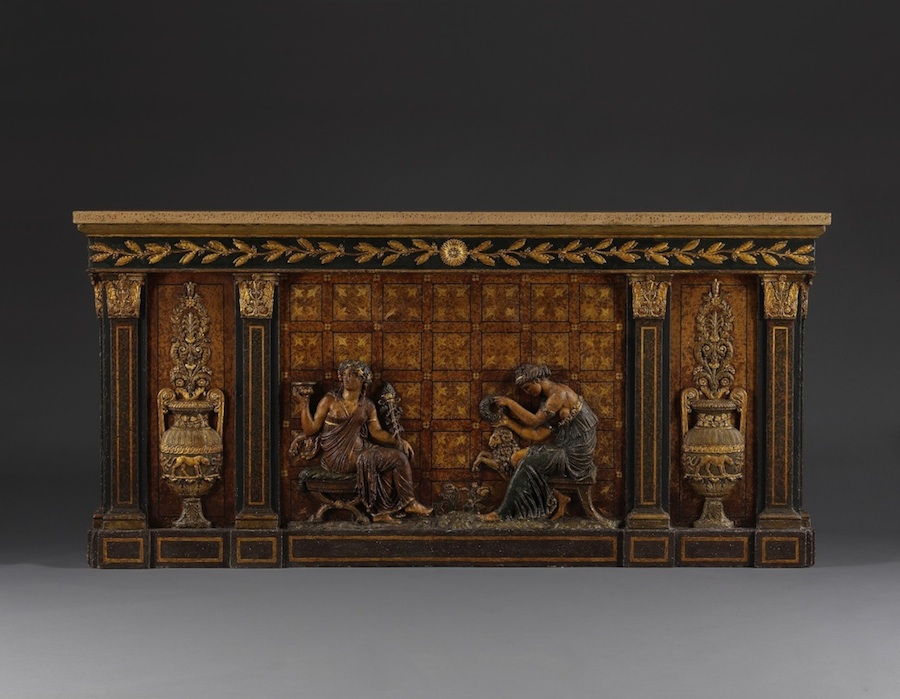
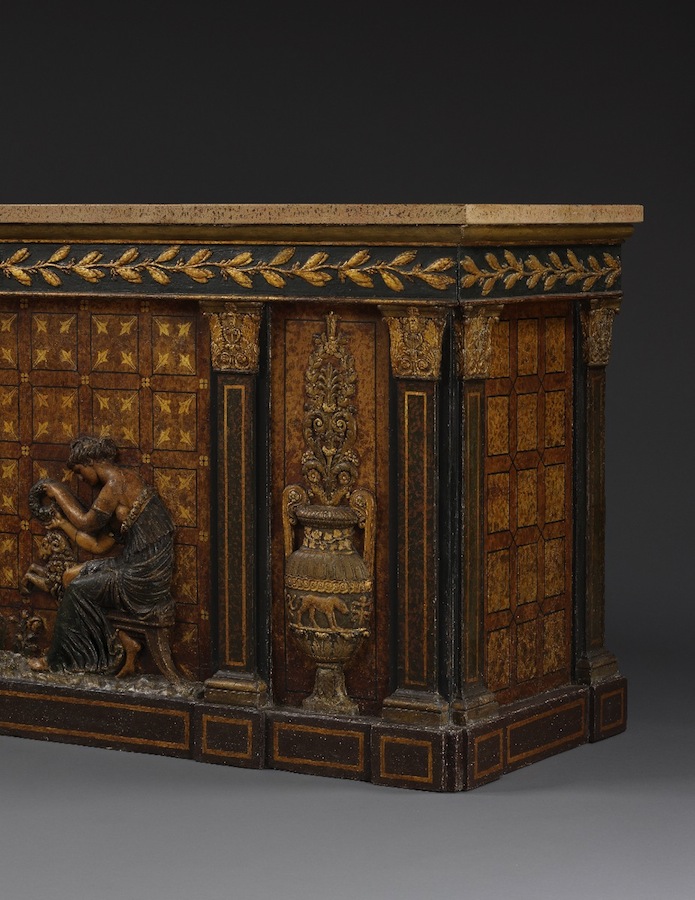
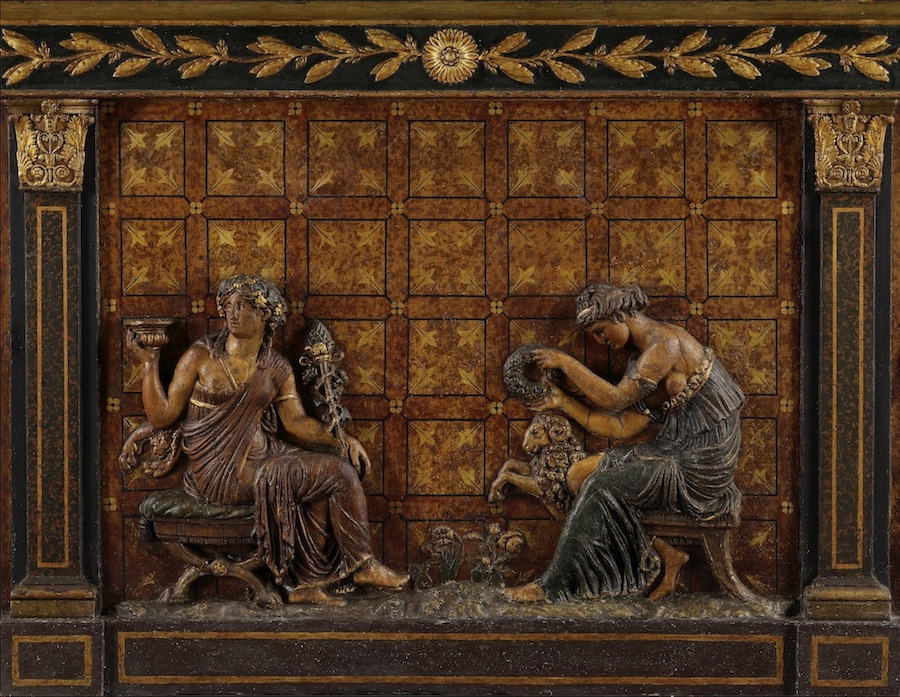
A large retail counter of pine and composition, the replaced top of striated limestone. A frieze around the top of three sides, decorated with foliage and buds with a central sunflower. The front is separated into three areas by four pilasters of an unusual classical order, with two further pilasters framing the end panels, the back with central kneehole flanked by two banks of four drawers. The central panel is the largest and contains two seated female figures of composition, the two flanking panels both with large volute krater vases containing floral arrangements. Painted decoration includes geometrical patterning on central and end panels. The reverse side painted green with two banks of drawers on either side of a central kneehole. One drawer rebuilt. Tests indicate one previous paint layer, the existing one probably completed close to the time of manufacture.
Provenance:
A Private Collection, Paris
By repute, a shop in the Carrefour de la Croix Rouge, Paris
The tumult of the French Revolution saw much of Paris’ highly reputed luxury goods trade seriously damaged. However, on being crowned Emperor in December 1804, Napoleon set about reversing this process, in the same year introducing the wide-reaching legal reforms known as the Code Napoléon. In 1807 a specific Code de Commerce was issued to regulate the conduct of business and trade in France. This new legal framework, along with the improved economic climate of the period, helped the city regain its position as the leading center for the retail of luxury goods in the world. Development was furthered by the Emperor’s reconstruction of large areas of Paris, which included several commercial districts, adding new and improved lighting, paving, and space for traffic.
The iconography of the present counter’s front repeatedly references Dionysus, the ancient Greek god of wine, associating it with a high-class Parisian Marchand de Vin. The central scene evokes the Nurturing of Dionysus, an ideal subject to decorate a wine seller’s interior.
Full research report available on request.