
Research
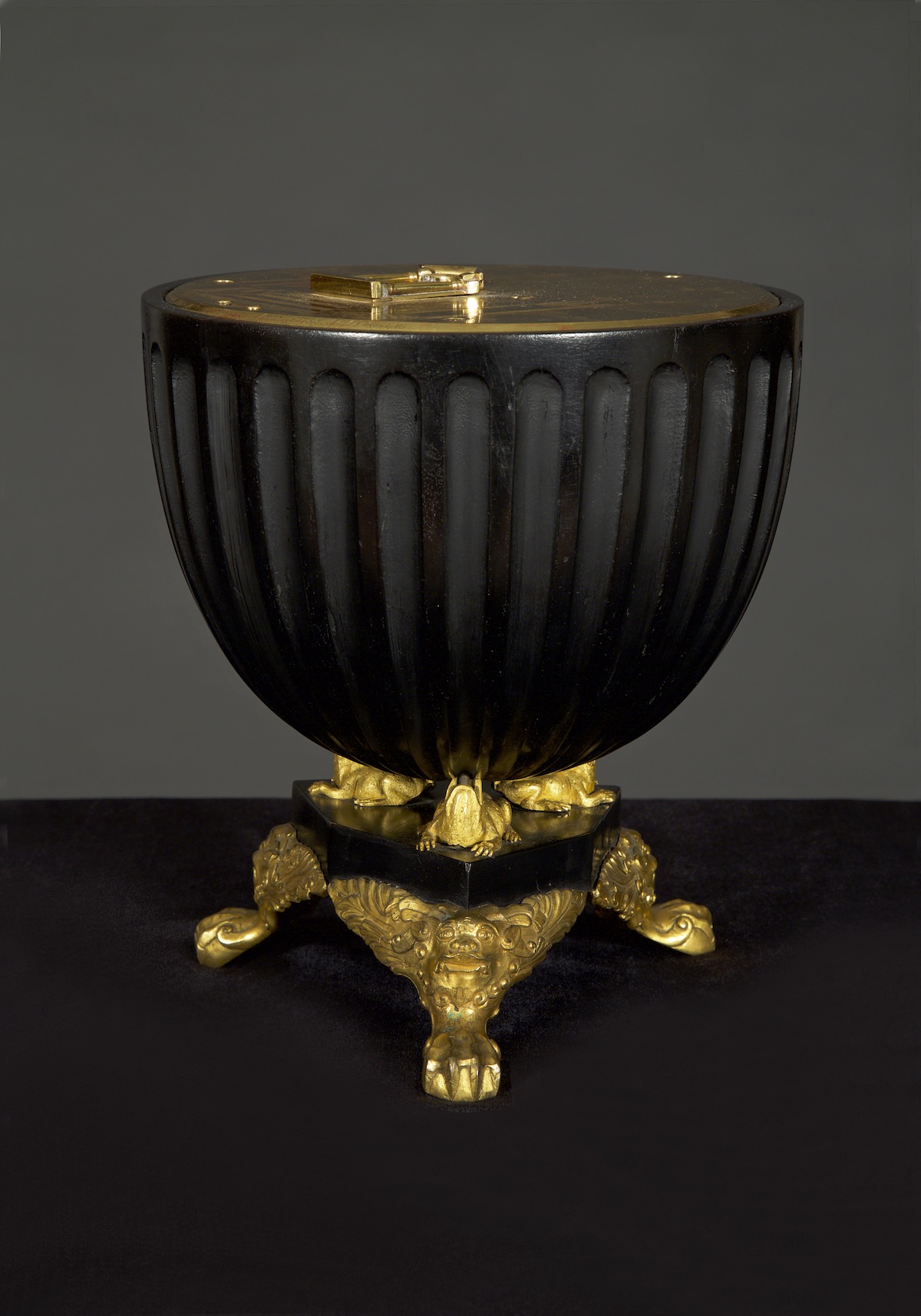
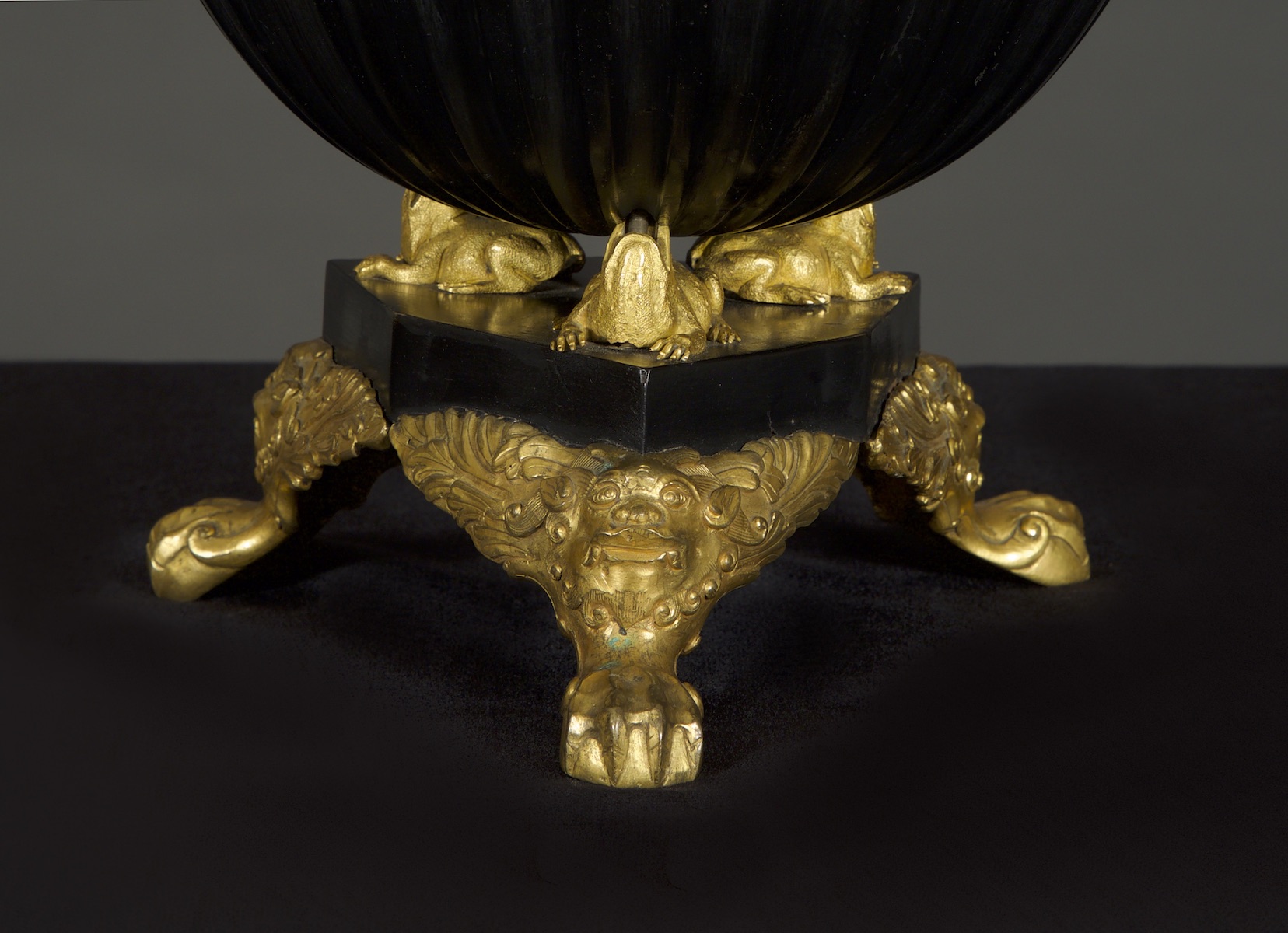
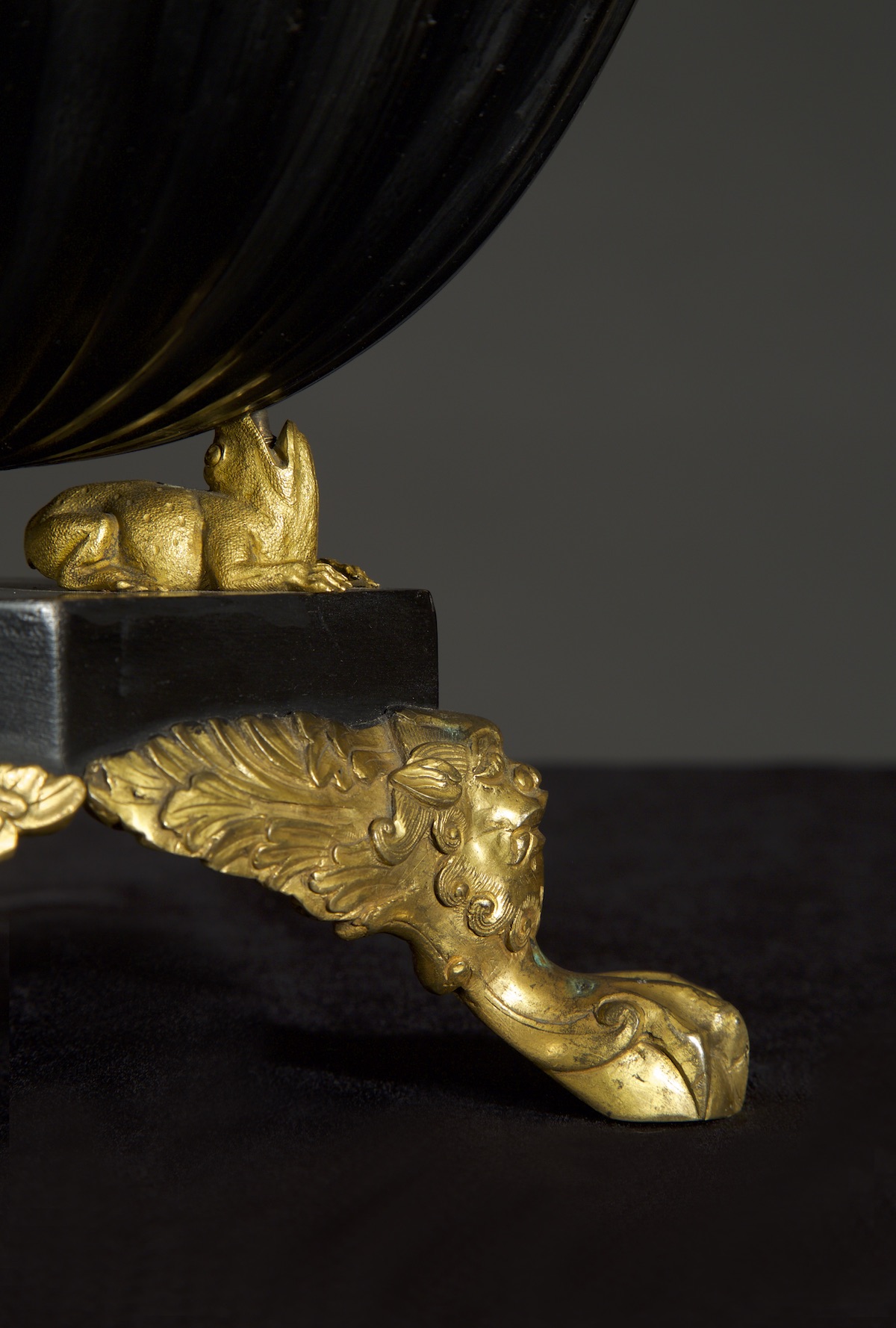
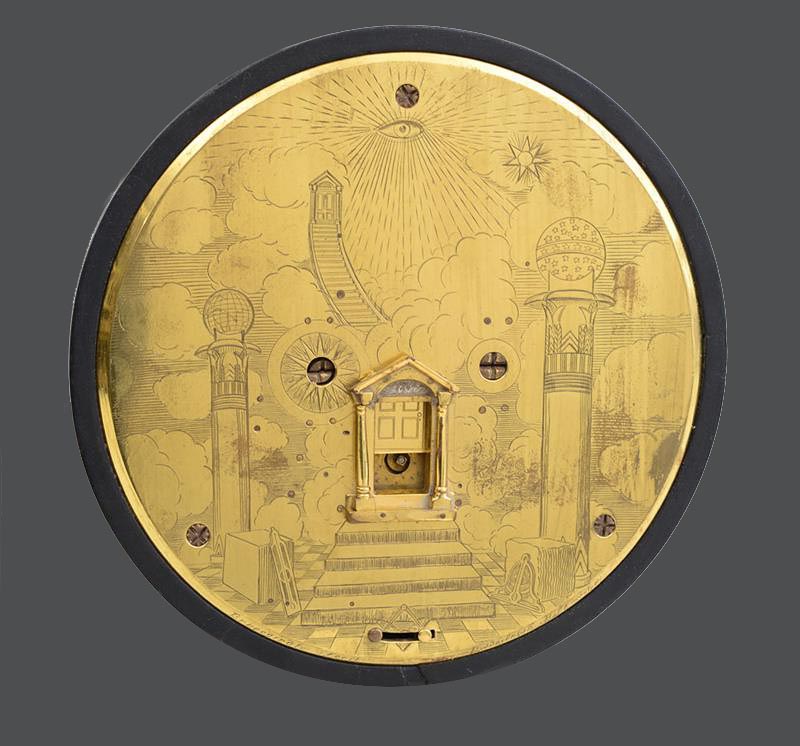
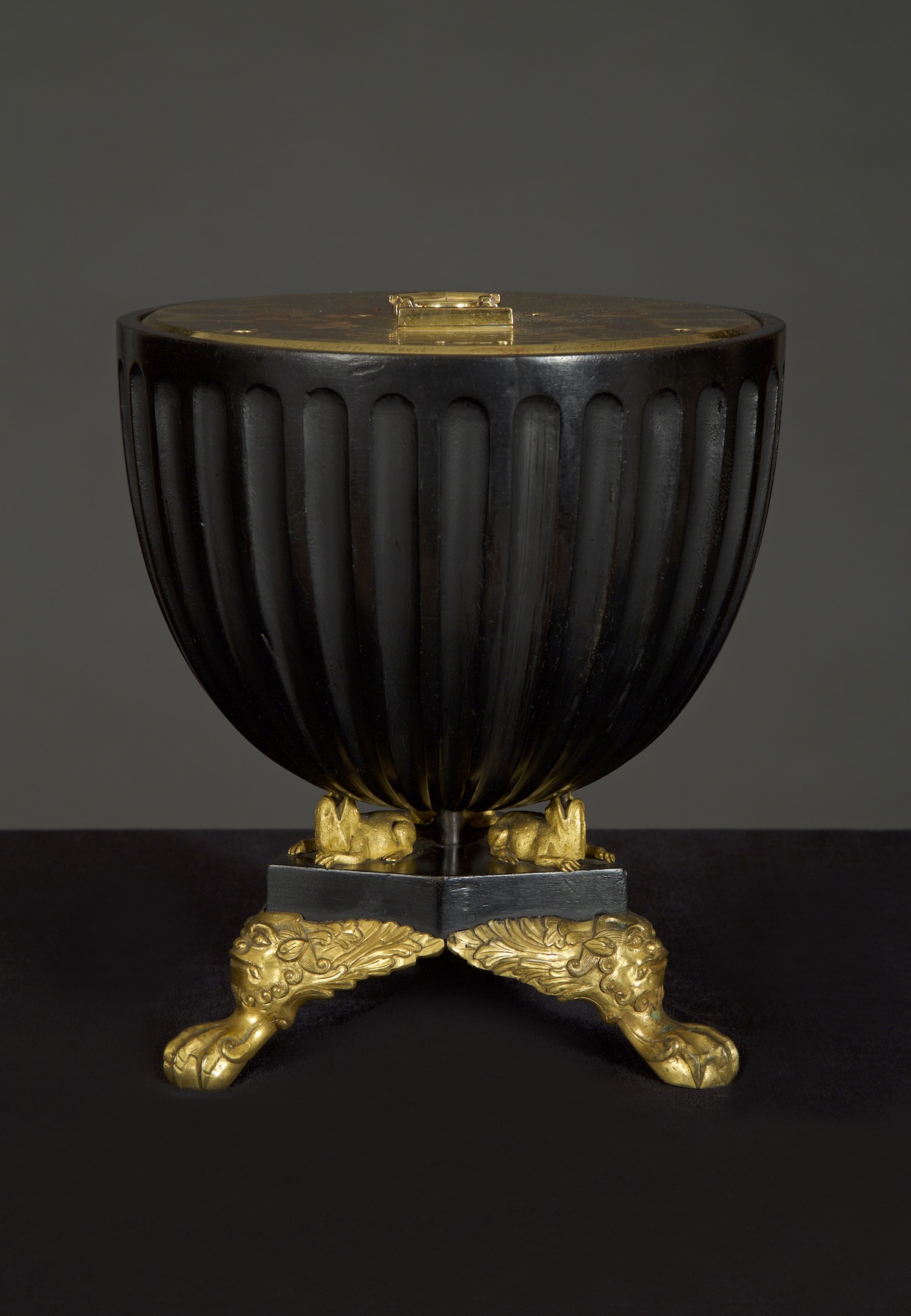
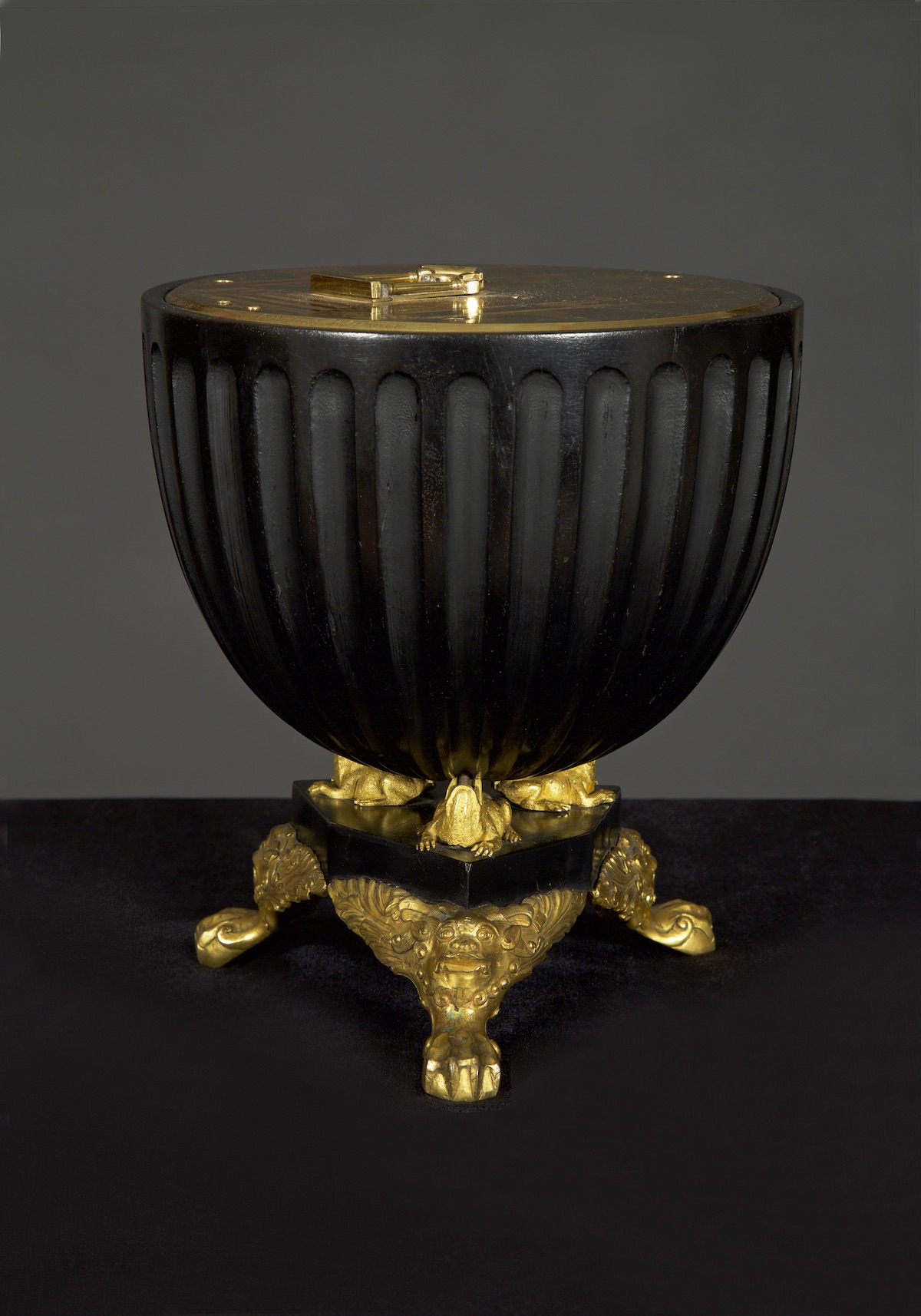
Of ebonized wood and gilt brass. The circular fluted ebonized drum case with horizontal engraved brass clock face centered by a stair case leading to classical doorway which opens to reveal a clock, flanked by Egyptian style columns surmounted by terrestrial and celestial globes, and surrounded by the tools of Freemasonry resting on a checkerboard floor below a clouded sky with sun, moon, star, and All-Seeing Eye. The clock supported by three gilt-brass frogs with upturned heads on an ebonized tripartite plinth, resting on three winged chimera heads with ball and claw feet. Report on mechanism appended.
Marks:
Engraved to the rim of the clock face:
Bracegirdle (fecit); Pyddesleigh Hill (sculpit)
The reverse of the clock face stamped:
SELWOB
Movement inscribed with repairer’s scratch mark:
Carter Bowles rep. 1930
Provenance:
Chris Machmer, Anneville, PA.
From whom acquired by a New York collector, 1996.
This hemispherical table clock bears highly distinctive decoration, being engraved with the symbols of Freemasonry. It is signed with the inscriptions Bracegirdle (fecit) and Pyddesleigh Hill (sculpit) on the outside edge of the clock face, and SELWOB on its reverse. No record of these names, have been found as yet. Furthermore, the hemispherical shape of the clock, with the dial set horizontally, also appears to be unique in 19th century clock design, save for two other related examples with identical Bracegirdle and Pyddsleigh Hill inscriptions. As the clock has a Masonic theme, it has been suggested that the makers’ names of Bracegirdle or Pyddesleigh Hill could be some sort of cryptogram in keeping with the secrecy tradition of the order.
The engraved dial bears overt Masonic symbolism, but the clock is also remarkable for the inclusion of three beautifully modeled gilt-brass toads which support the body of the clock. The use of these creatures as metal mounts is possibly unique and it is likely that they were created with symbolic meaning pertinent to Freemasonry, where they are viewed as magical creatures embodying rebirth and prosperity.
The origins of Freemasonry, formally called the Ancient and Honorable Fraternity of Free and Accepted Masons, are obscure. During the late 18th and early 19th century there was speculation that Freemasonry had its origins in ancient Egypt with the likes of Thomas Paine and Cagliostro asserting this view. Indeed the engraved columns portrayed on the clock face are of ancient Egyptian design.
The present clock belongs to a small known group of five other examples of Masonic clocks, in Europe and the United States, with nearly identical or high-related design elements, including two that are similarly signed.
Full research report available on request.