
Research
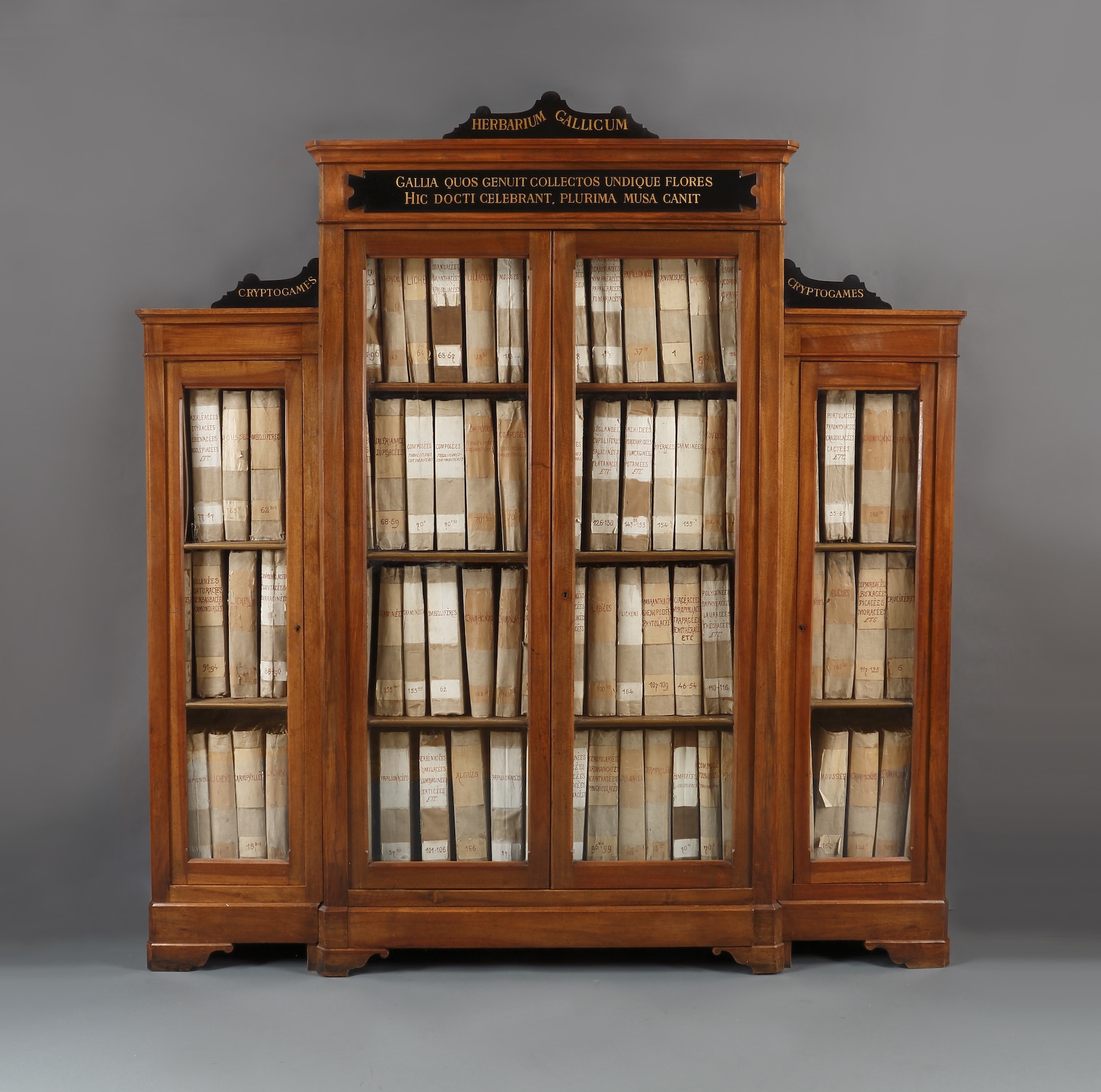
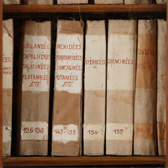
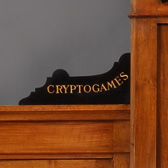
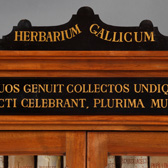
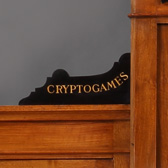
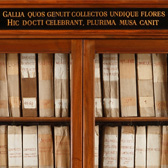
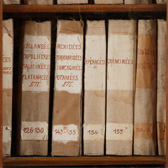
Of walnut, ebonized and gilt decoration. The central section with two full length glazed doors concealing four shelves, flanked on each side with two lower sections with three shelves each contained behind a single glazed door. Ebonized and gilt plaques surmounting the central section inscribed Herbarium Gallicium and Gallia quos genuit collectos undique flores / hic docti celebrant, plurima musa canit; conforming plaques above each side section inscribed cryptogames. The whole raised on six shaped bracket feet. The cabinet holding labeled dossiers containing botanical specimens.
Marks:
Ebonzed and gilded signs inscribed:
Herbarium Gallicum
Gallia quos genuit collectos undique flores / hic docti celebrant, plurima musa canit
Cryptogames
Provenance:
French private collection
This impressive cabinet was specially constructed to house a 19th century herbarium, a collection of preserved plant specimens and associated documentation that functions as a physical botanical encyclopedia. The specimens were traditionally dried, glued or sewn onto sheets of paper, and then placed in boxes or bound in volumes with others of a particular type, a method that remains largely unchanged today.
The practice of observing and preserving plants reaches back to antiquity; the oldest example of this is a bundle of dried olive twigs bound by a palm leaf, dating from circa 305 B.C, found in an Egyptian tomb and conserved in the Royal Botanic Gardens, Kew. Botanical subjects were also described and illustrated in manuscripts called “herbals,” used by apothecaries and physicians. The drying of plants and flowers as keepsakes or devotional objects continued for centuries, but it was not until the Renaissance that they were systematically procured and catalogued to form a botanical database.
Full research report available on request.