
Research
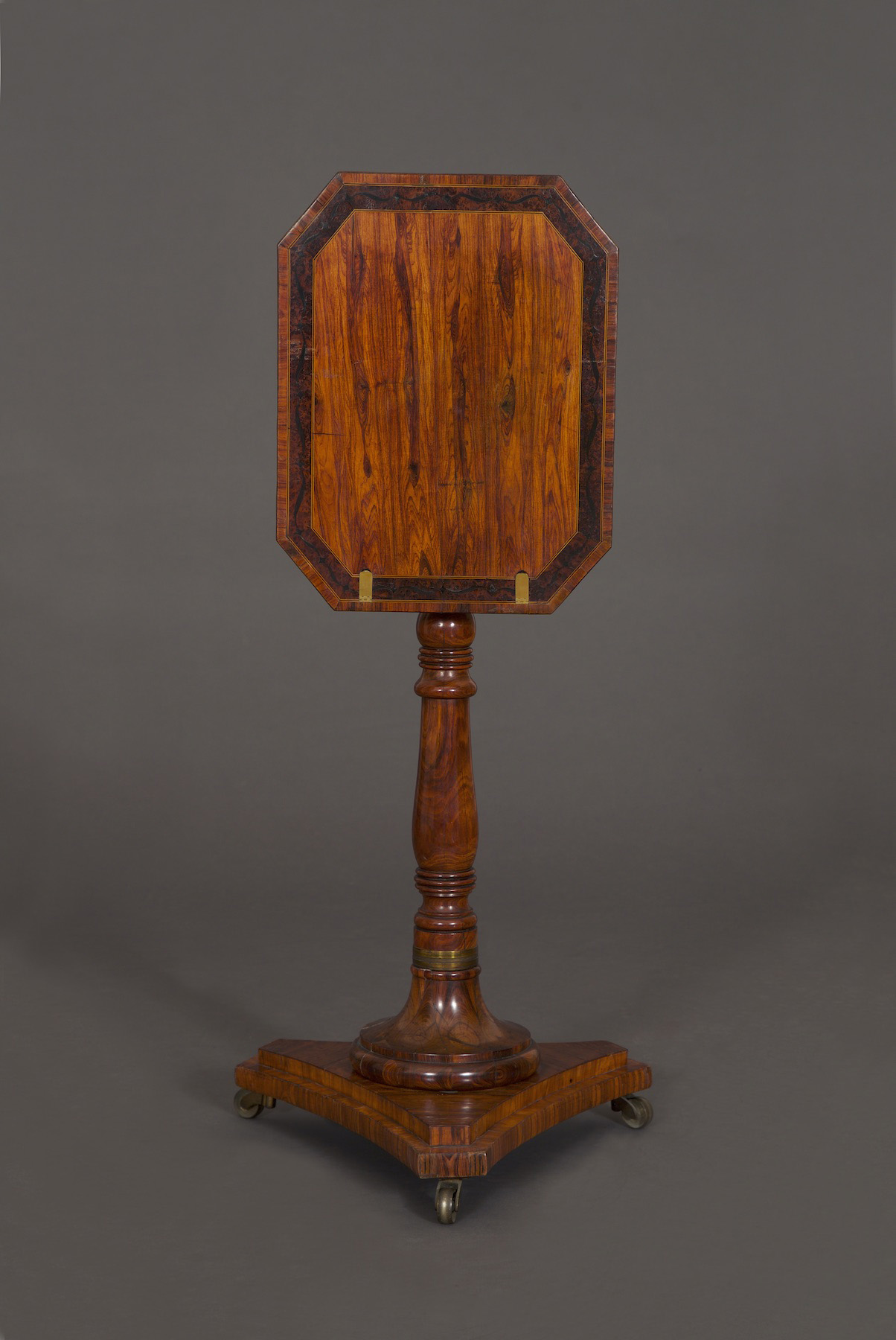
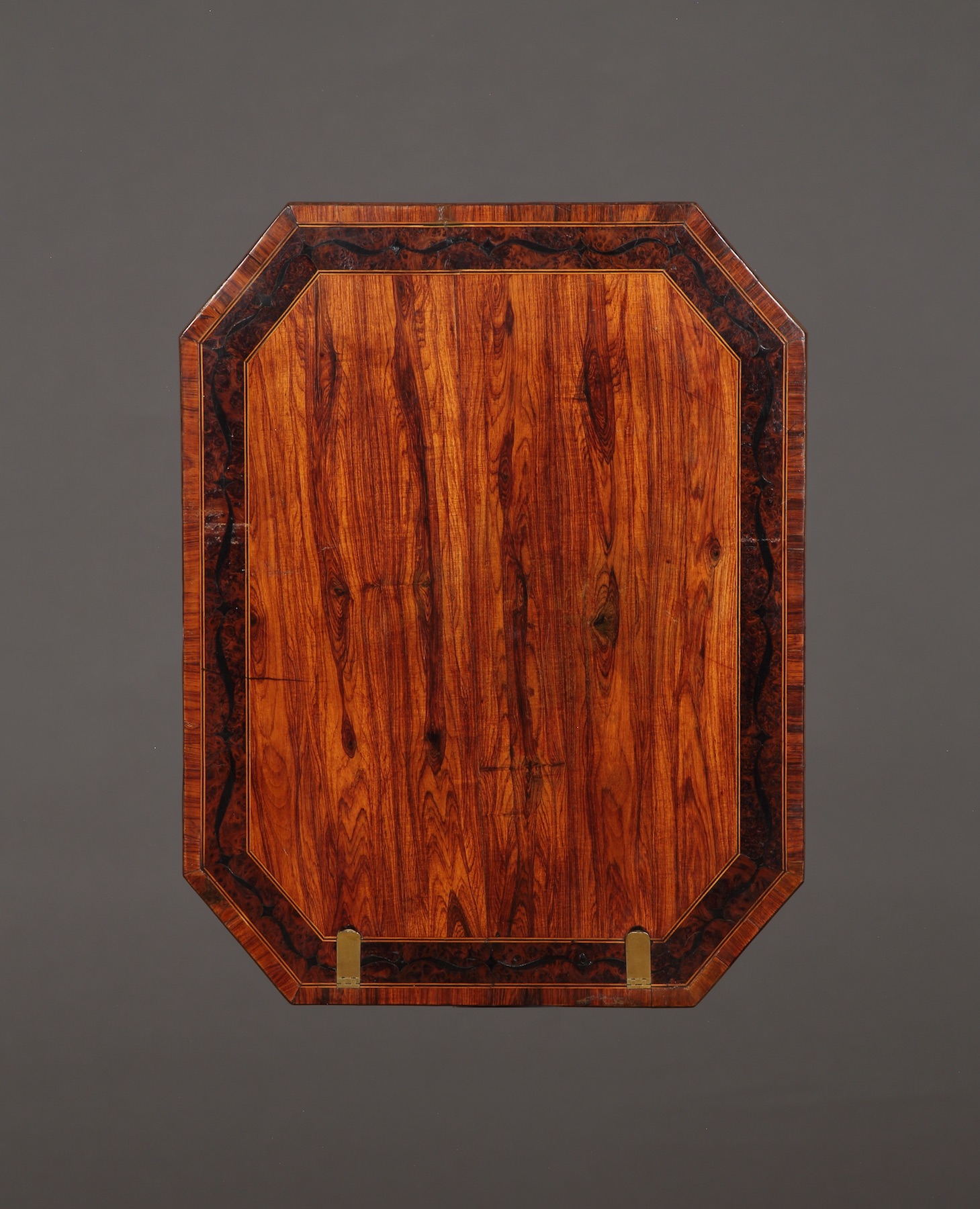
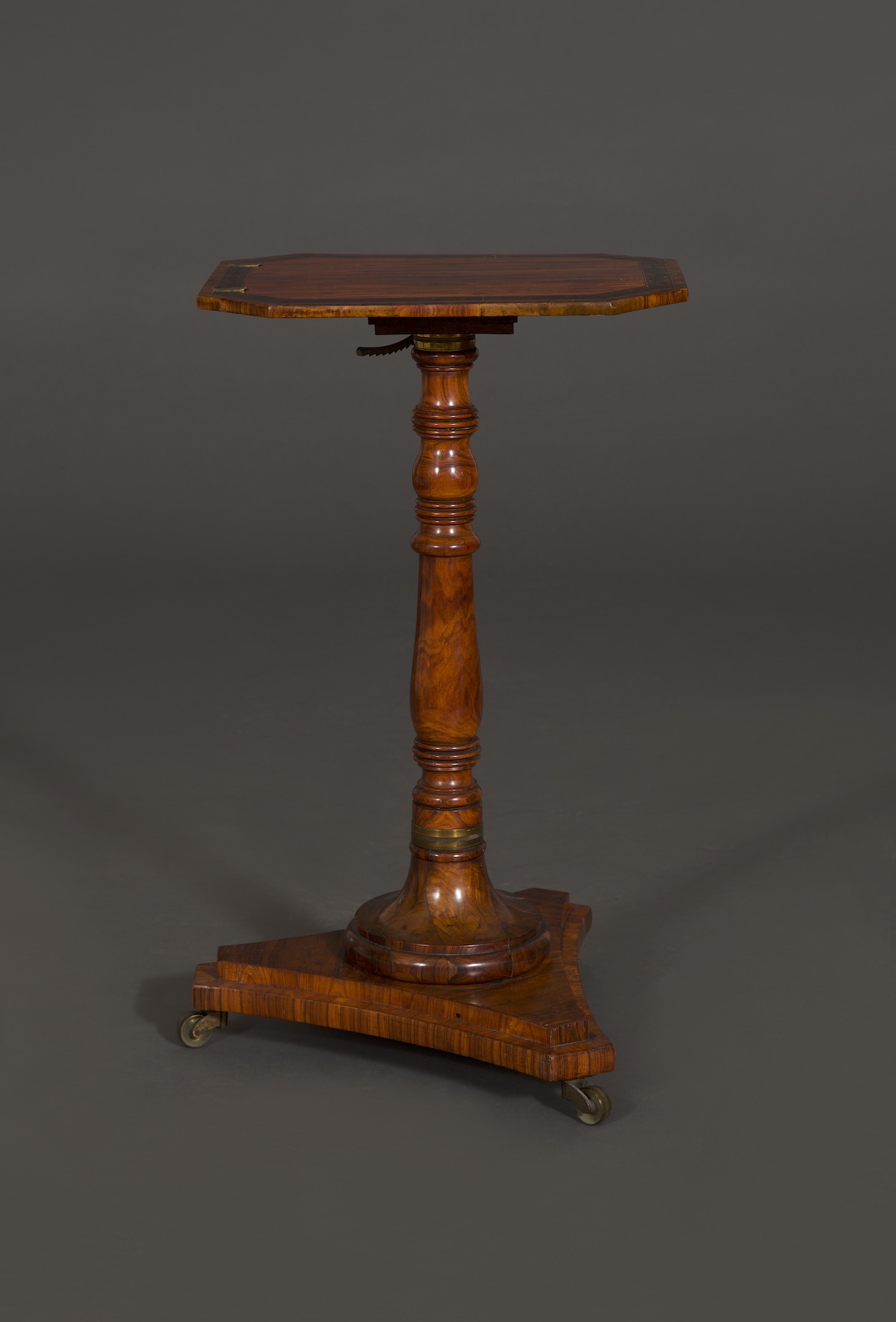
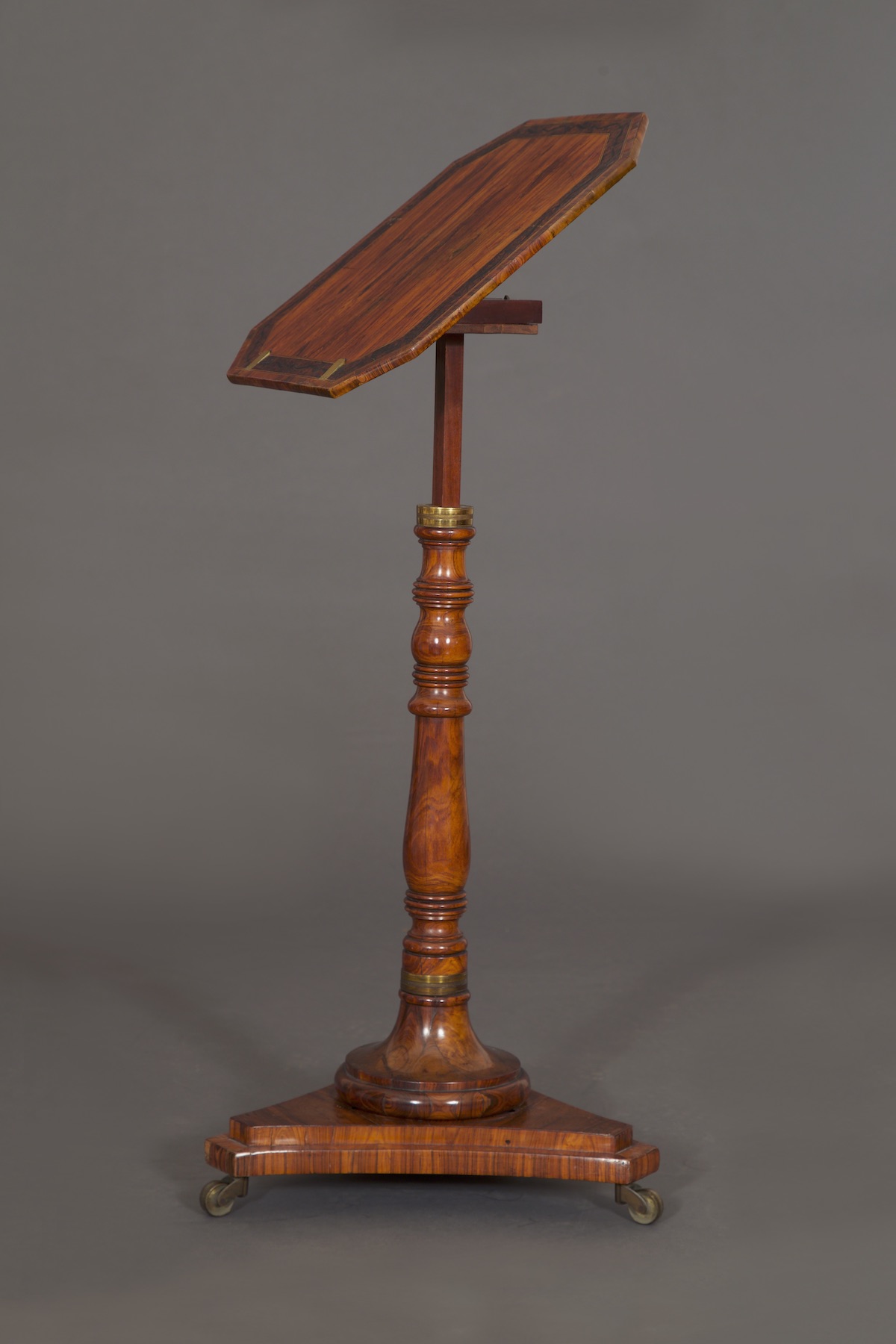
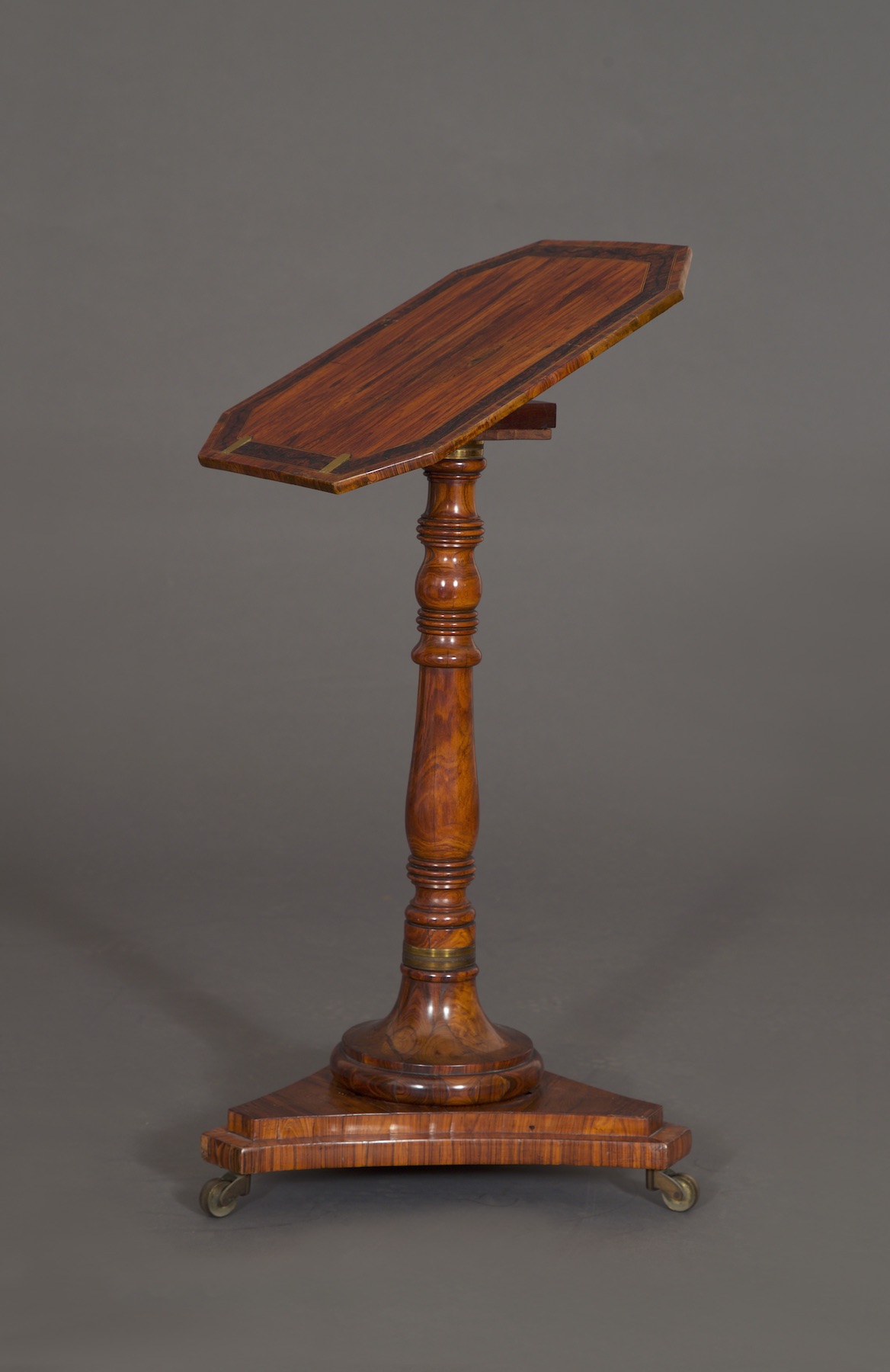
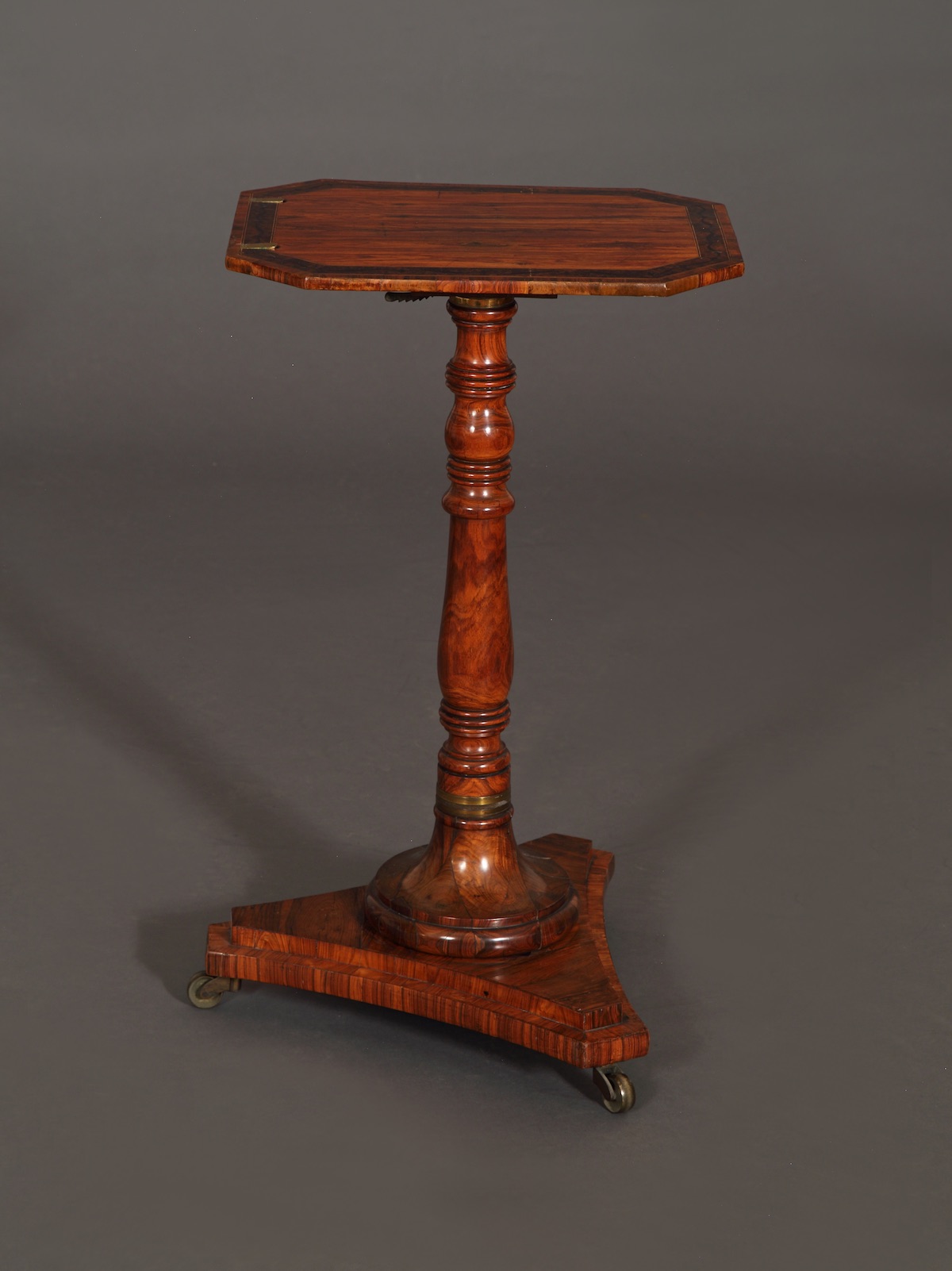
Of kingwood, thuya, and ebony with gilt brass fittings. The rectangular canted cornered top edged with inlaid ebony and thuya wavy boarder. The solid pieced kingwood baluster stem set with high quality brass fittings and top for adjustment of ratcheted mechanism, so that the table can be used as a reading stand. The whole raised upon an incurved tripartite platform fitted with three original gilt brass casters. Curious construction detail where stem and platform join, however, both are original.
Marks:
Struck to the underside:
VR separated by a crown. CL, Room 45. 1872.
Old square paper label with red printed numeral ‘5‘.
This center table is exceptional for being almost entirely of highly valued, exquisitely marked kingwood (also known as princes wood), including the solid baluster stem which is necessarily formed of pieced sections glued together then finely turned.
The table is stamped to the underside with the royal cypher of Queen Victoria and a date of 1872, the year a catalog of the Royal Collection was produced, following the first authoritative inventory recorded in 1861.
The table is also stamped CL and Room 45. A compelling possibility for this reference is Cumberland Lodge, a magnificent 17th century estate in Windsor Great Park, nearby to Windsor Castle. The lodge entered Royal possession in 1670, when King Charles II made it the residence of the Ranger of the Park, calling it the ‘Great Lodge.’ In 1747, King George’ II’s son Prince William Augustus, Duke of Cumberland was made Ranger and “immediately set about altering his residence to form a grand mansion to rival any in the land,” with the aid of architect Henry Flitcroft. In 1757 the Duke enlarged the house again under Thomas Sandby, nearly doubling it in size.
In 1790 King George III successfully took back the house, now called ‘Cumberland Lodge,’ and a further major refurbishment was begun by the architect James Wyatt that was completed under the direction of the Prince Regent. He resided at the nearby Royal Lodge while work was carried out. The house was fully occupied by George IV’s younger brother, the Duke of Sussex, from 1822-42 and it is therefore possible the table was made for the latter.
Full research report available on request.