
Research
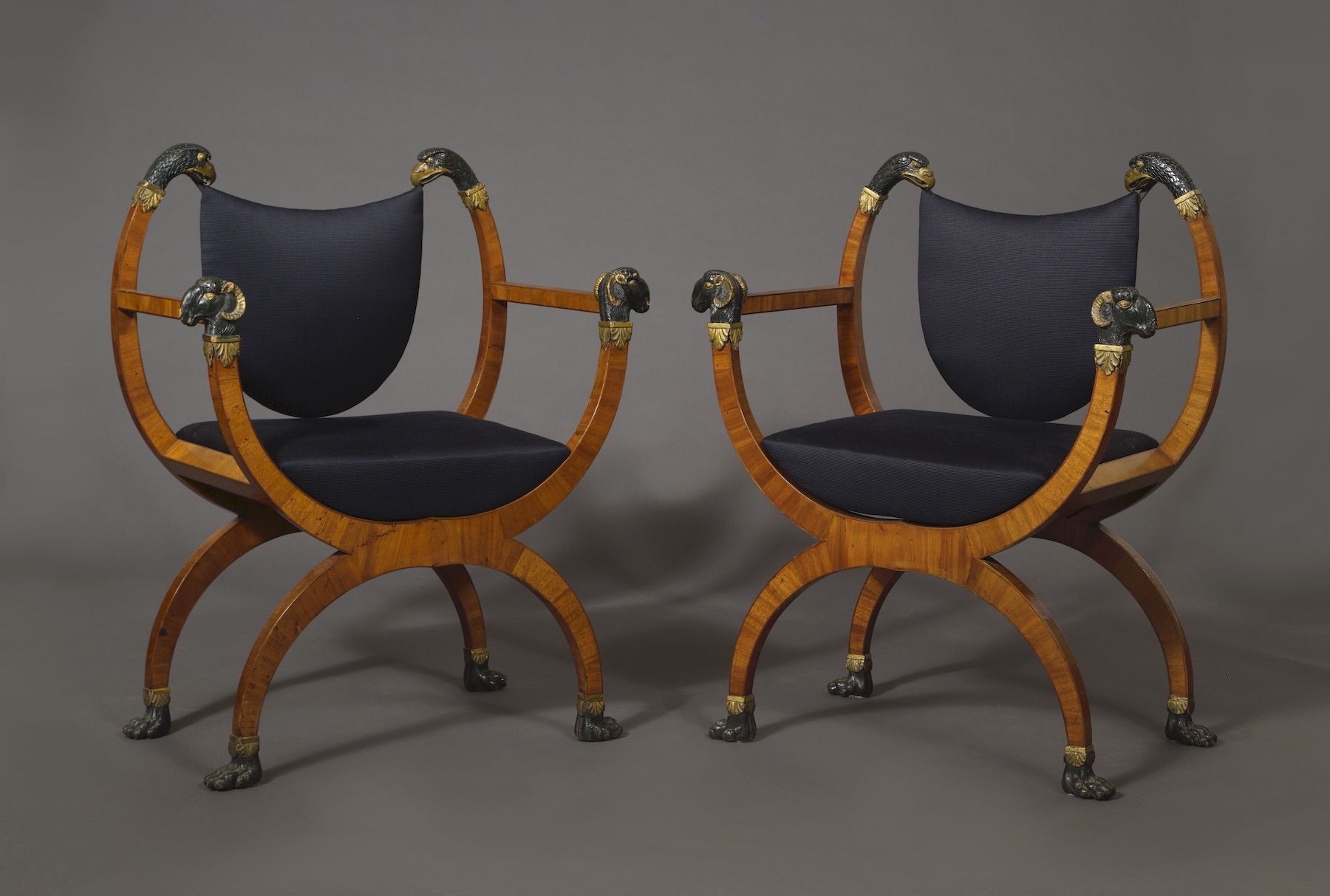
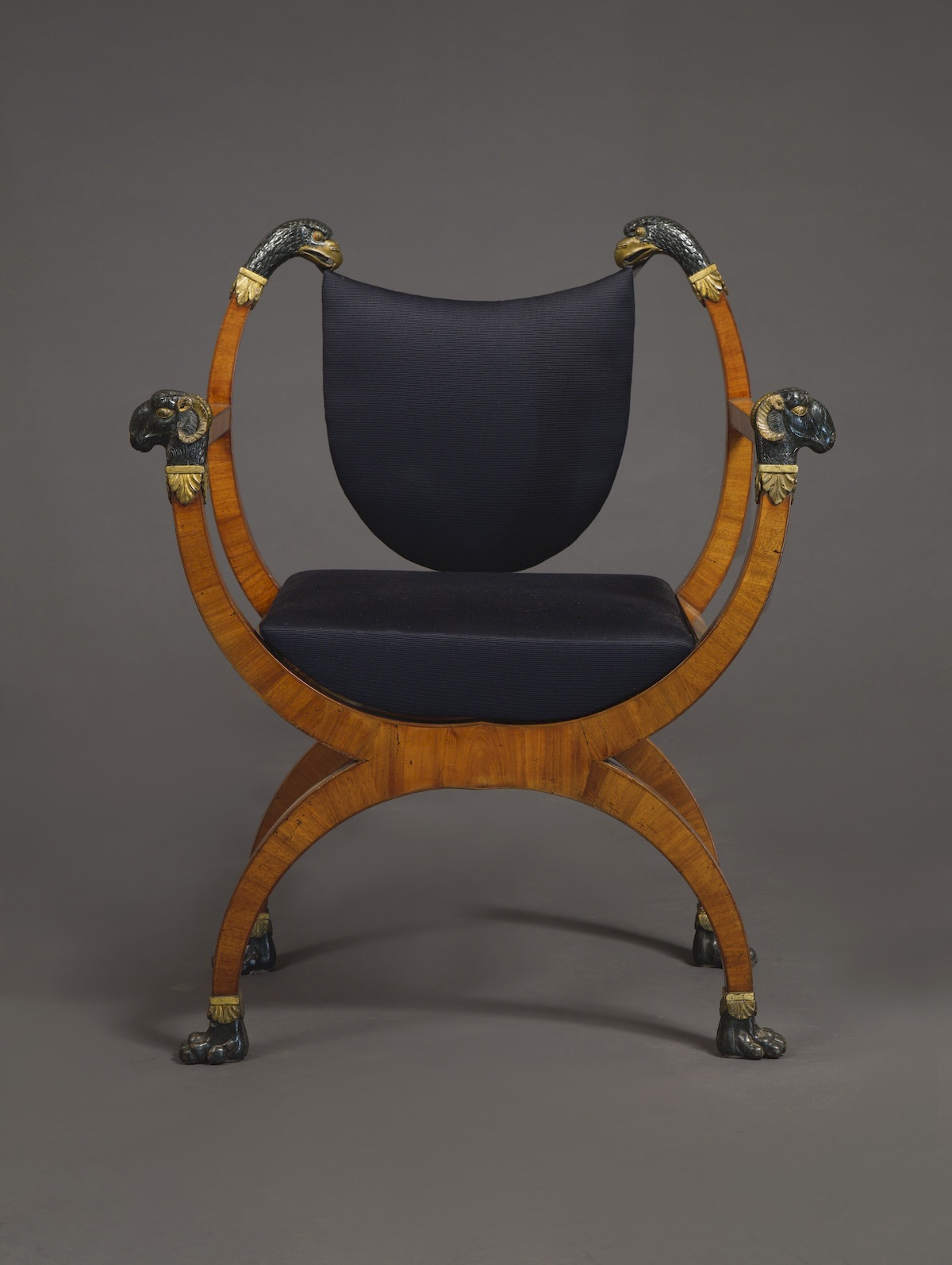
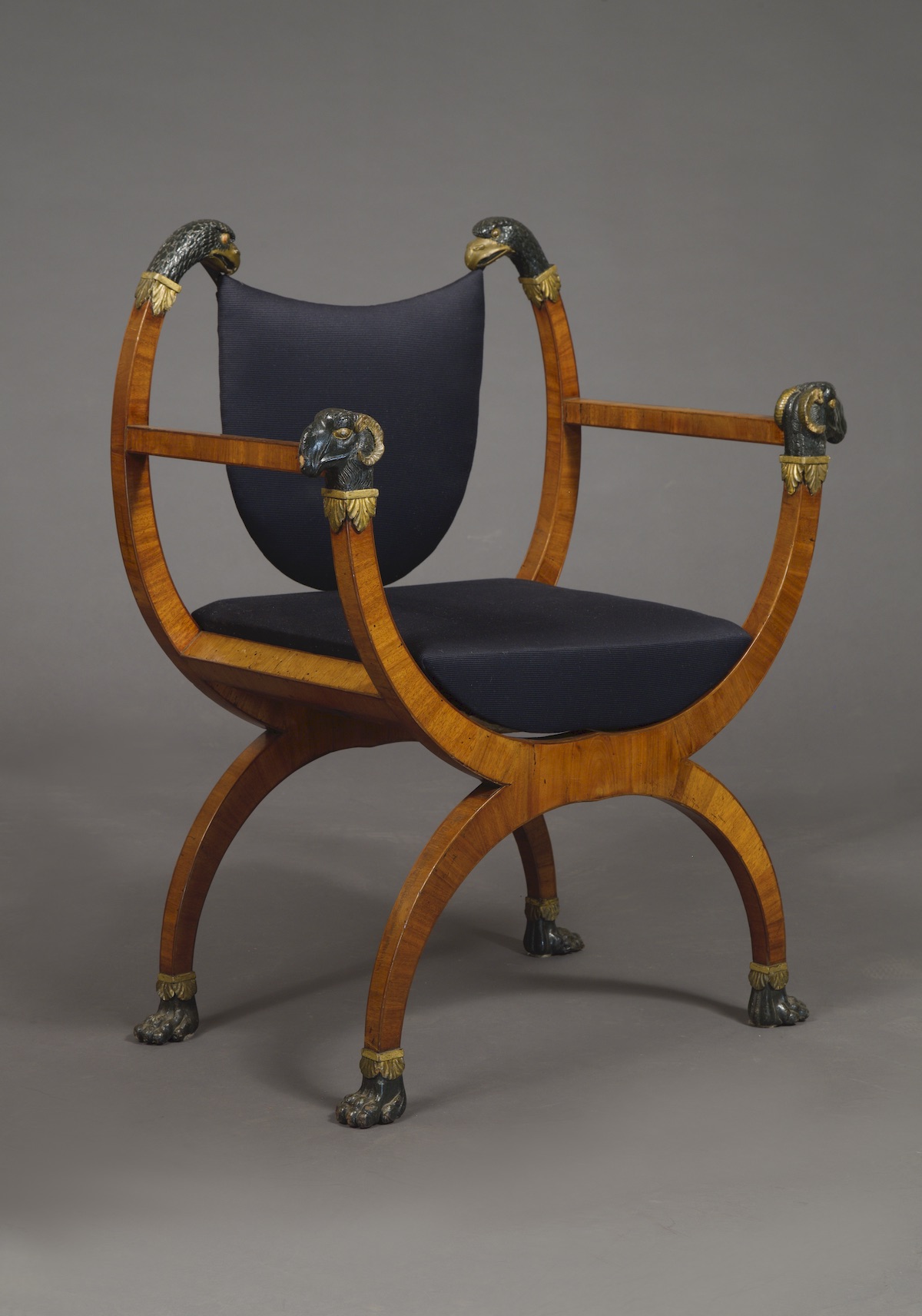
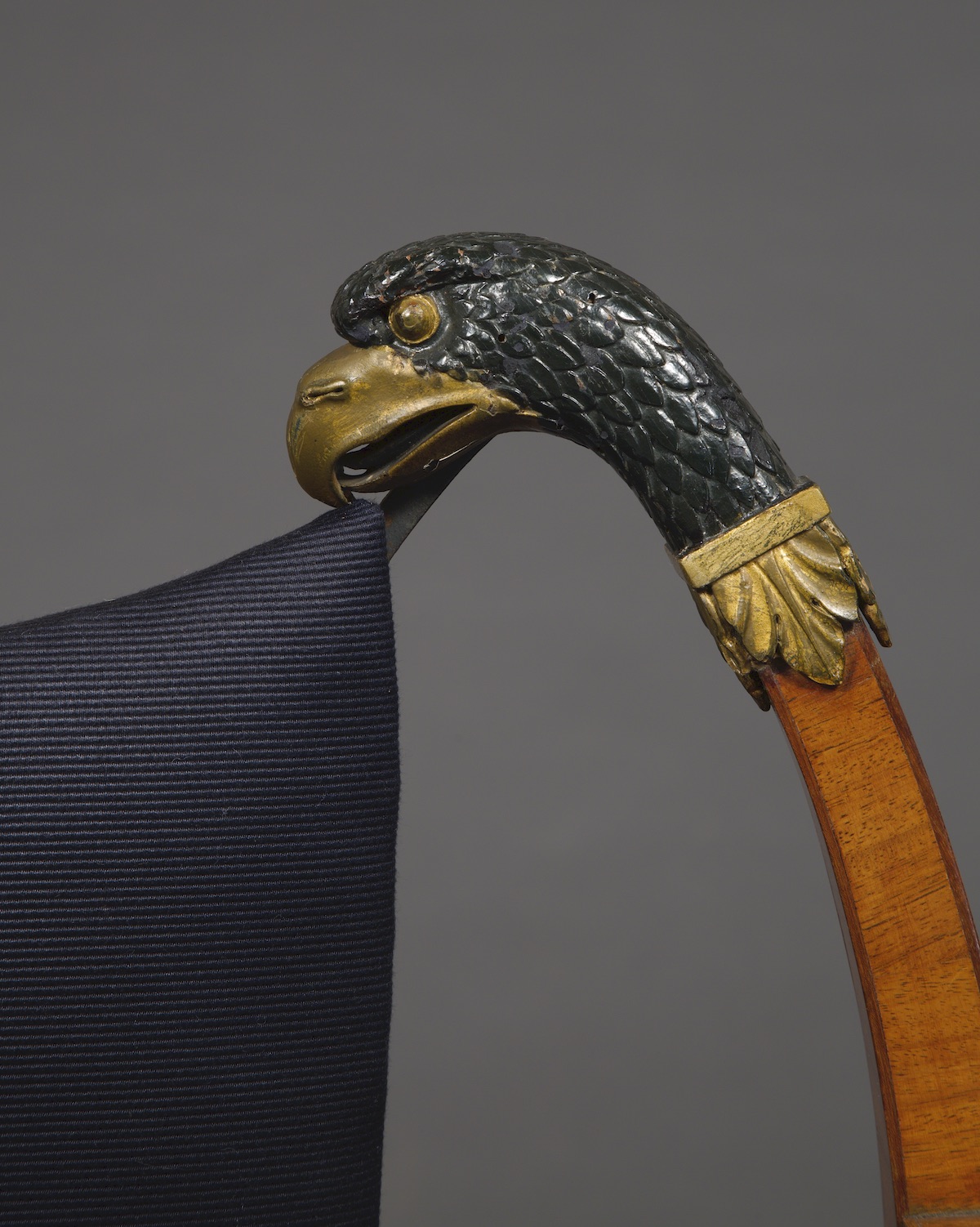
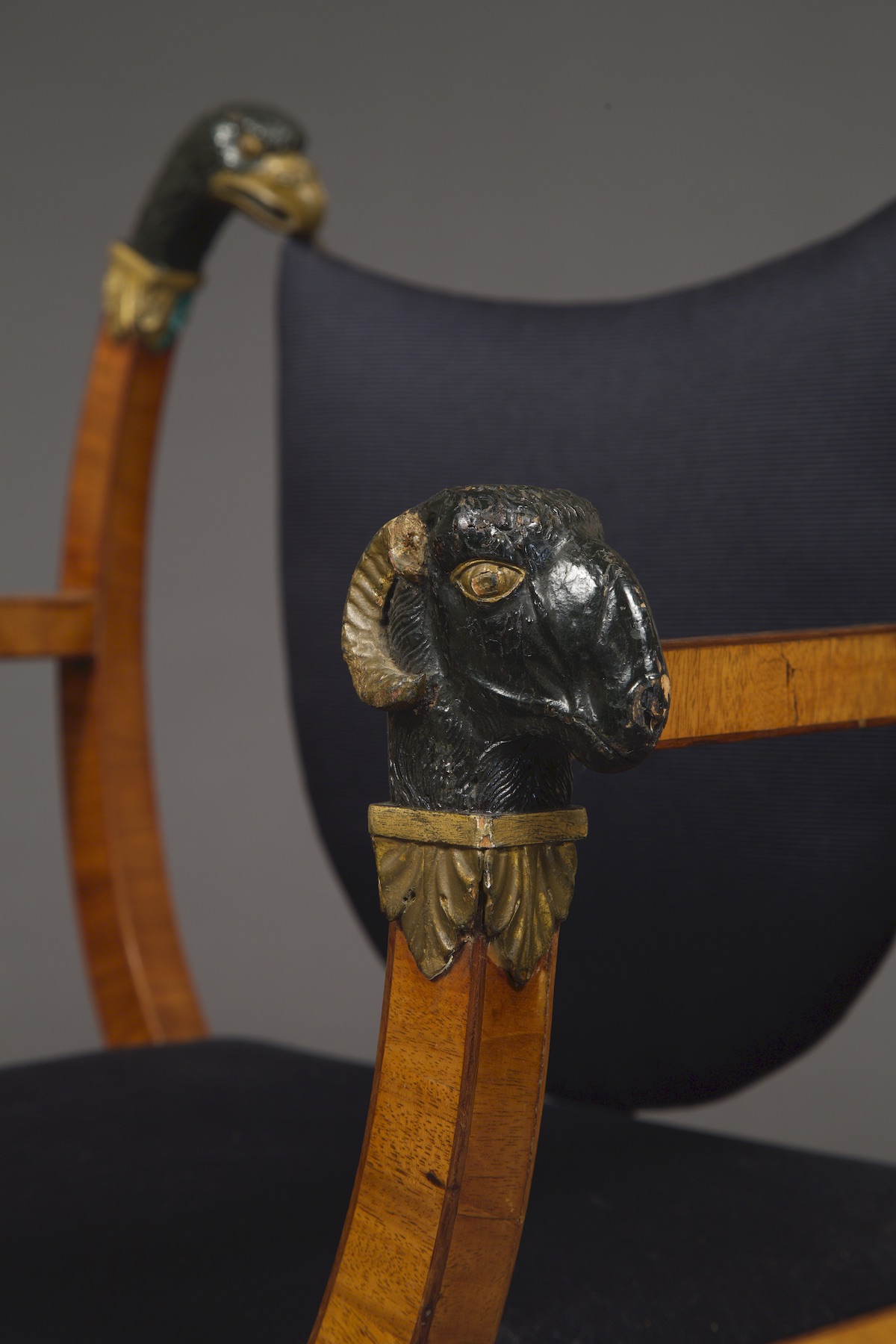
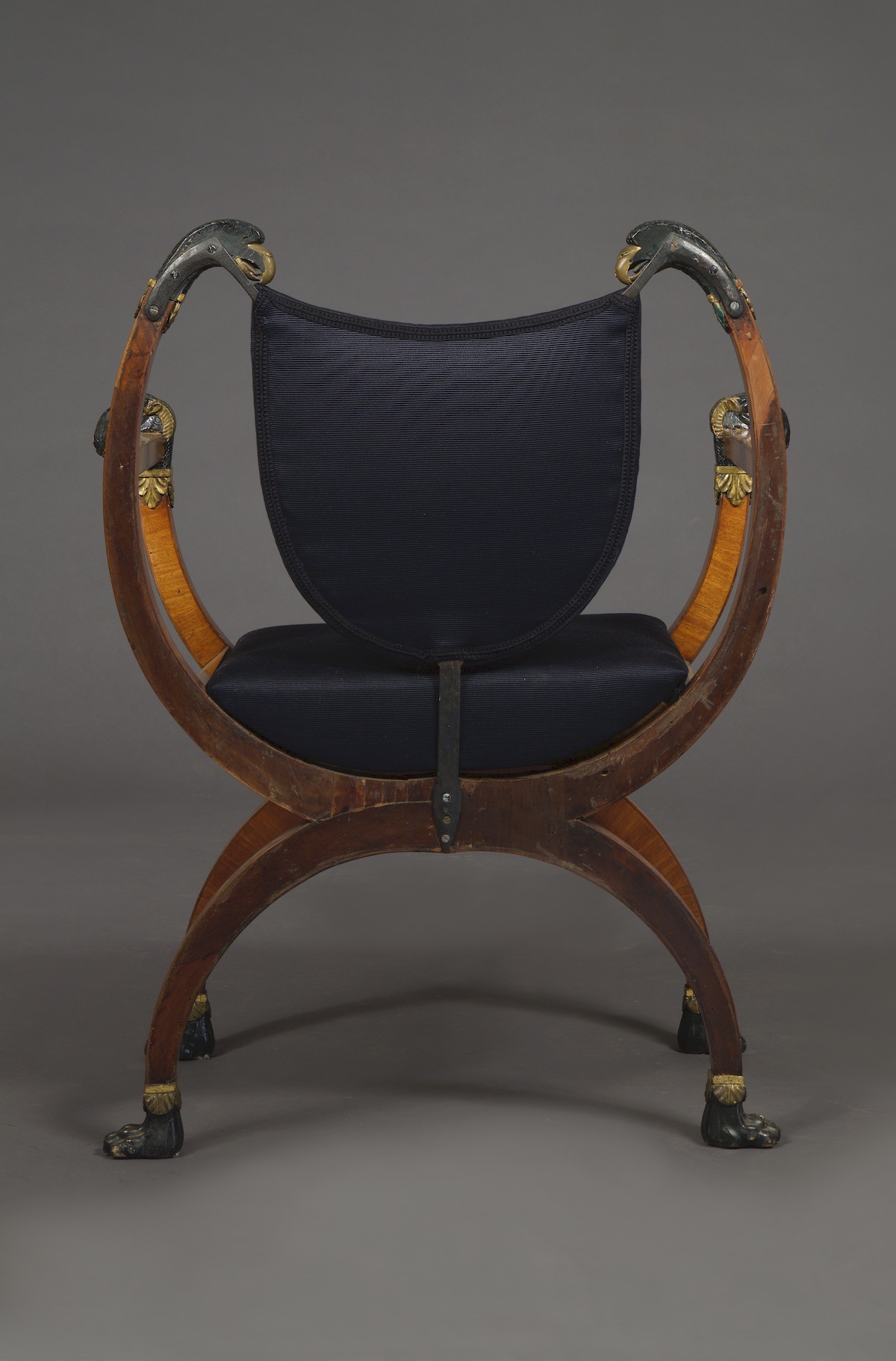
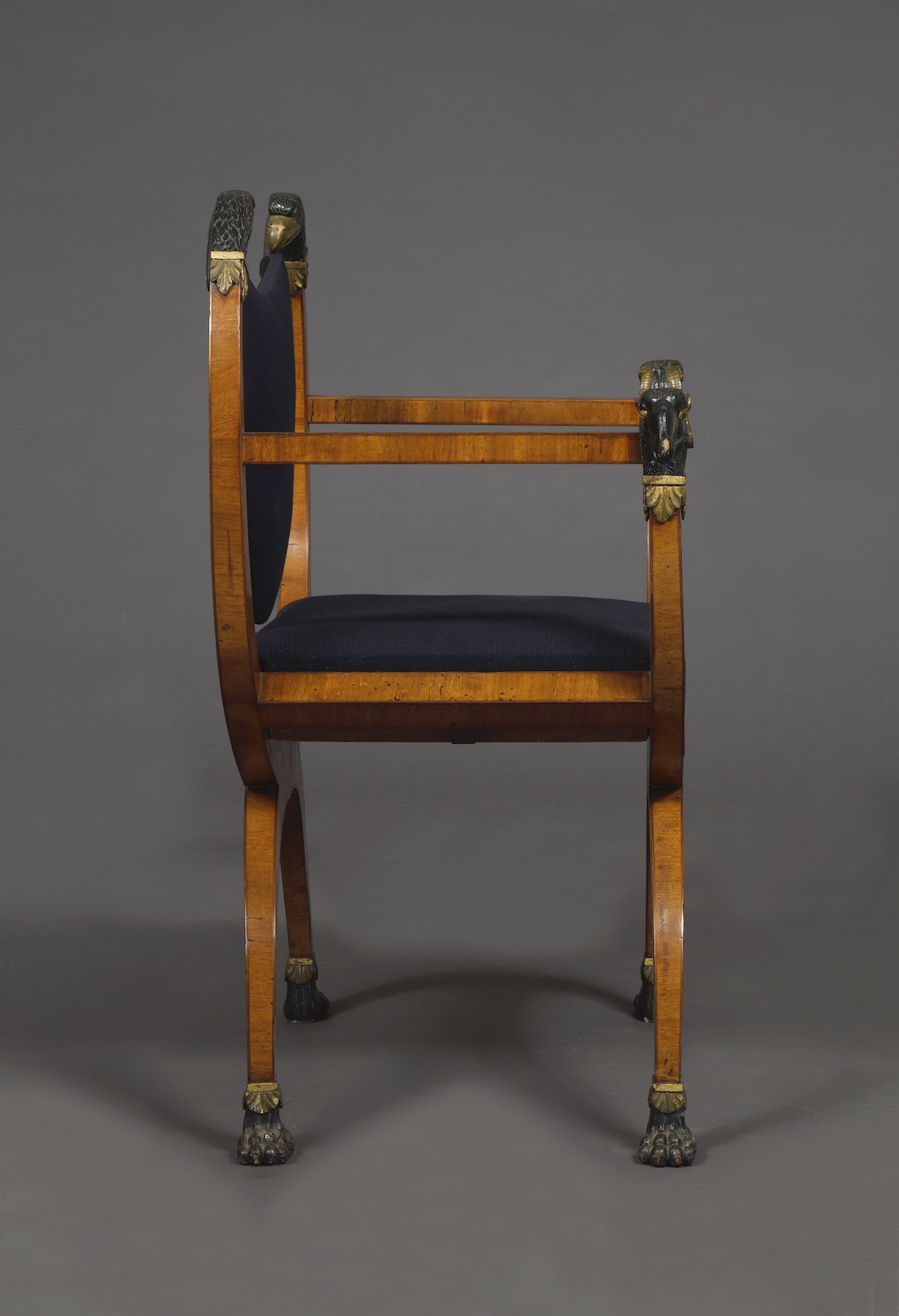
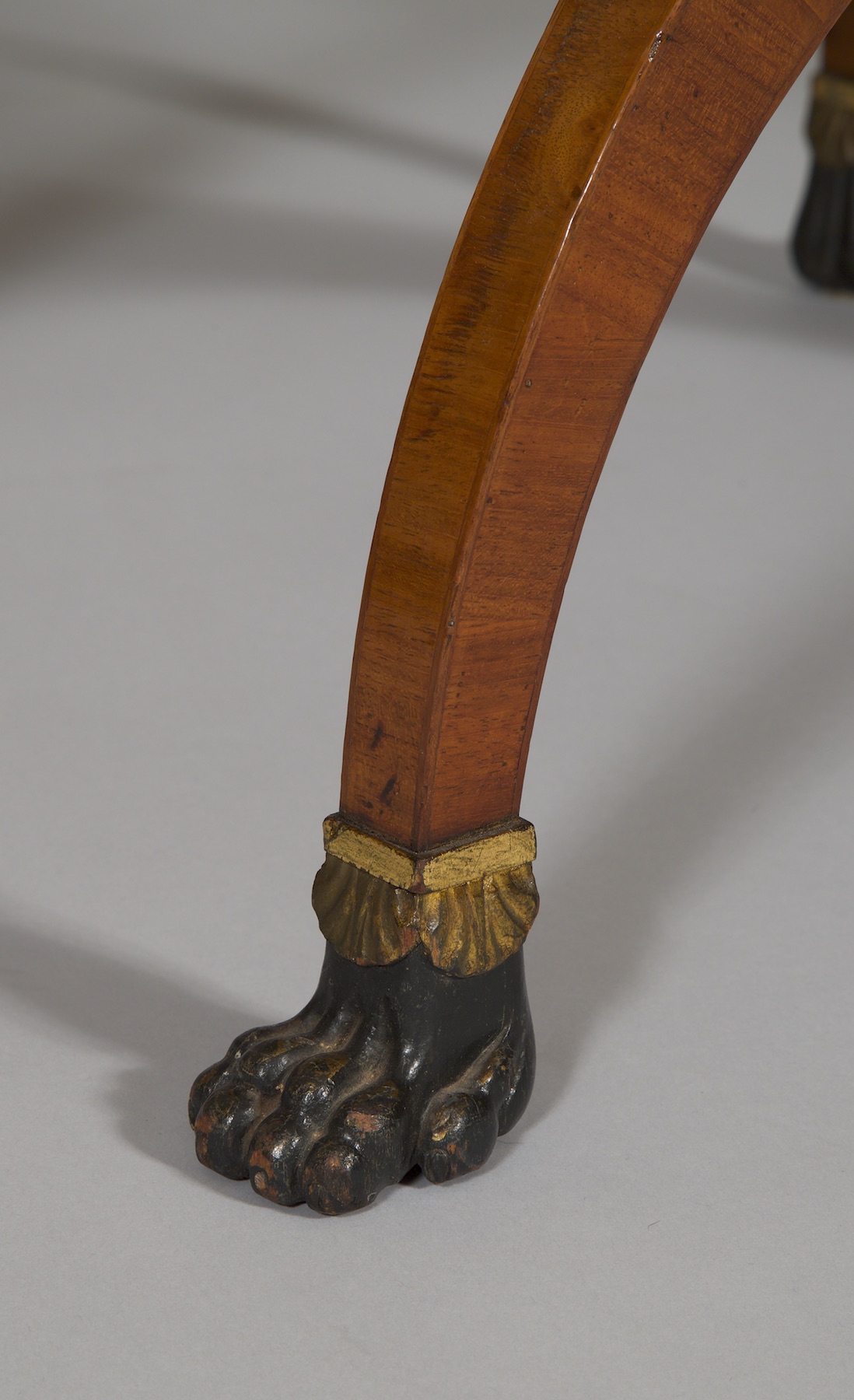
Of crossbanded bois violette(?) veneer with parcel gilt and bronzing. The upholstered U-form backrest suspended from two curved X-form uprights headed by carved eagle head monopodiae and terminating in lions paw feet. The uprights issuing straight armrests joining a conforming curved X-form shaped seat rail with carved rams head handrests, and also terminating in paw feet.
Marks:
One chair with white painted inscriptions to the underside:
F F
10(?)
The other chair with illegible pencil mark to the underside, possibly the number 7.
The present chairs employ a number of features characteristic of the decorative vocabulary of late-eighteenth century Russian painter, designer, and eminent architect, Andrei Voronikhin (1759-1814). Working predominantly in St. Petersburg, Voronikhin was responsible for a great number of highly acclaimed buildings in the Russian Empire and Neoclassical styles such as Kazan Cathedral in St. Petersburg. He employed a variety of motifs after antiquity, taking great artistic freedoms, particularly with seating. His designs for furniture, many of which were executed by the leading court cabinetmaker Heinrich Gambs, relied “heavily on decorative elements which assume almost a curiosity value”1 and included the uses of carved, ebonized, and gilded woods.
The design of the back of the present chairs gives the impression of an emblazoned heraldic cartouche suspended as if a banner from the two eagle’s head beaks. It is, therefore, possible that the original fabric back bore a coat of arms. Furthermore, the chairs were designed to be seen only against a wall, as the rear sides are not veneered. It is an idea that is mainly confined to England that a series of chairs with armorial decorated backs lined the walls of great entrance galleries in noble stately houses, and it is quite likely that the present chairs served a similar function. English design ideas were much in vogue in Russia during the second half of the eighteenth century, in no small part driven by the influence of Catherine the Great’s Scottish architect, Charles Cameron.
Full research report available on request.