





Research:
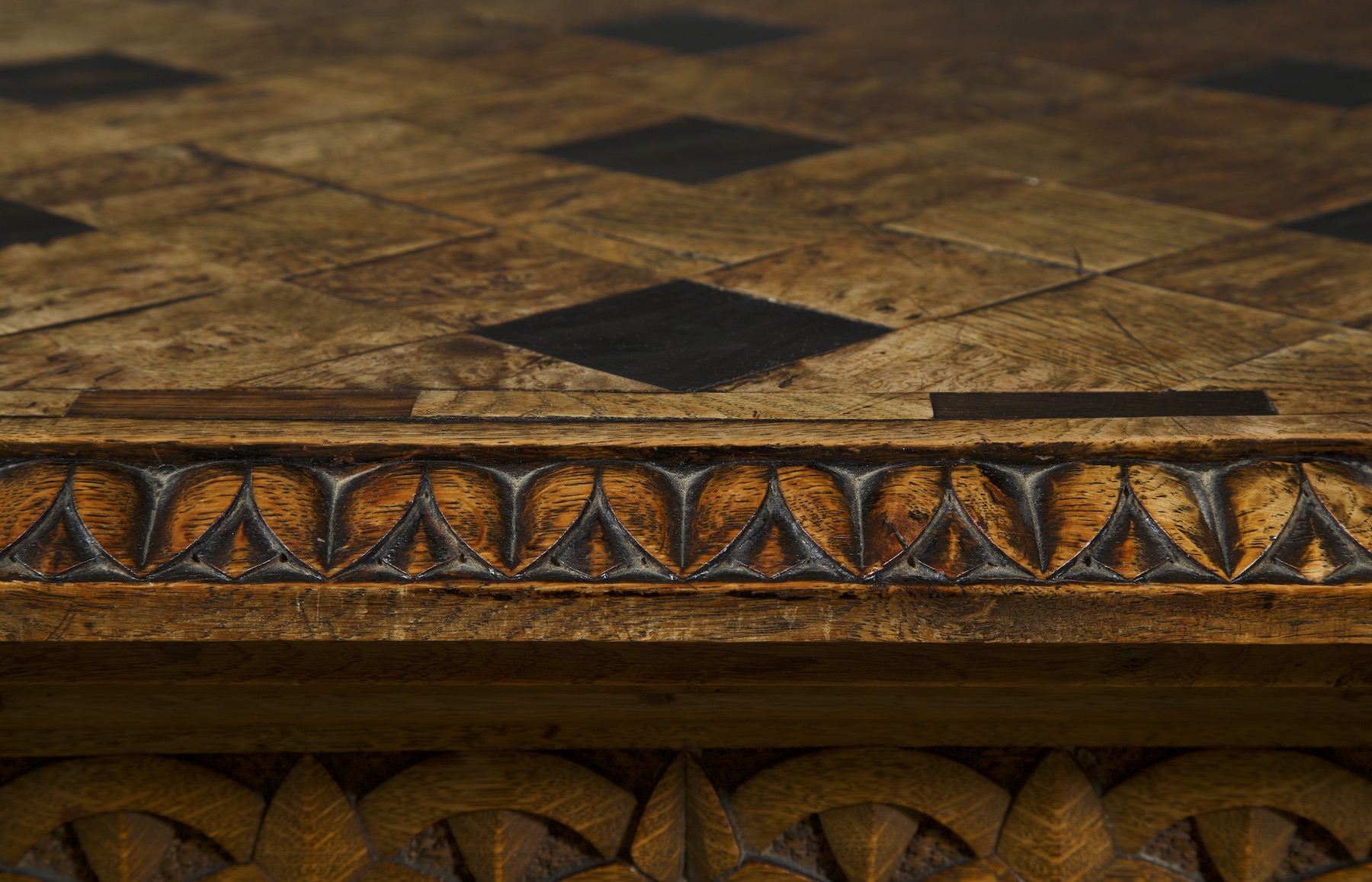
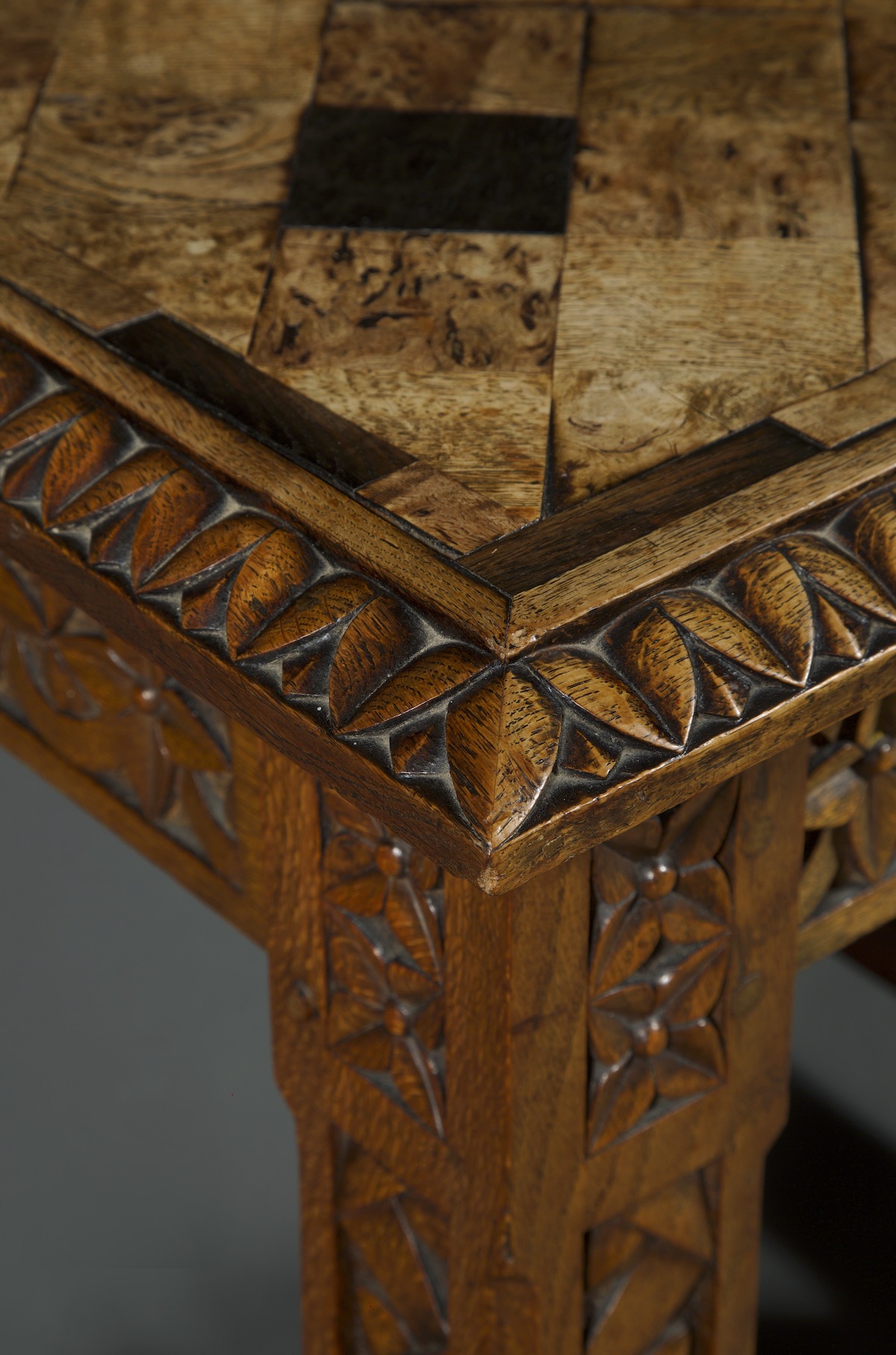
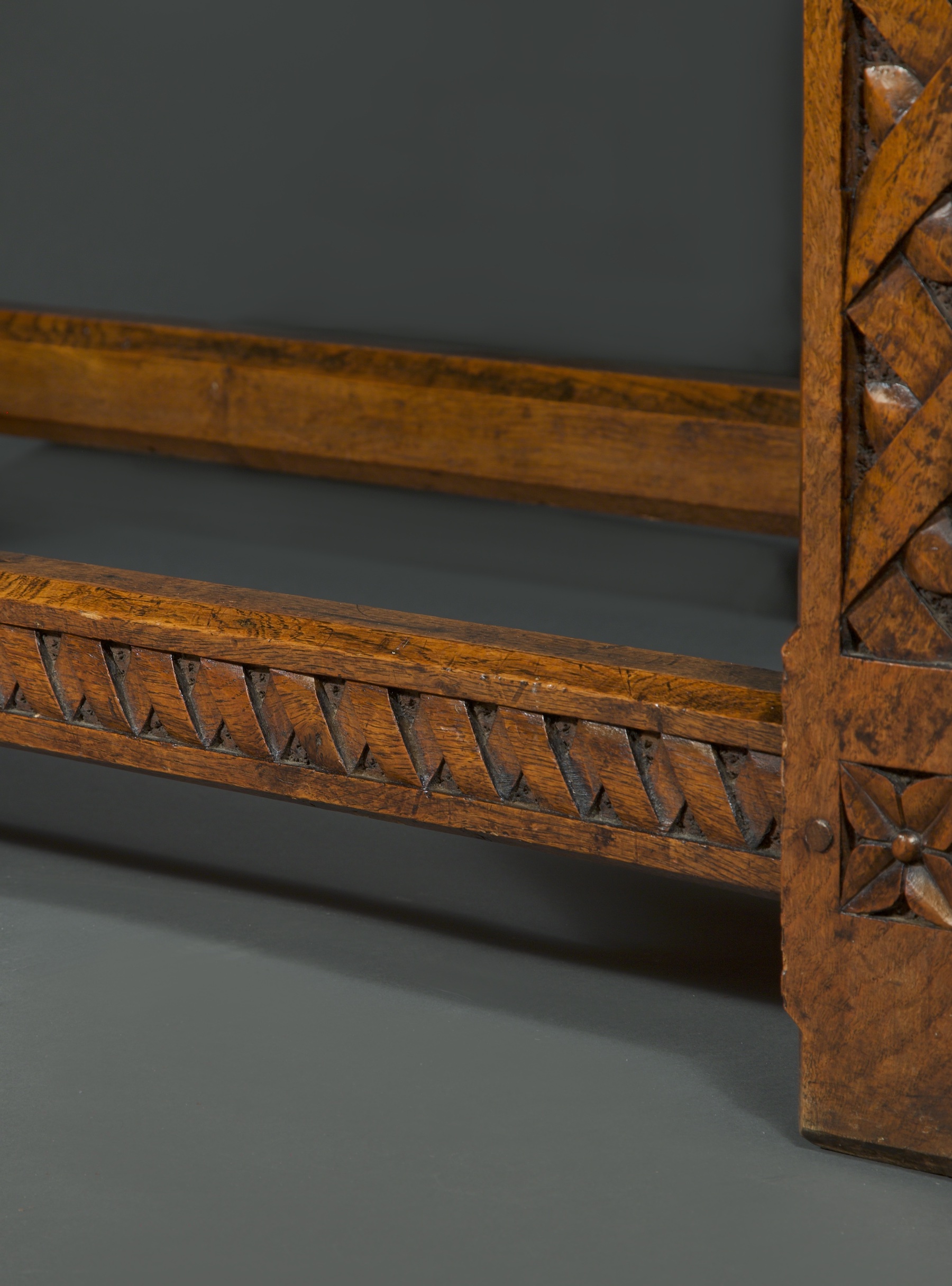
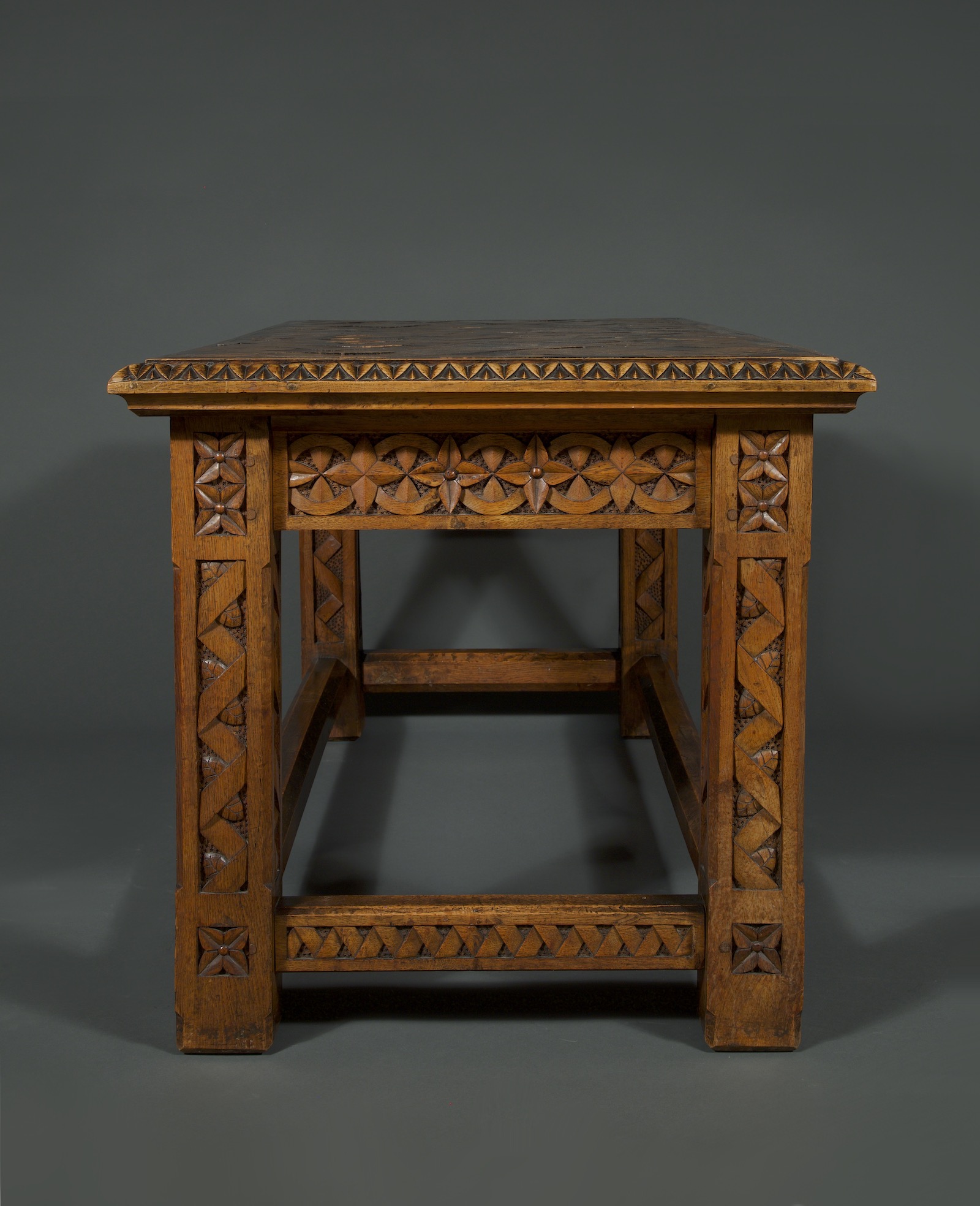
Of oak. Each with rectangular top inlaid in a lozenge pattern enclosed by a leaf and dart molding, the frieze with repeating circle and dog tooth’s pattern raised on four rectangular legs with carved ribbon pattern. One table with drawer. Slight differences in carvings. The two tables with small construction differences. With paired flower head paterae at the top and bottom, the legs connected by a box stretcher with outer ribbon pattern carving.
This pair of tables dating from the Arts and Crafts period is an accomplished exercise in the use of oak in nineteenth century furniture. To achieve sculpted precision in this material requires a carver of consummate technical and artistic ability; the wood’s coarse grain and very hard inclusions, known as medullary rays, render oak as one of the most challenging of all the woods a carver can work.
Of the numerous revival styles which existed in the nineteenth century, the Gothic was to thrive over an extended period and established the close relationship between architecture and the Arts and Crafts Movement, which “insisted on the correct use of authentic medieval ornament and design, honesty in construction and truth to materials.”
Full research available on request.