
Research
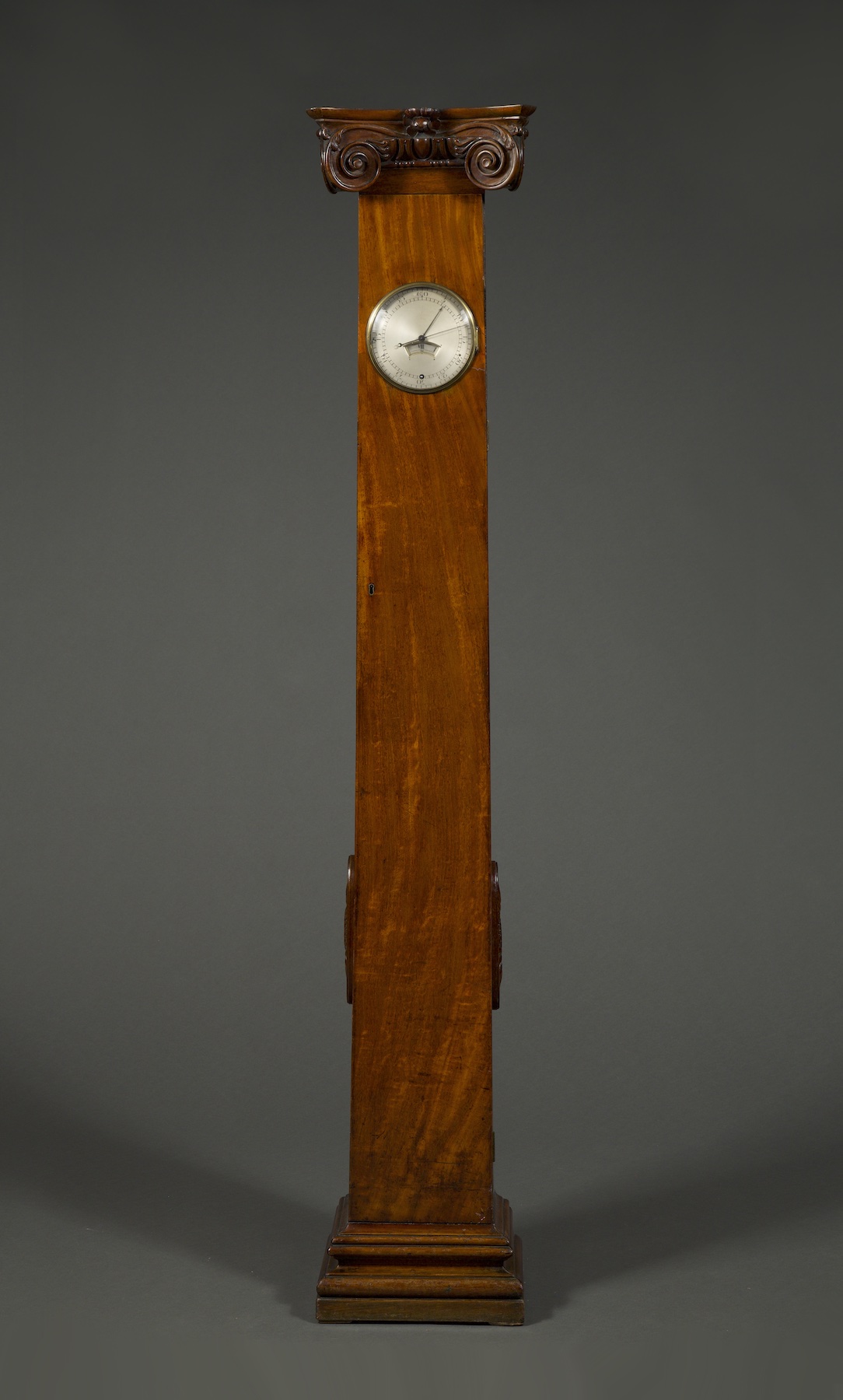
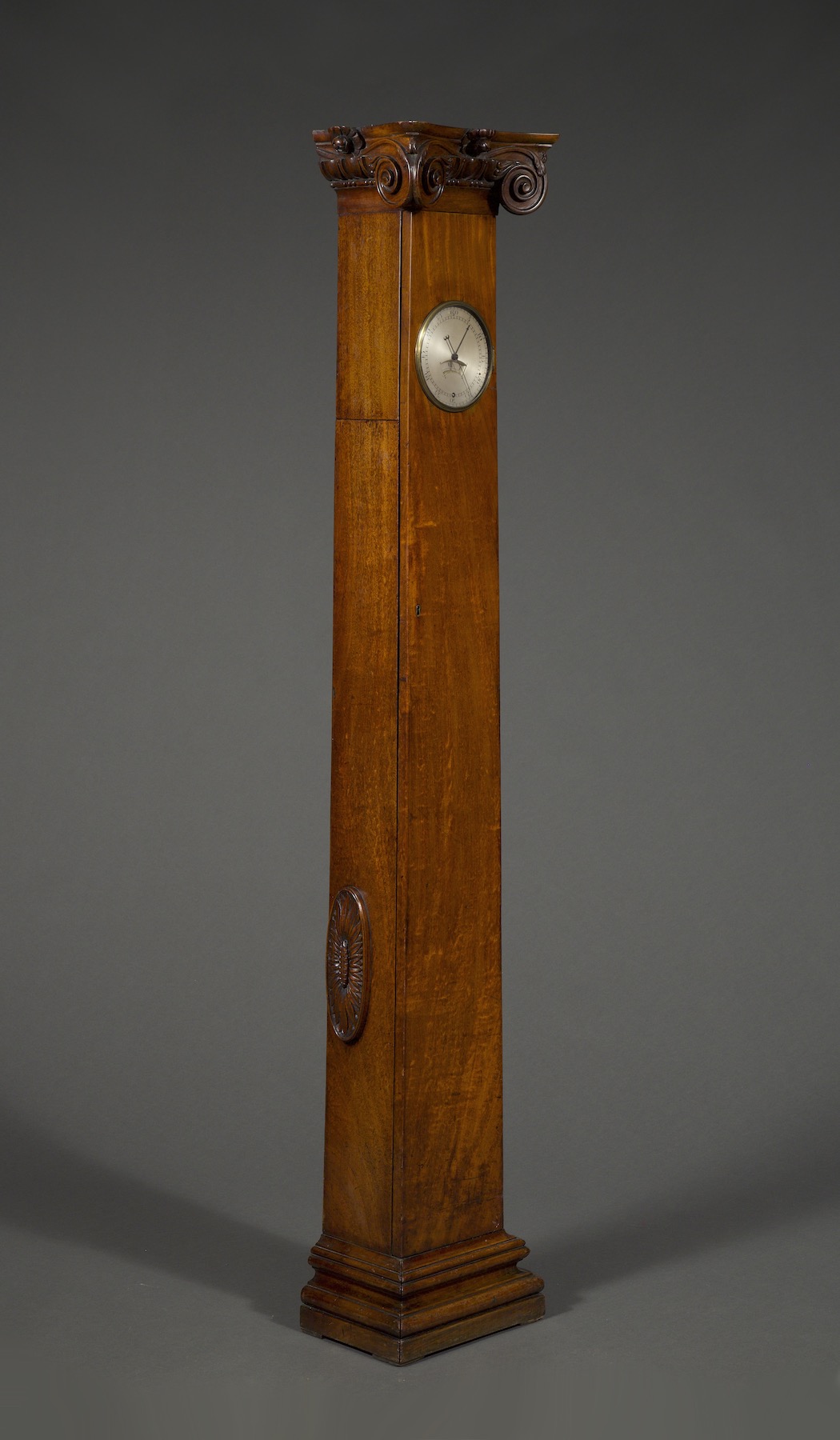
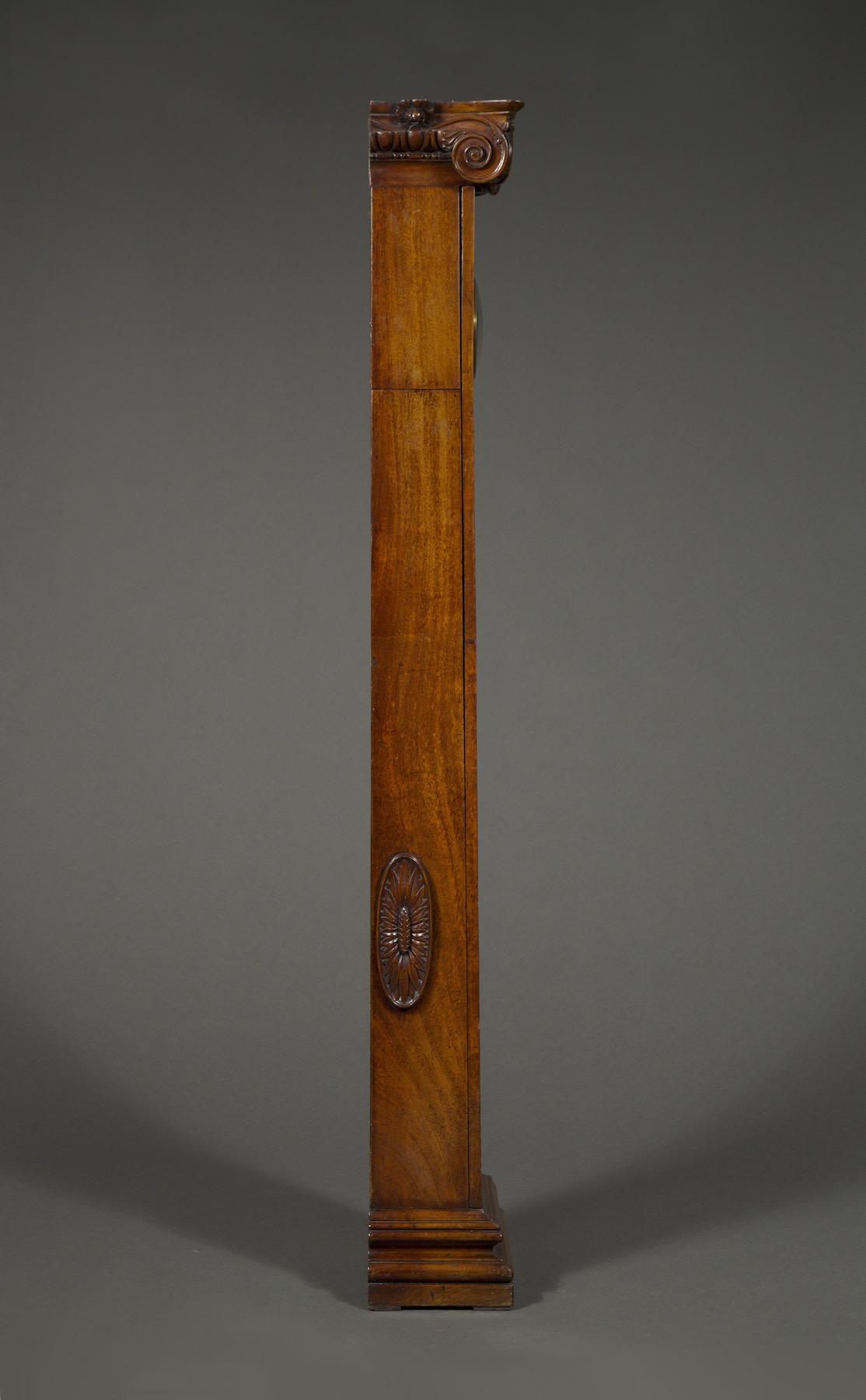
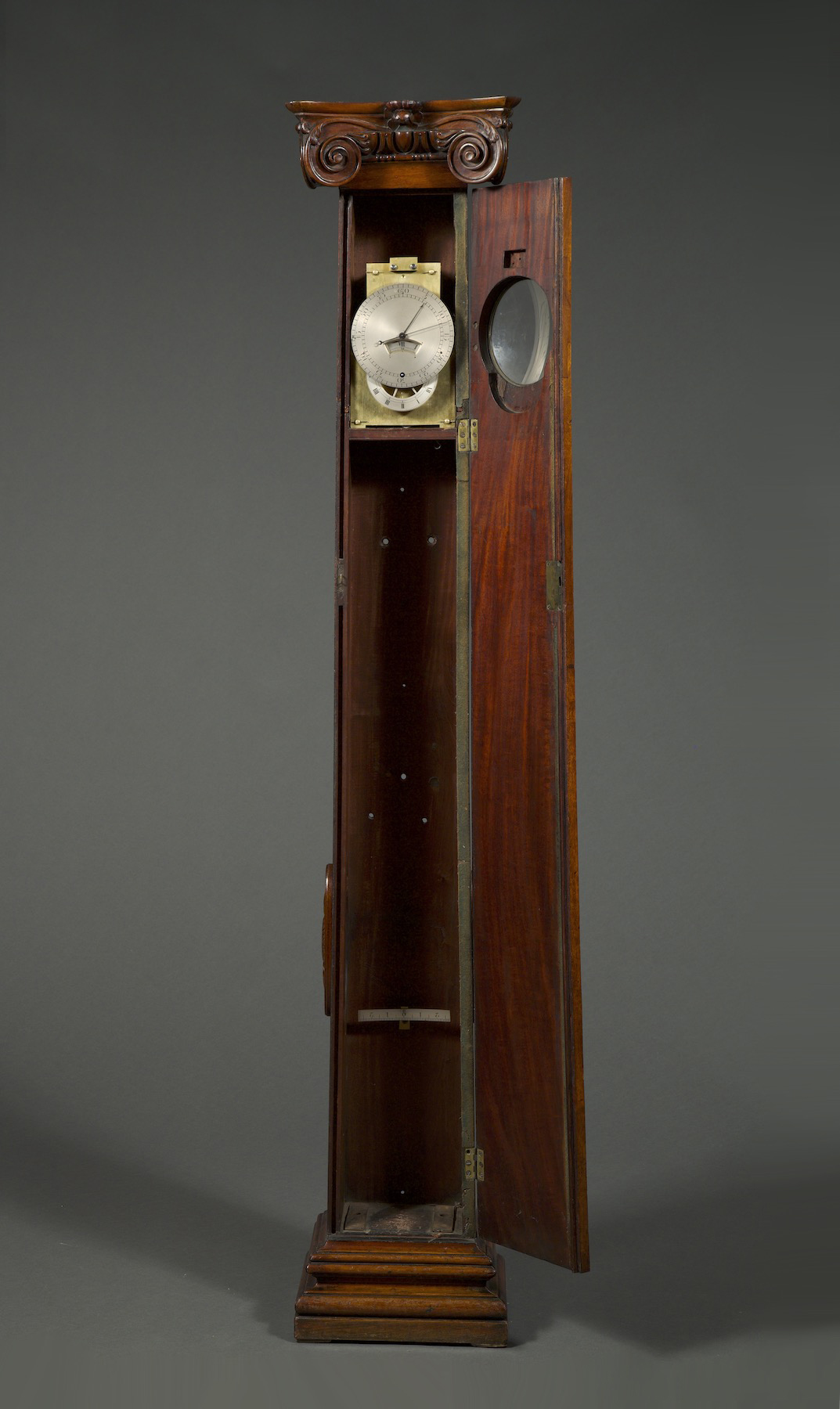
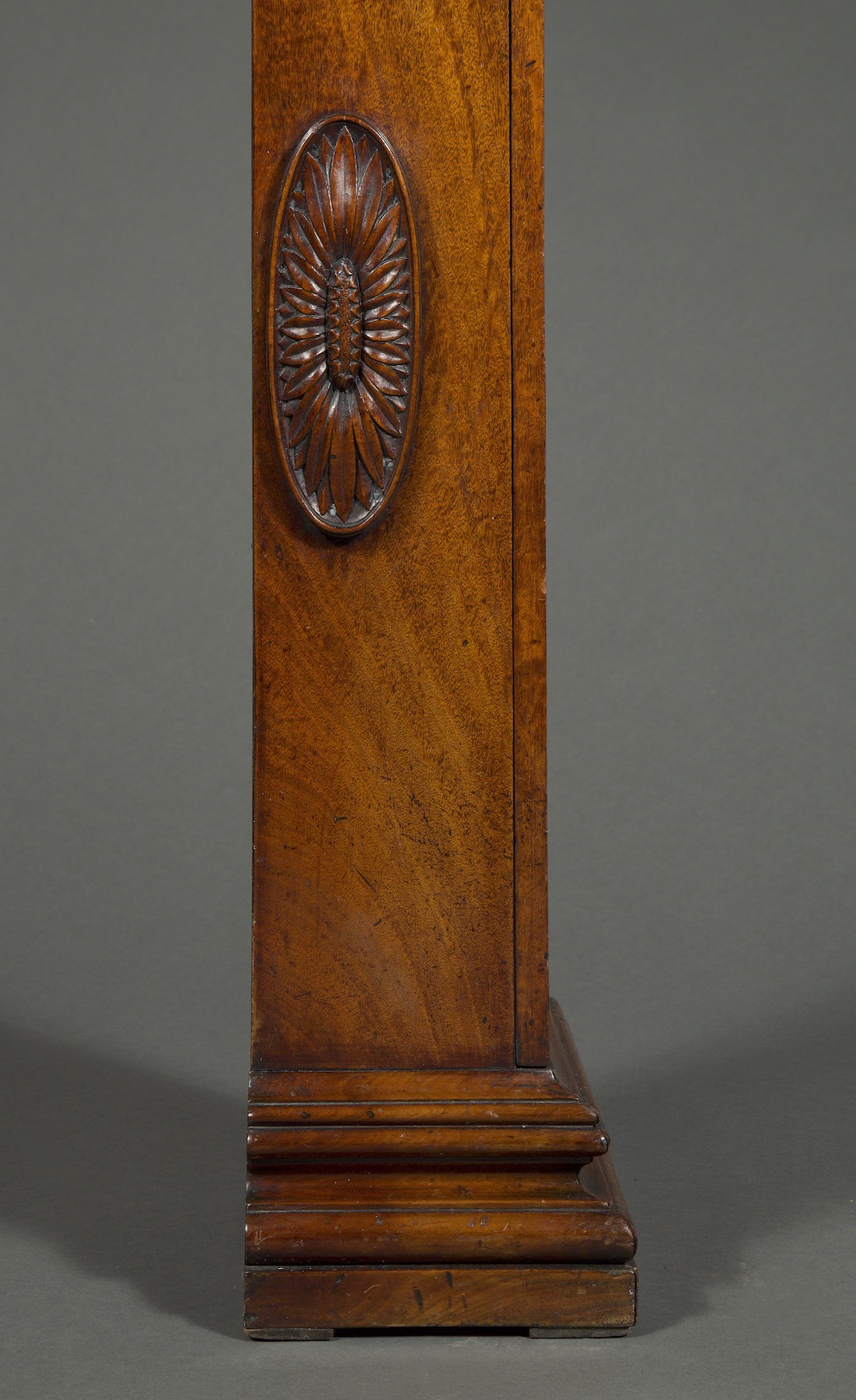
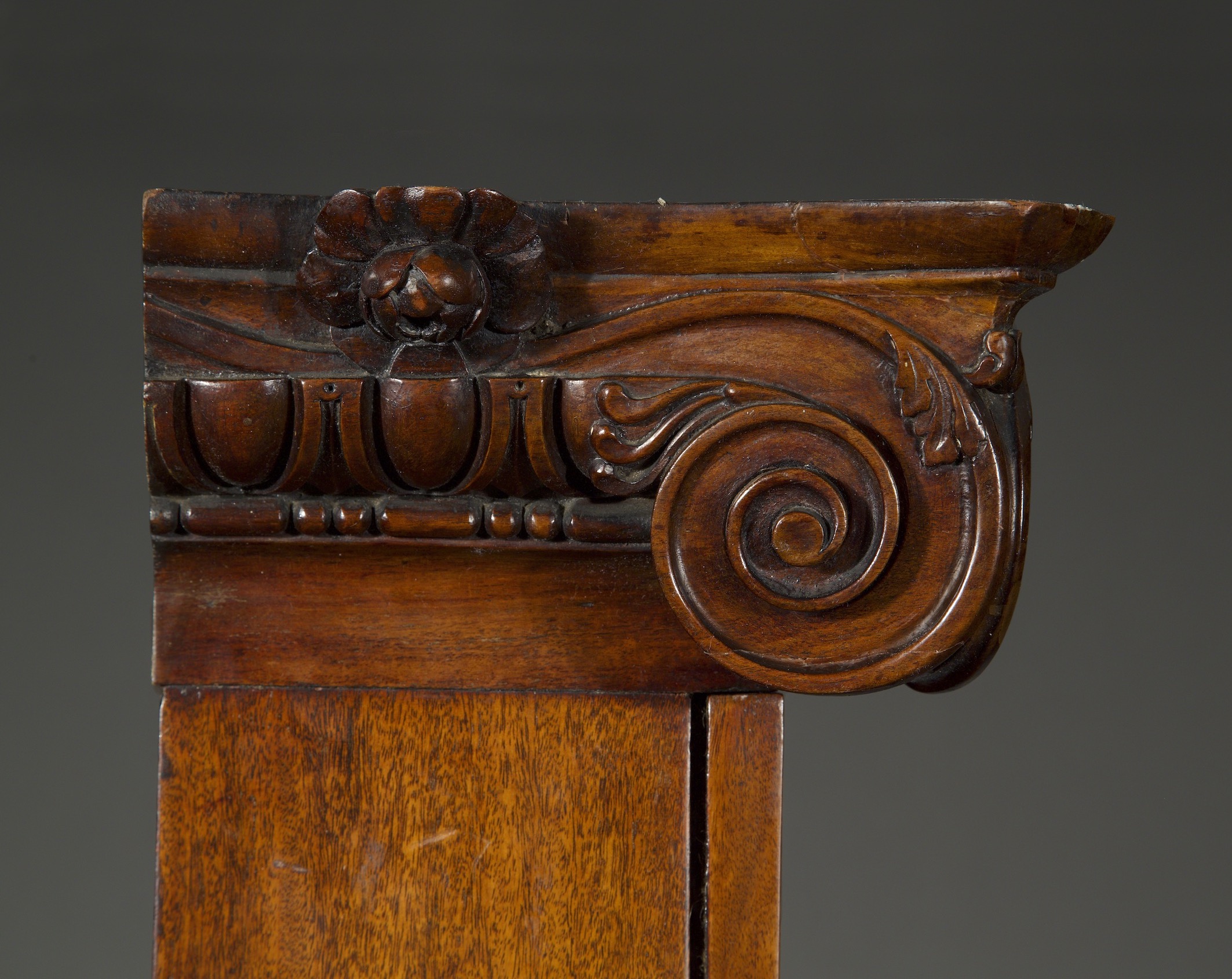
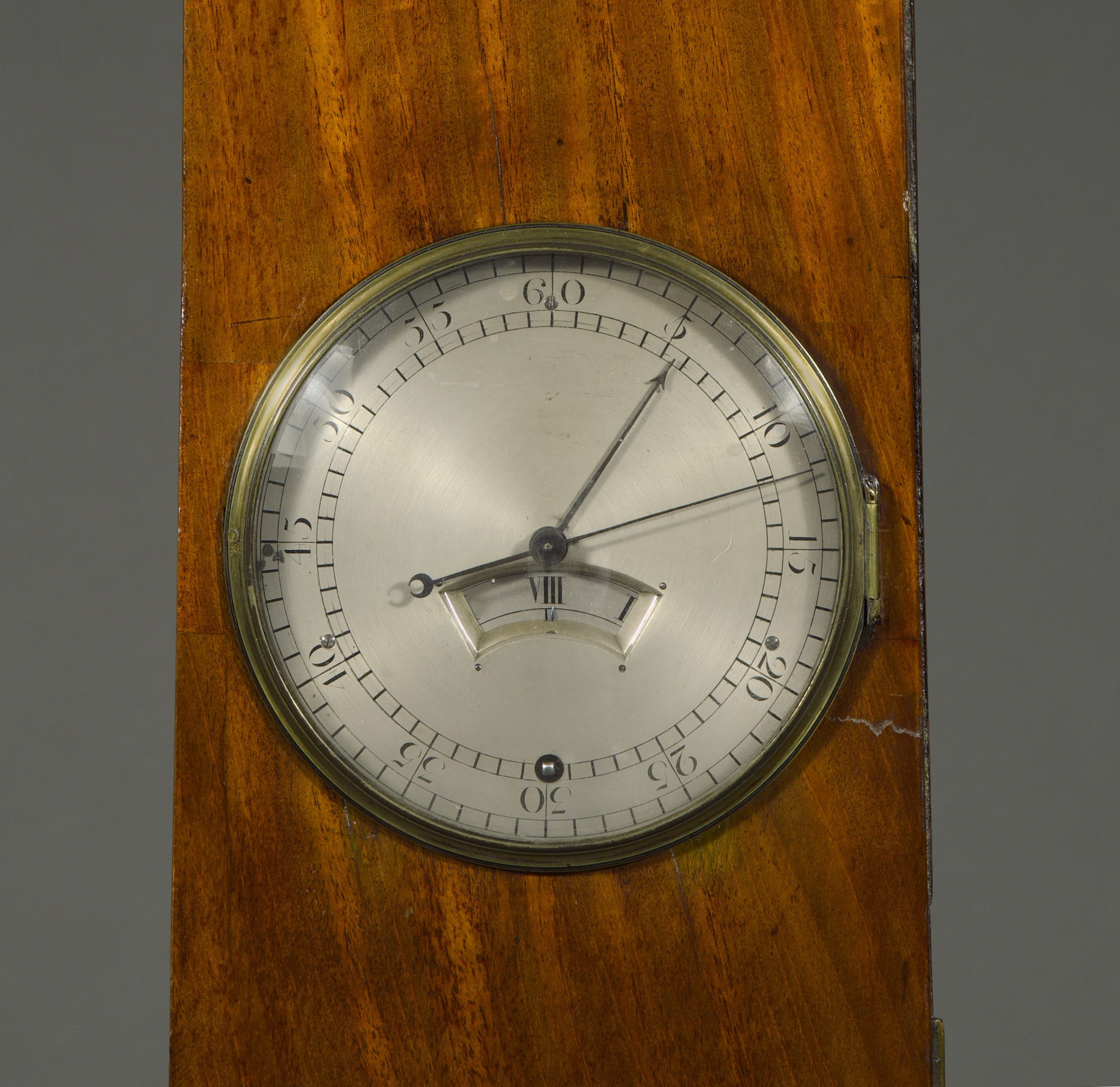
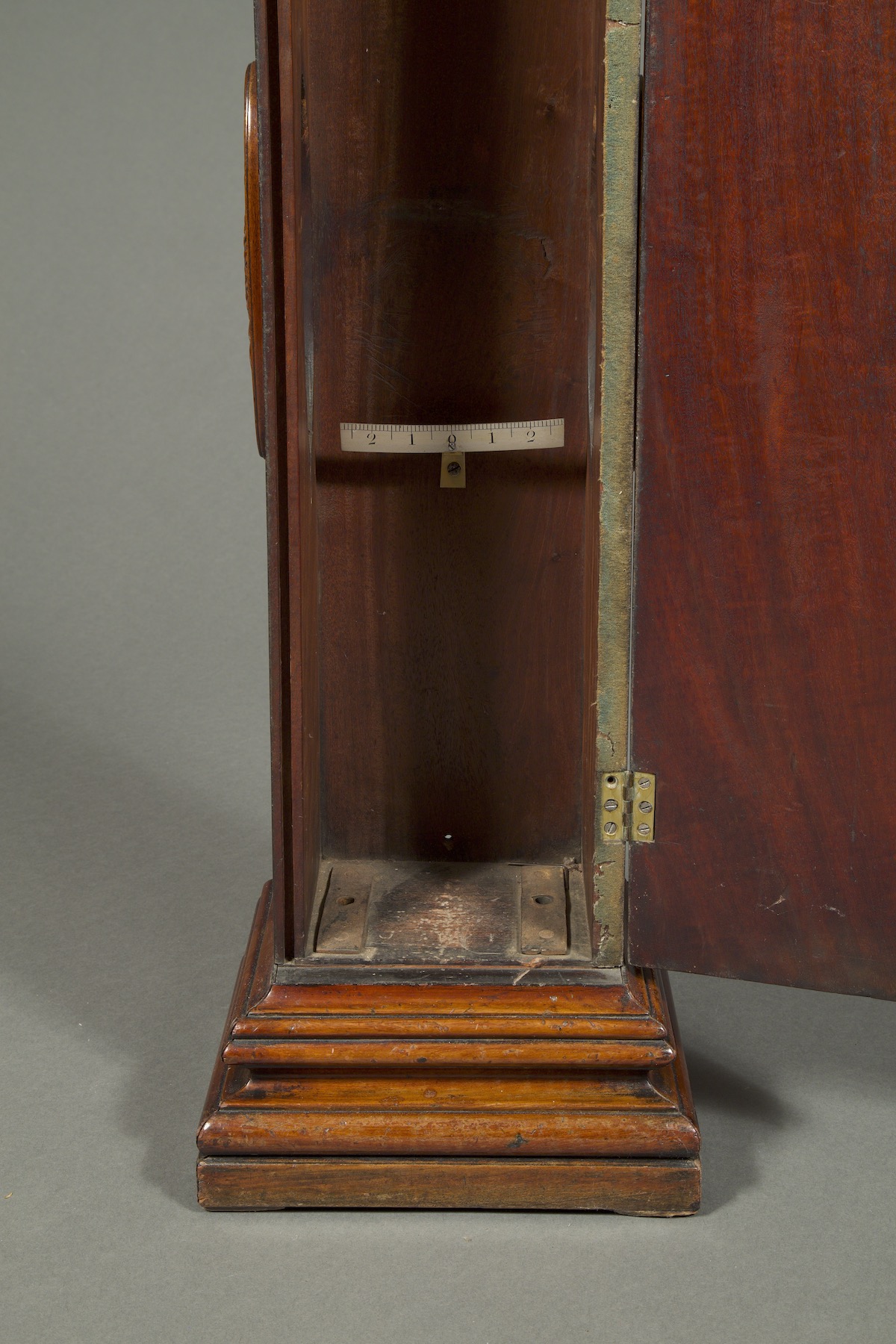
Of solid mahogany. The molded plinth supports a plain tapering case with carved oval paterae to the sides. The plain front with single door, with very careful old repair, mounted at top with circular domed glazed hinged aperture door with molded brass bezel enclosing the silvered clock face and movement. The whole surmounted by a carved ionique moderne capital. Within the case can be observed screw hole insertions to the backboard and base to attach the case to the wall. Very old thinning out to sides of hood, indicating a larger movement may have been anticipated. A faint line to backboard may infer another movement was initially placed in the case. It is probable that the Thwaites movement was an upgrade at the time of manufacture of this piece. Thwaites’ highest precision regulator movement required the clock be rigidly fixed to the wall, to be perfectly level and protected from any vibration. Pendulum and weights to be replaced.
Marks:
Thwaites 1118
Provenance:
Jeremy Ltd., King’s Road, London, 1984.
A New York Collection.
Published:
Grosvenor House Antiques Fair, 1984 Handbook, Jeremy Ltd., 255 King’s Road, Chelsea, London SW3, pg. 114.
The case of the present regulator clock is fashioned, most unusually, in the form of an Ionic column, with carved scrolling, egg-and-dart and beaded molding, and a central rosette to the front and sides. It is made of finely figured mahogany, which, in the eighteenth century was considered “the chief of furniture woods” by cabinetmakers and highly-prized “for its beautiful reddish brown color, exquisite figuring, natural luster, and strength.” Its large size and density made it ideal for casework and carving, both of which feature in the present regulator.
The case of the clock is a particularly beautiful and pure conception of Early English Neoclassiscm. The designer of this case has clearly striven to condense its finely-drawn architectural proportions to the maximum slimness. With this in mind, he has introduced carved oval paterae to the lower sides. At first glance, they are observed as interesting Neoclassical adornments. However, they actually serve an important function in as much as the carved applications are hollowed out from within to allow for the necessary space for the bob of the pendulum to swing, accommodated within the slim overall proportion of the clock’s body.
The clock movement is stamped THWAITES and 1118. According to the historical records of Thwaites & Reed Clockmakers Ltd, who still trade today, the movement model number corresponds to the year 1783. The firm found this present piece to be: “an exceptional floor mounted regulator with the highest quality movement.”
Full research report available on request.