
Research
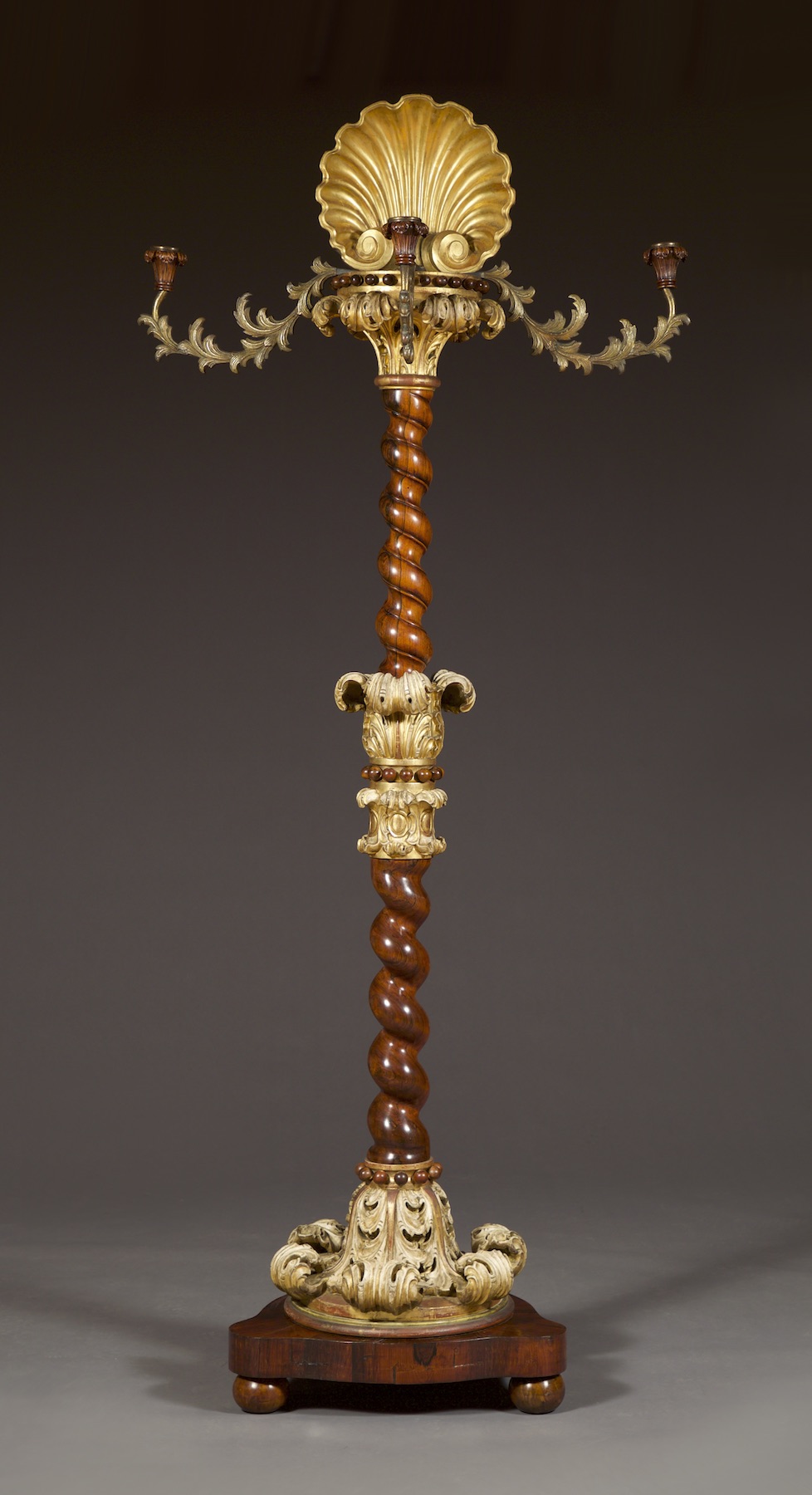
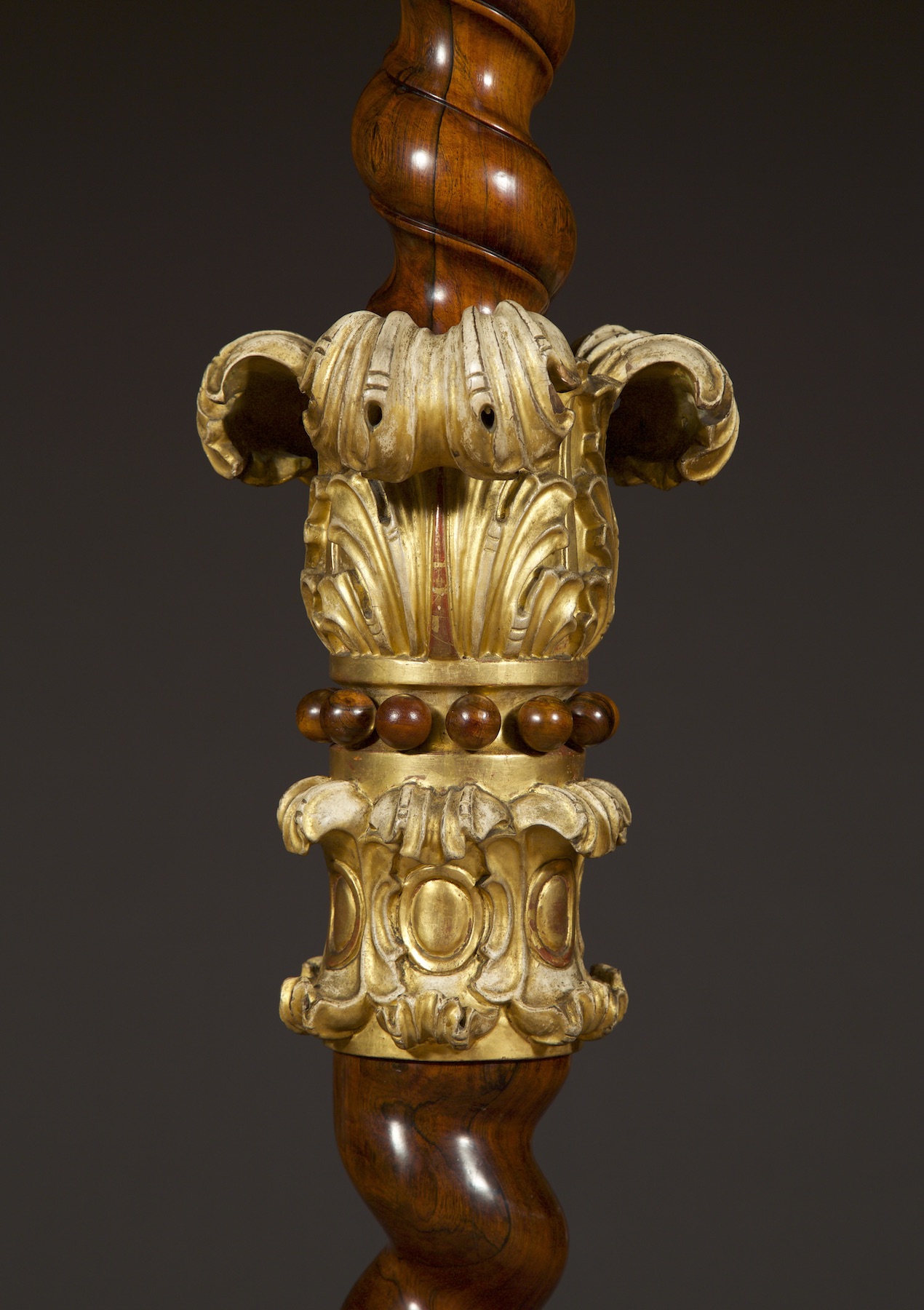
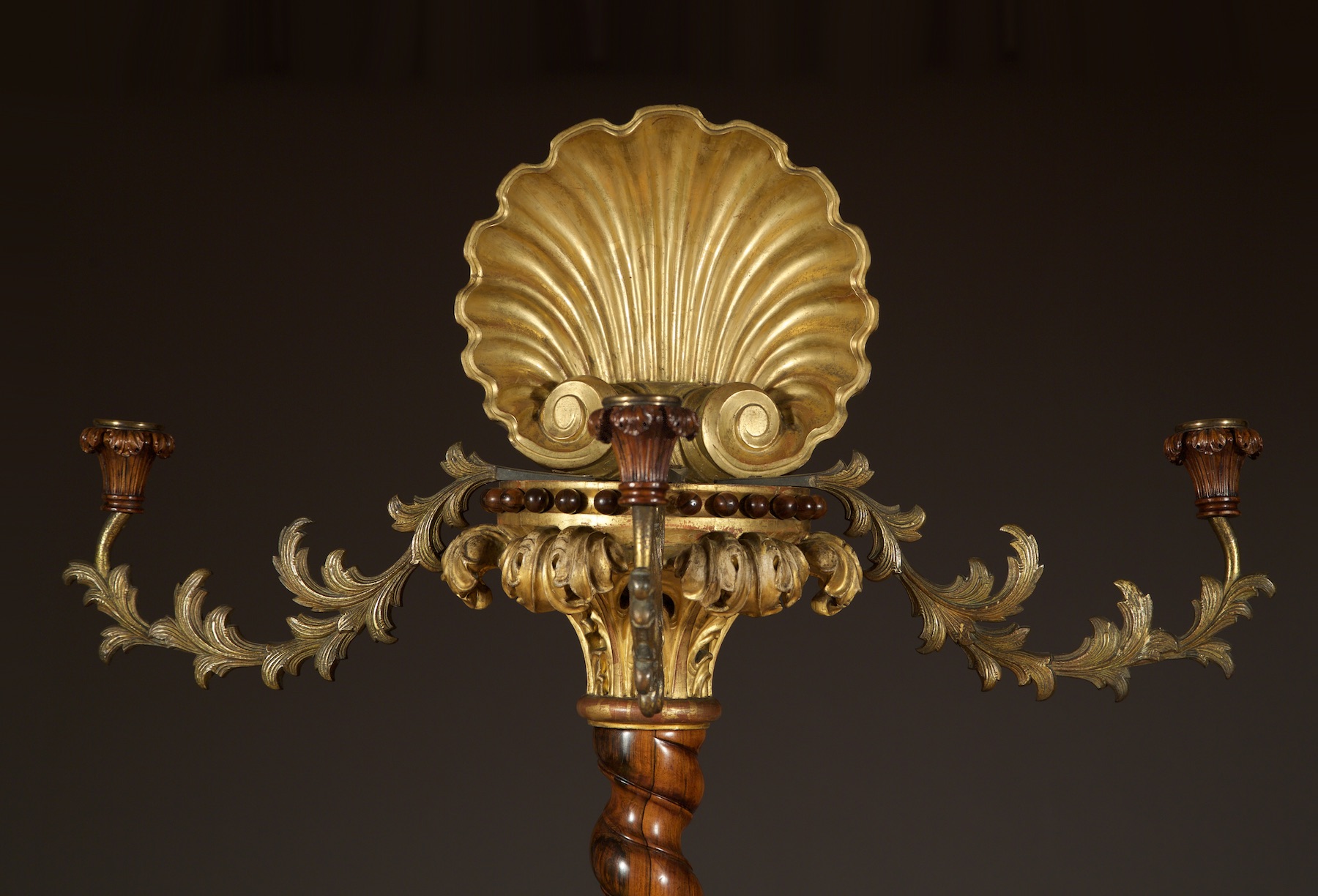
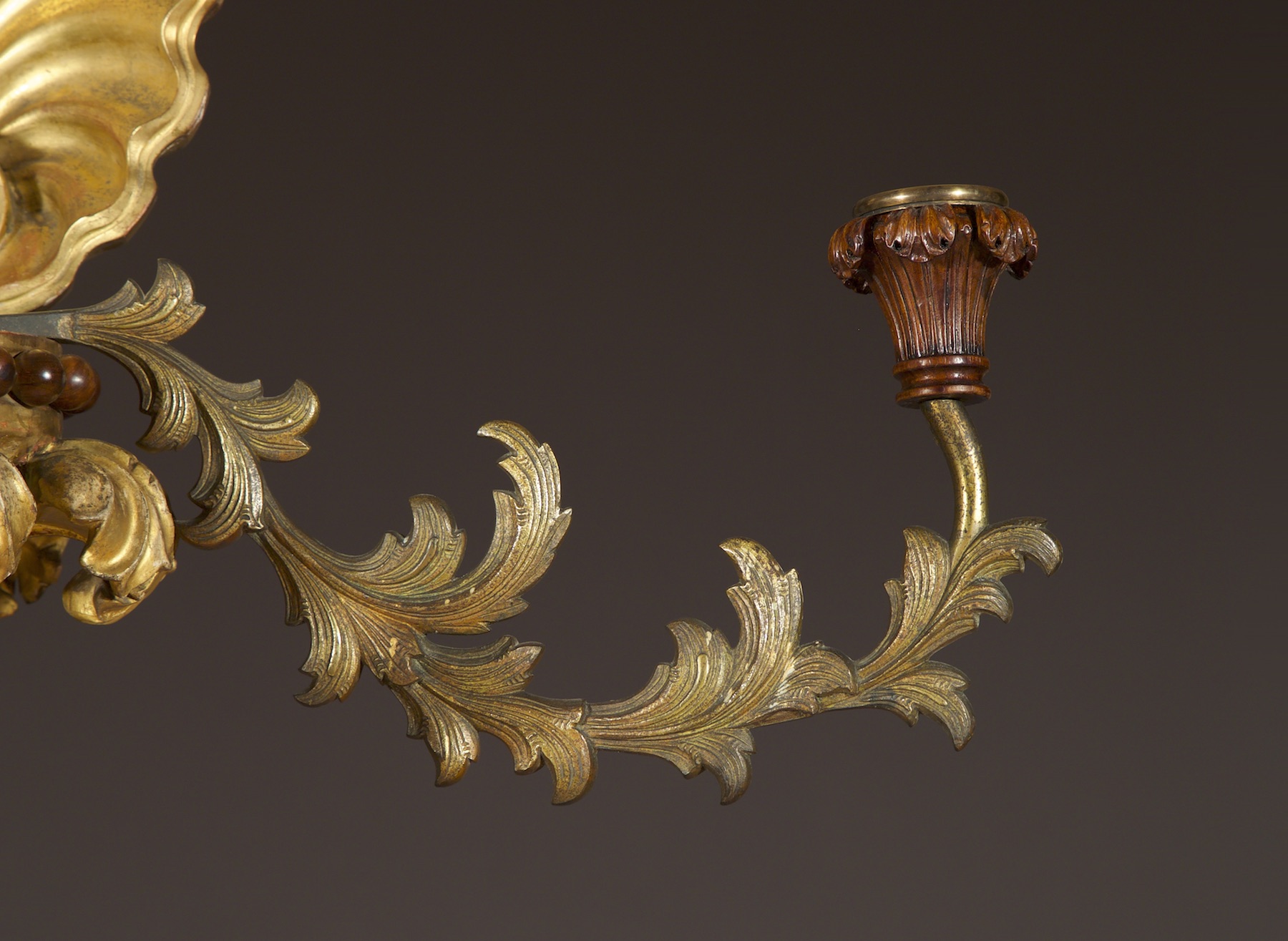
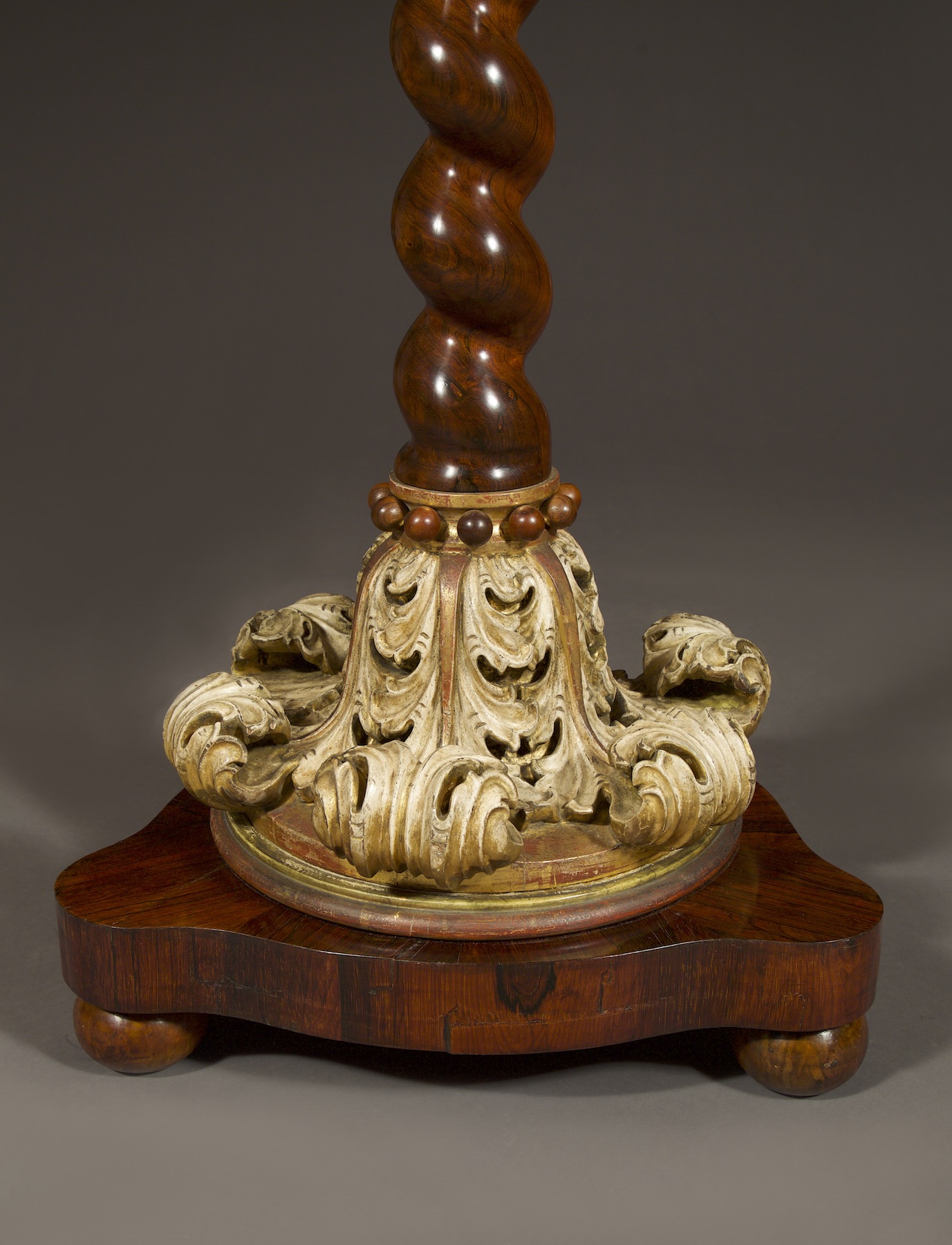
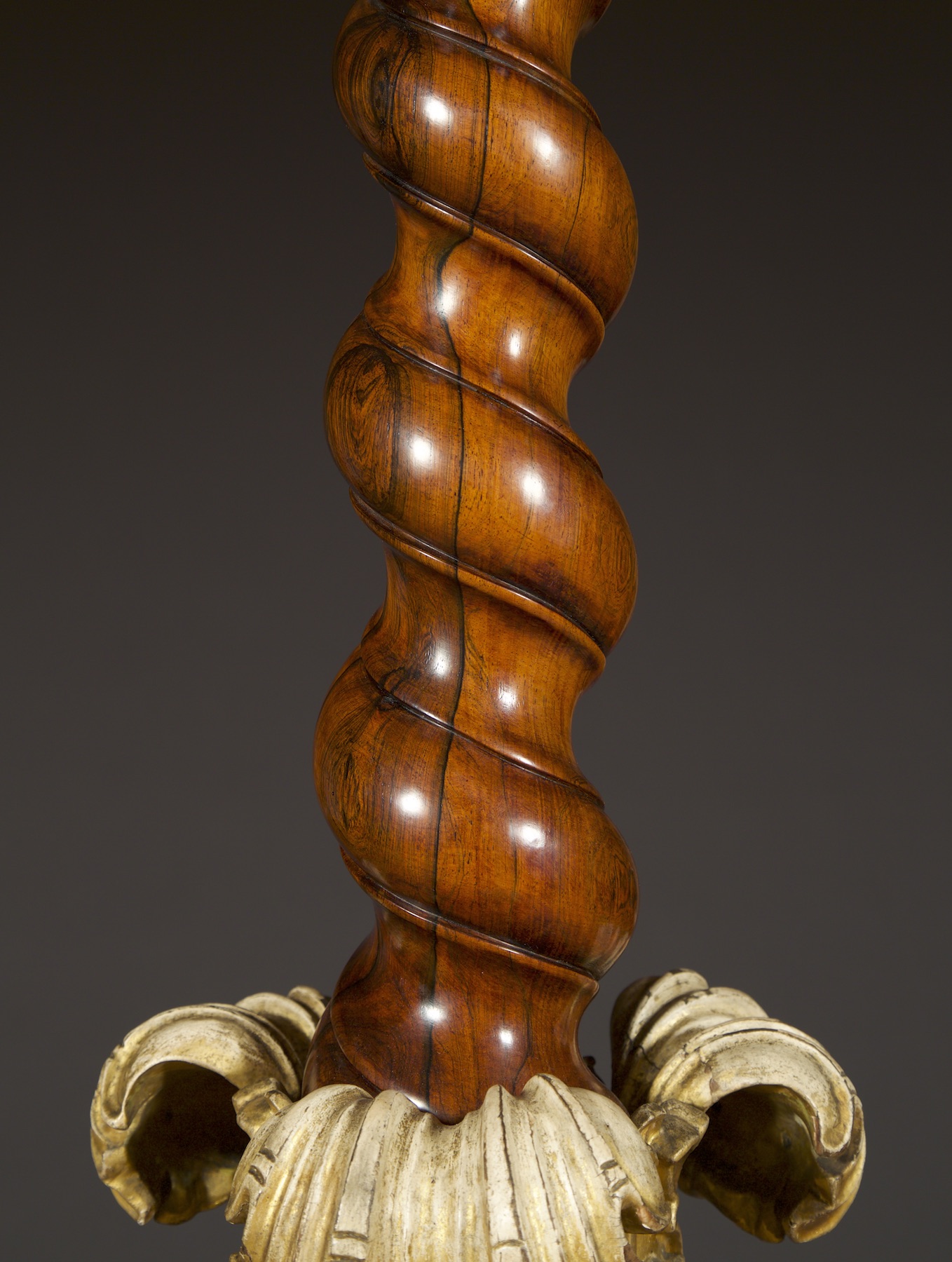
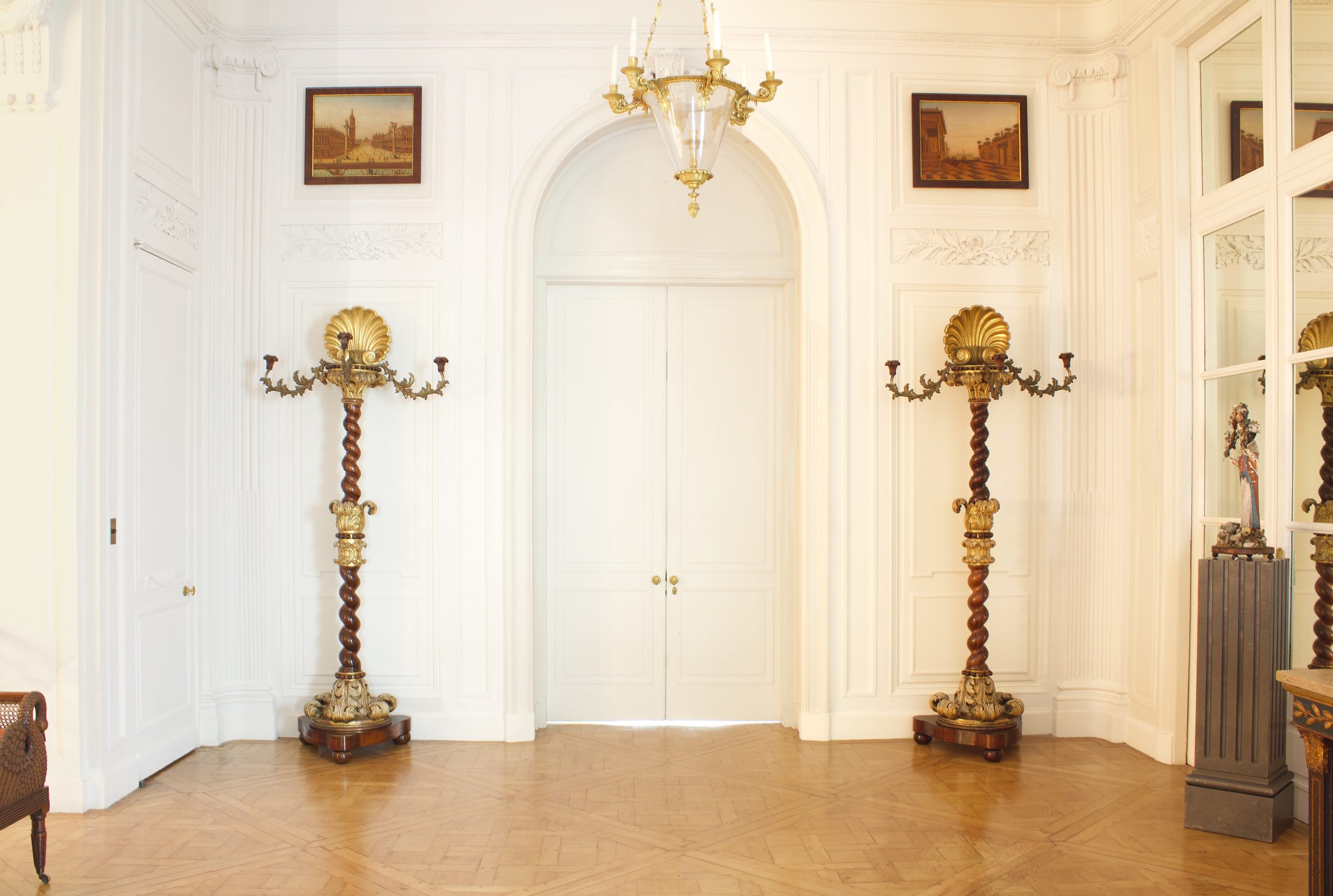
Of rosewood, giltwood and gilt brass. Each with a carved giltwood shell mounted plateau with rosewood beaded frieze resting on a ring of acanthus leaves from which issues three brass foliate candlearms terminating in foliate rosewood candleholders, supported on turned rosewood shafts centered by a conforming foliate and beaded collar, above an outswept giltwood acanthine foot on a tripod plinth and raised on three bun feet. Minor old restorations.
Marks:
Each marked with a black stenciled inventory mark:
628 II’ KE’ [state property]
UDGÅET [deaccessioned]
and the label:
Det Danske Kongehus Løsørefideikommis, nr. 4 [the Danish Royal Property Trust, no 4.]
Provenance:
Probably King Karl XV of Sweden
Danish Royal Collection
This impressive pair of spiral-turned floor standing candelabra, of unprecedented scale and exceptional quality, was formerly part of the Danish Royal Collection, having been most likely presented as a gift made by King Karl XV of Sweden (1826-1872) to Frederik VII of Denmark (1808 – 1863). According to the “Testamentary Dispositions of Her Majesty Queen Mother Louise” held at the National Archives in Copenhagen, the shafts of the present torchères were “turned by King Karl XV, while residing at Bäckaskog Castle,” where he stayed every summer from 1845 until his death. Queen Louise established the Danish Royal Furniture Trust in 1910 in order to preserve “Valuables Items of Special Family Historical Value.” Queen Louise was the daughter of king Karl XV of Sweden and wife of King Frederik VIII of Denmark.
The highly inventive style of these torchères, combined with their monumental scale appears to have no known parallel in nineteenth century European furniture design. Their design is partly inspired by the Solominic turned sections found in the furnishings of the seventeenth century, while the bold foliate carving to the base of each shaft is redolent of “chou fleur” leaf patterns found on North European late Gothic tapestry. The central carved element of the shaft has references to early Rococo ‘C’ scroll and cabochon designs. The gilt-brass candlearms follow a naturalistic scrolling pattern. The placement of a boldly carved scallop shell surmount in parallel with the candle arms was surely positioned to cause a dramatic effect by the candle light on the shell’s burnished surfaces. The use in particular of the undulating scallop shell was likely deliberate as one of the scallop’s numerous symbolic meanings is as a symbol of light.
Full research report available on request.