
Research
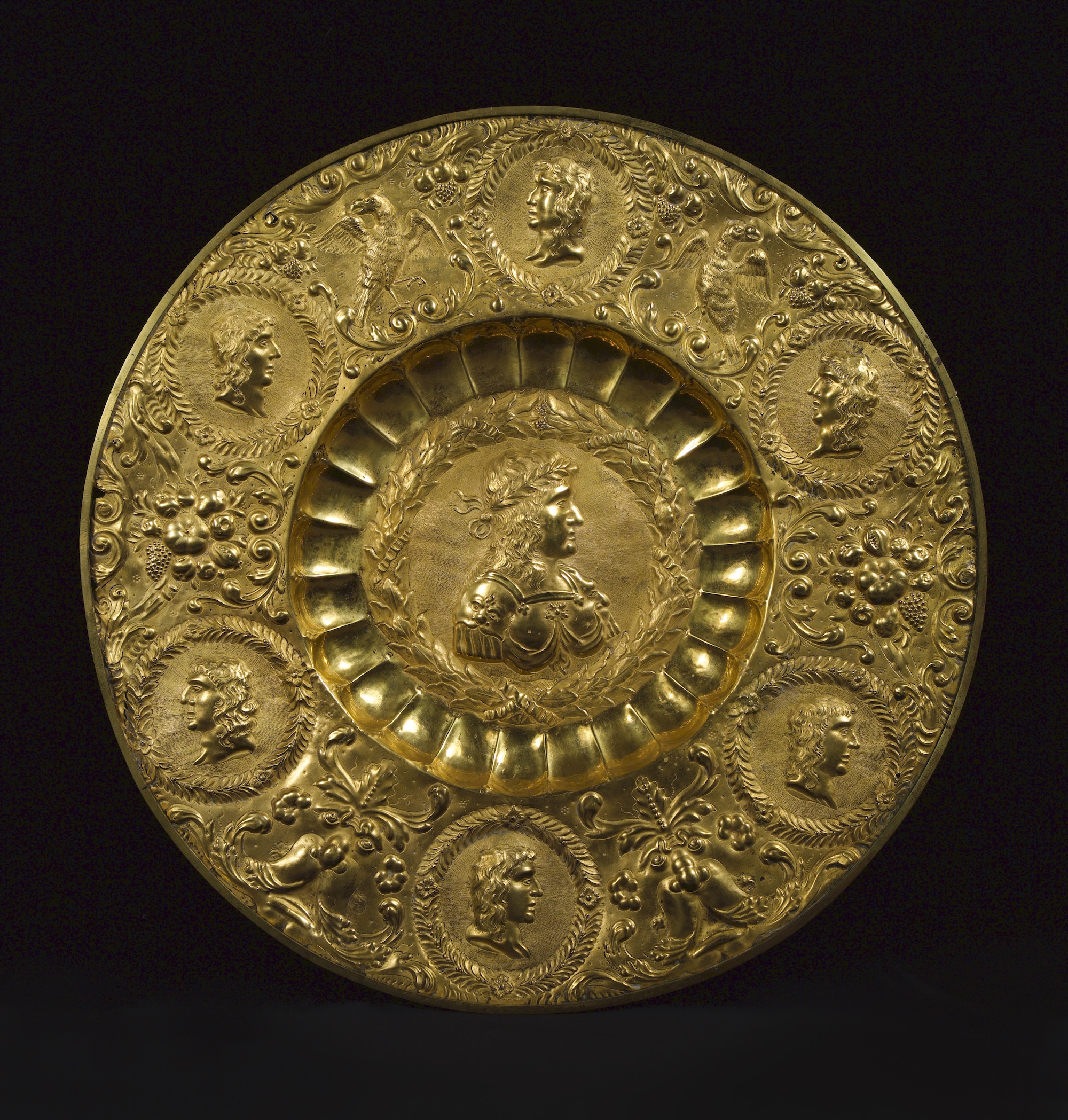
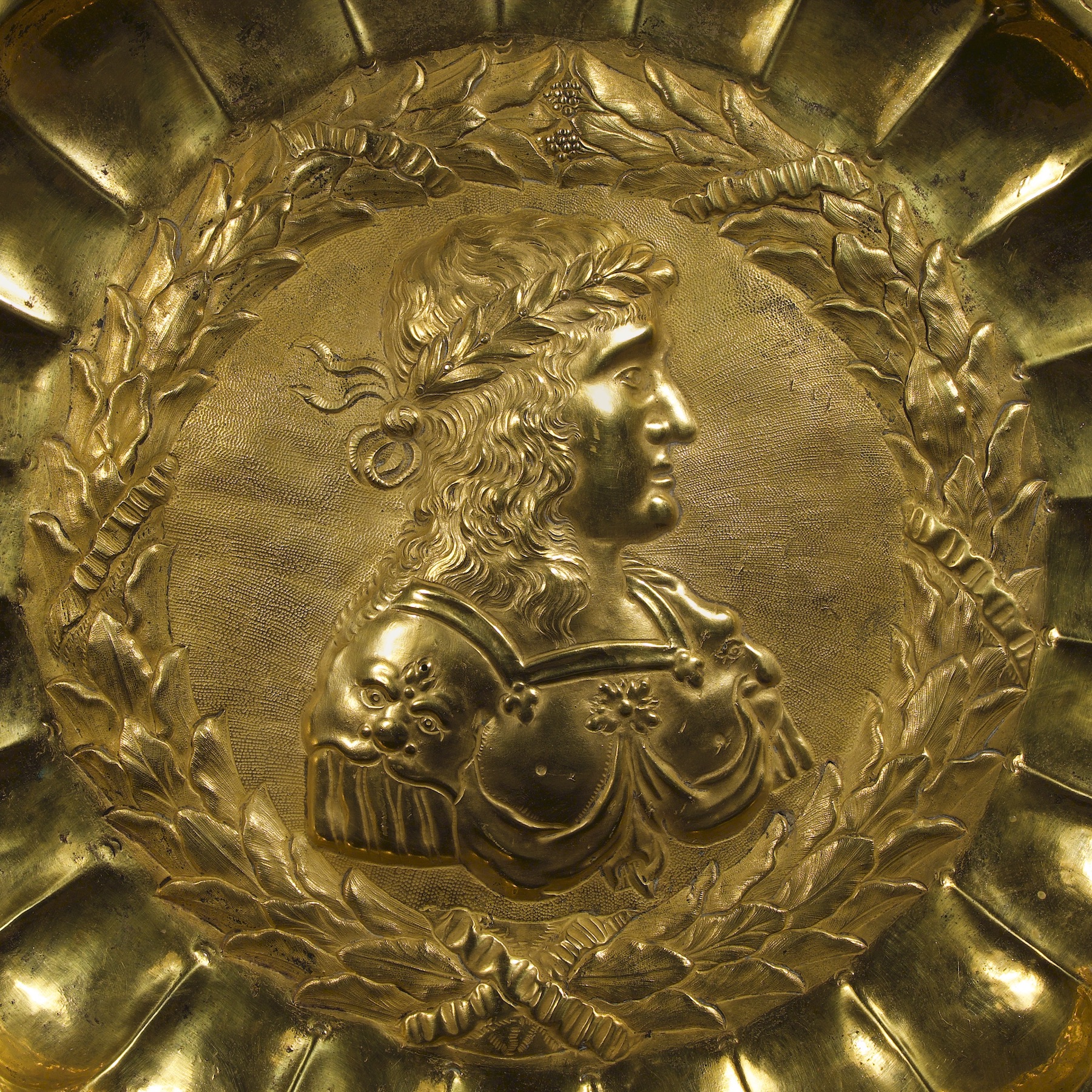
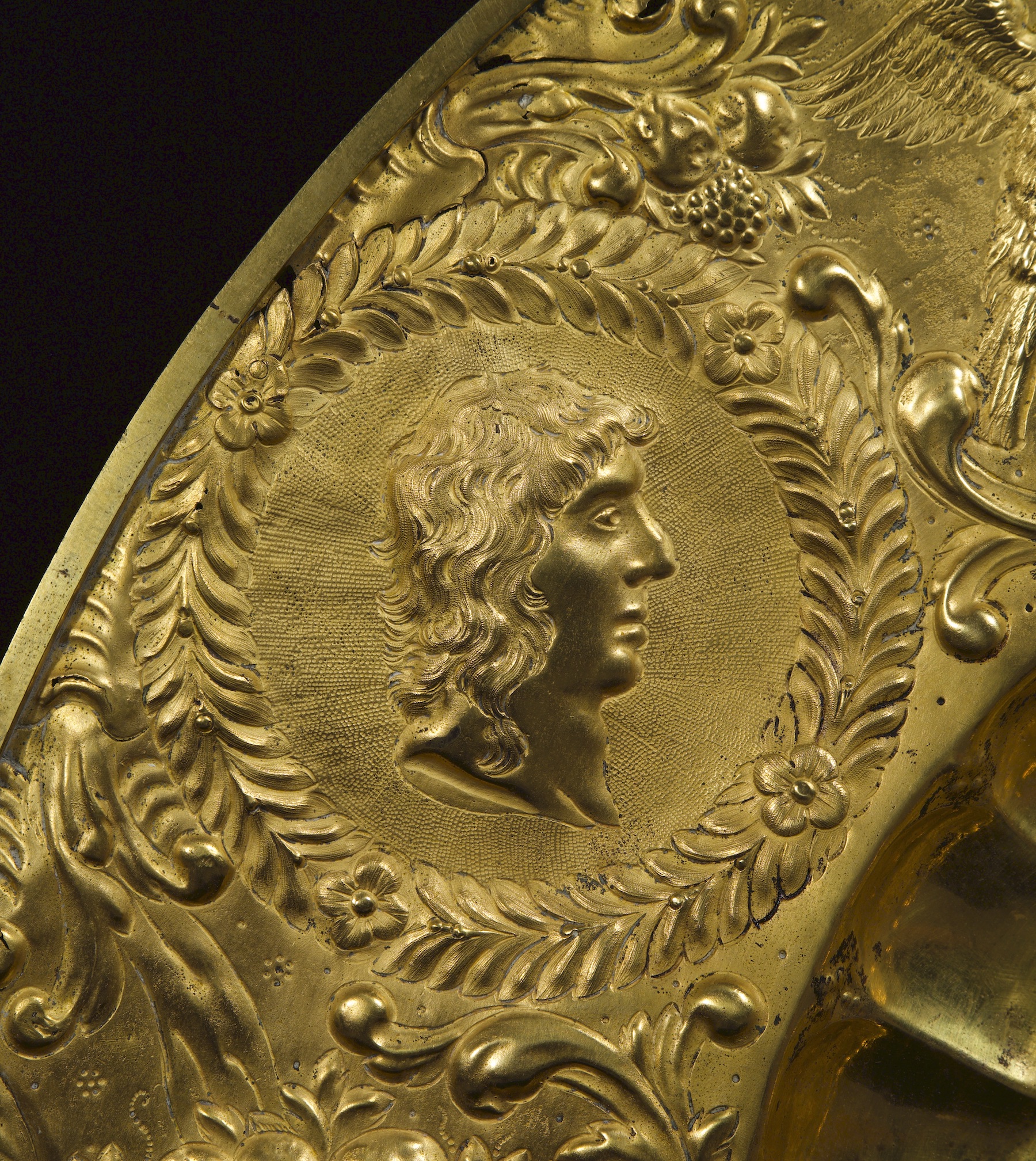
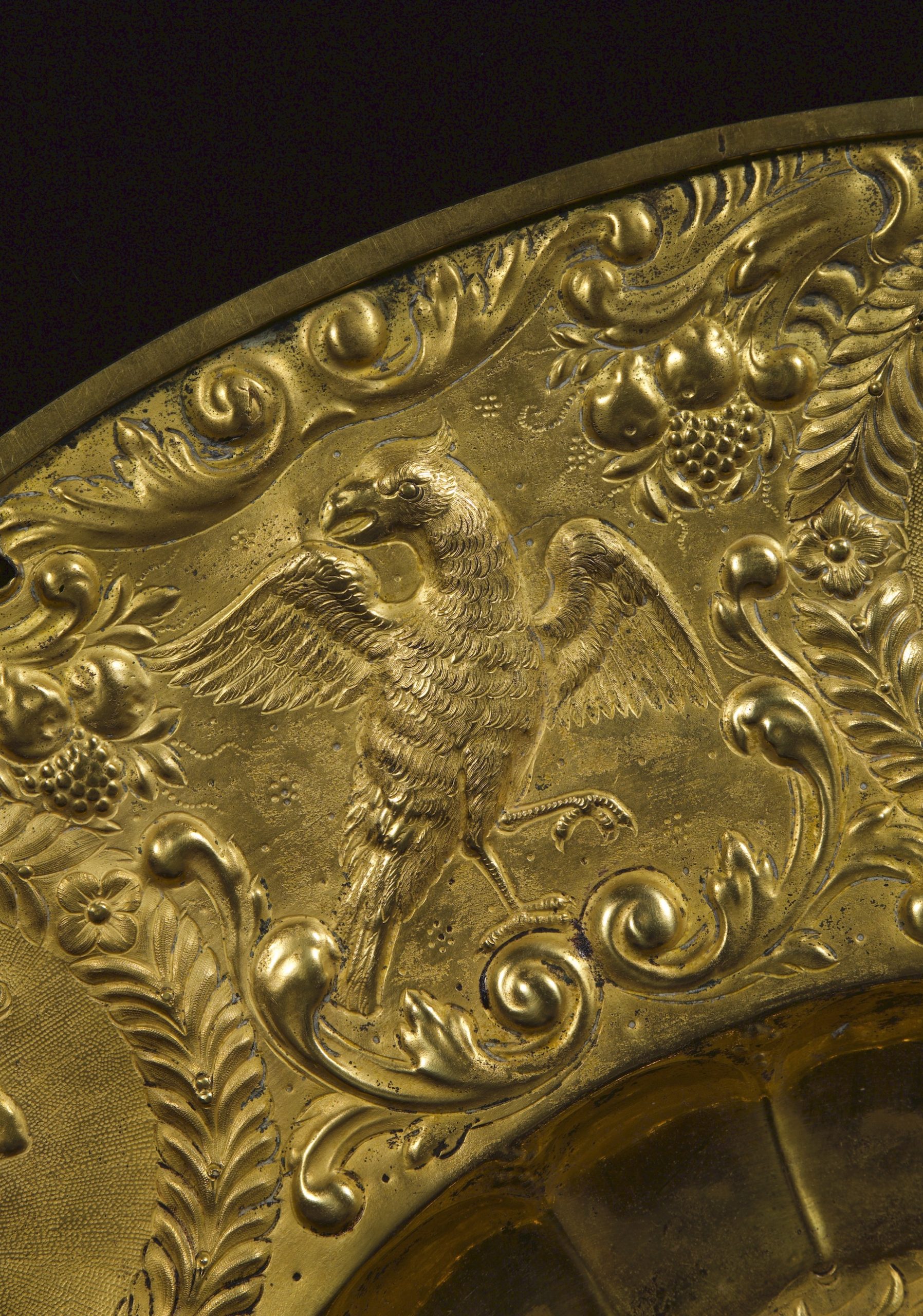
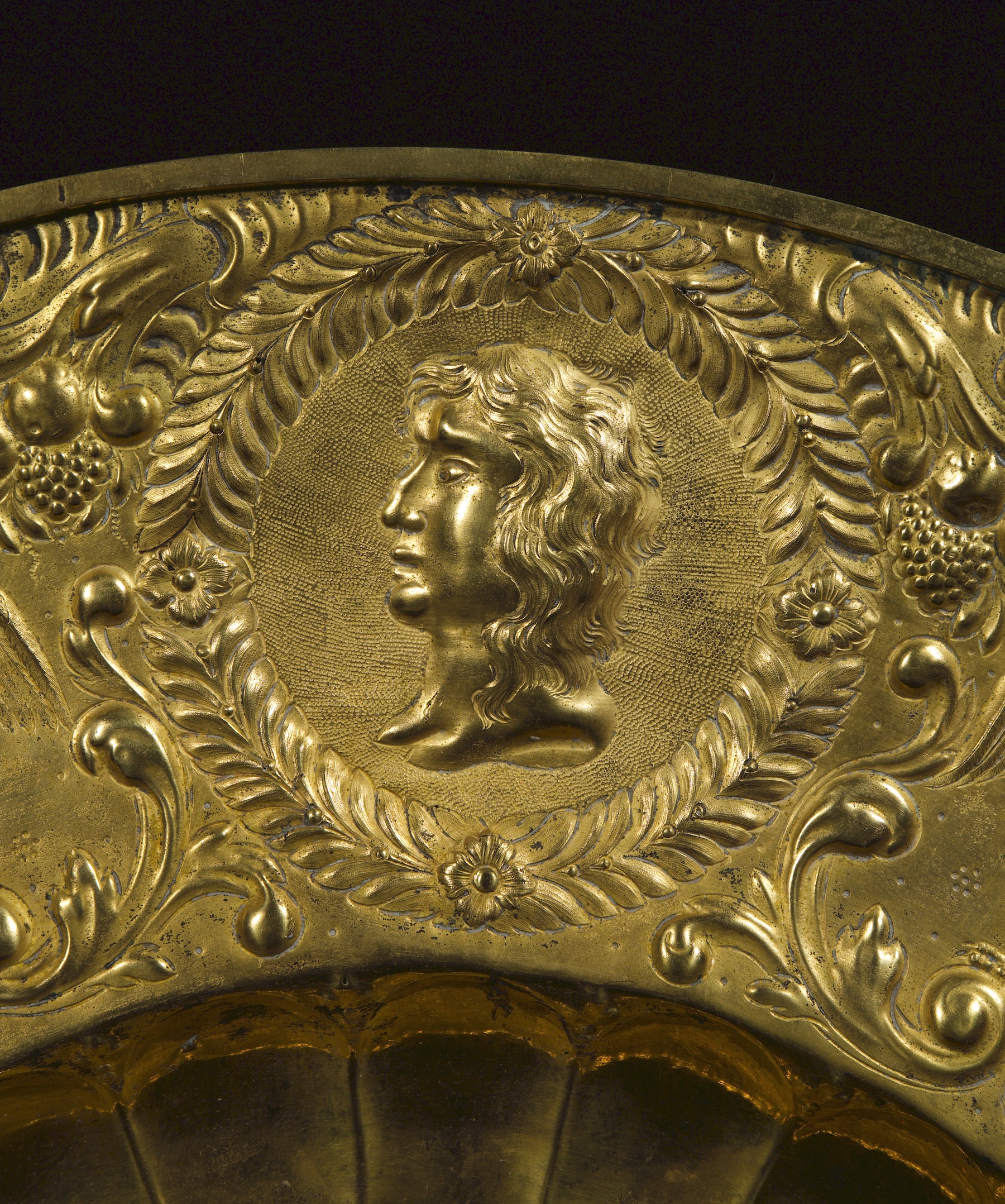
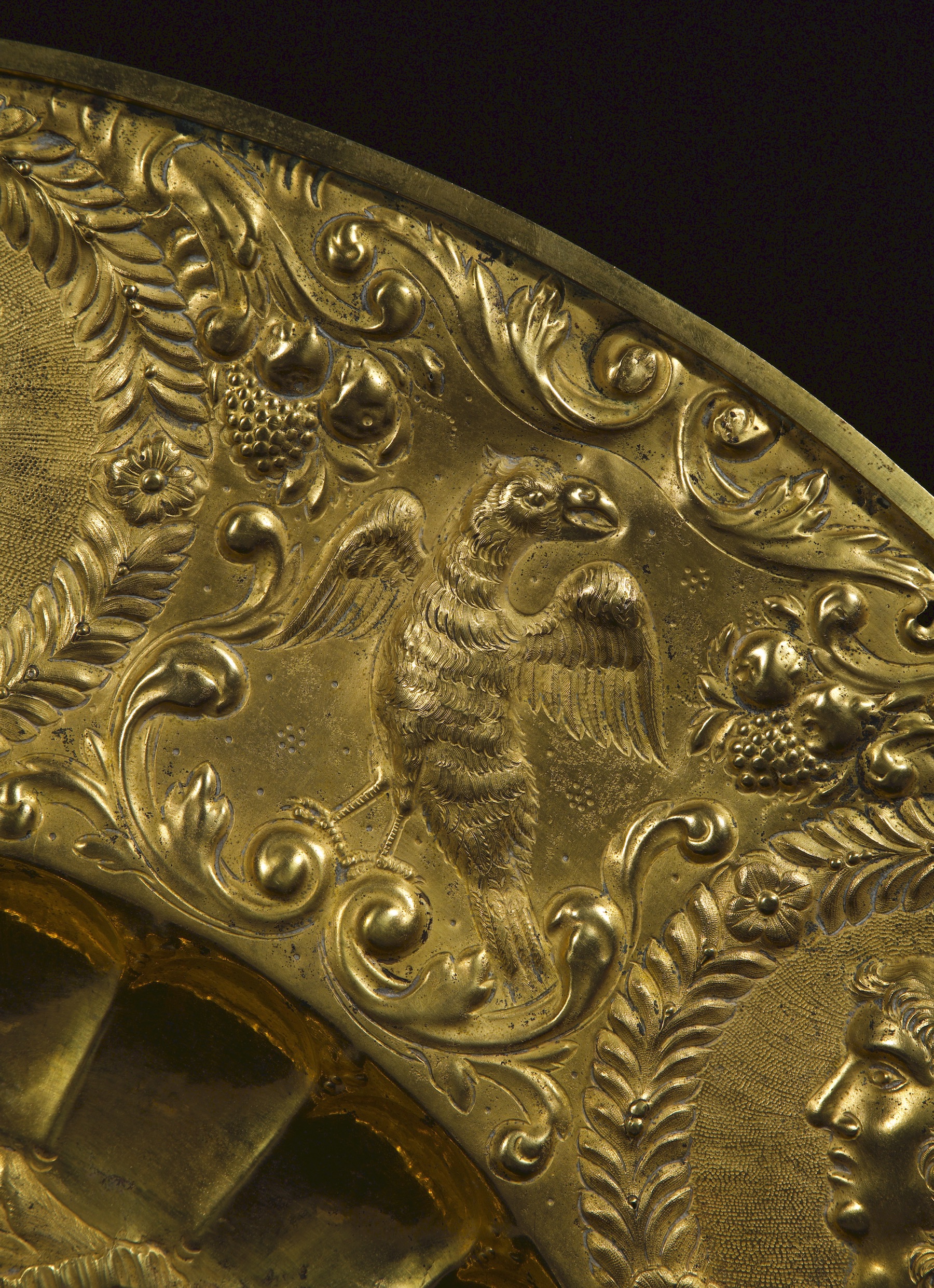
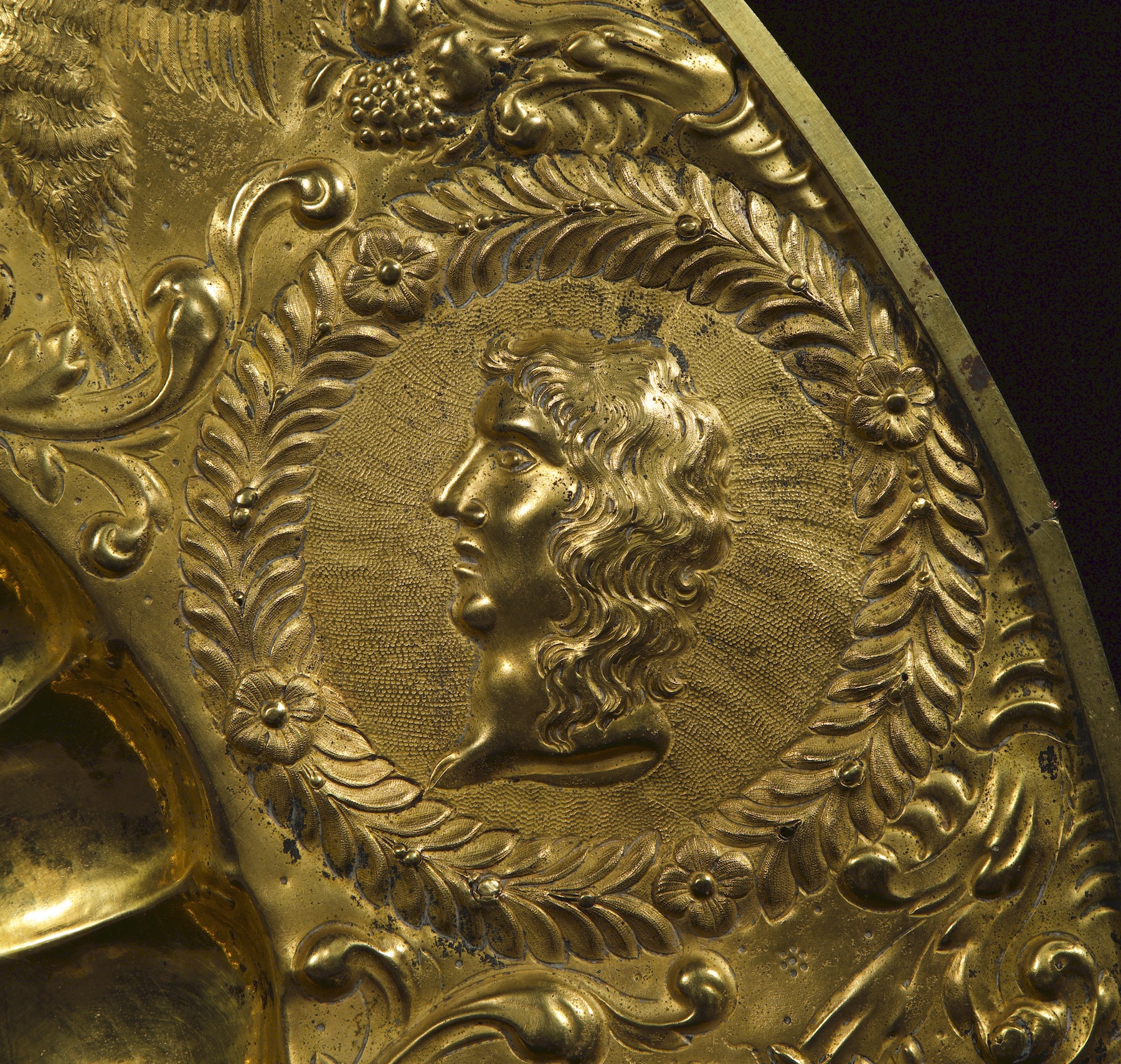
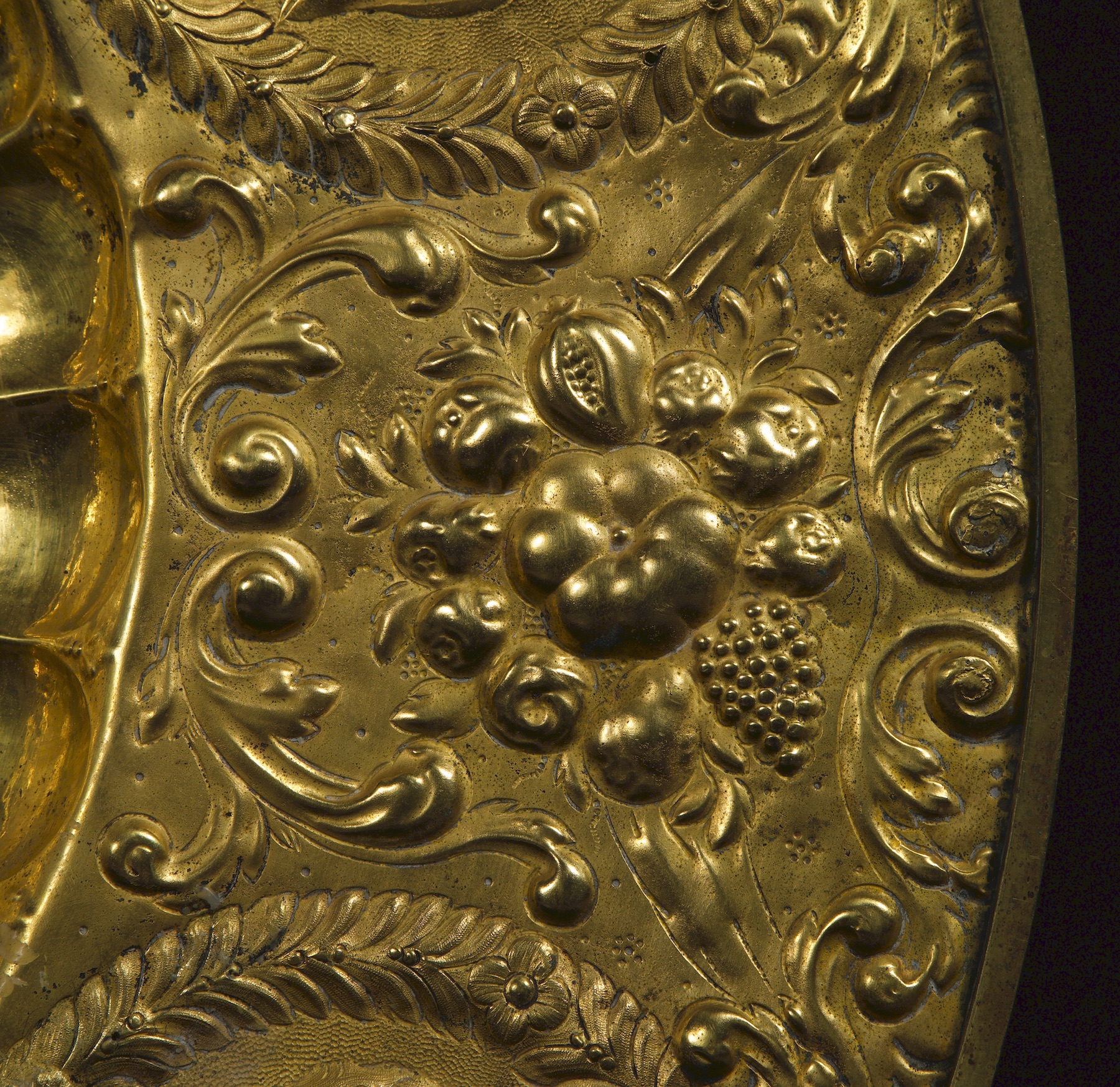
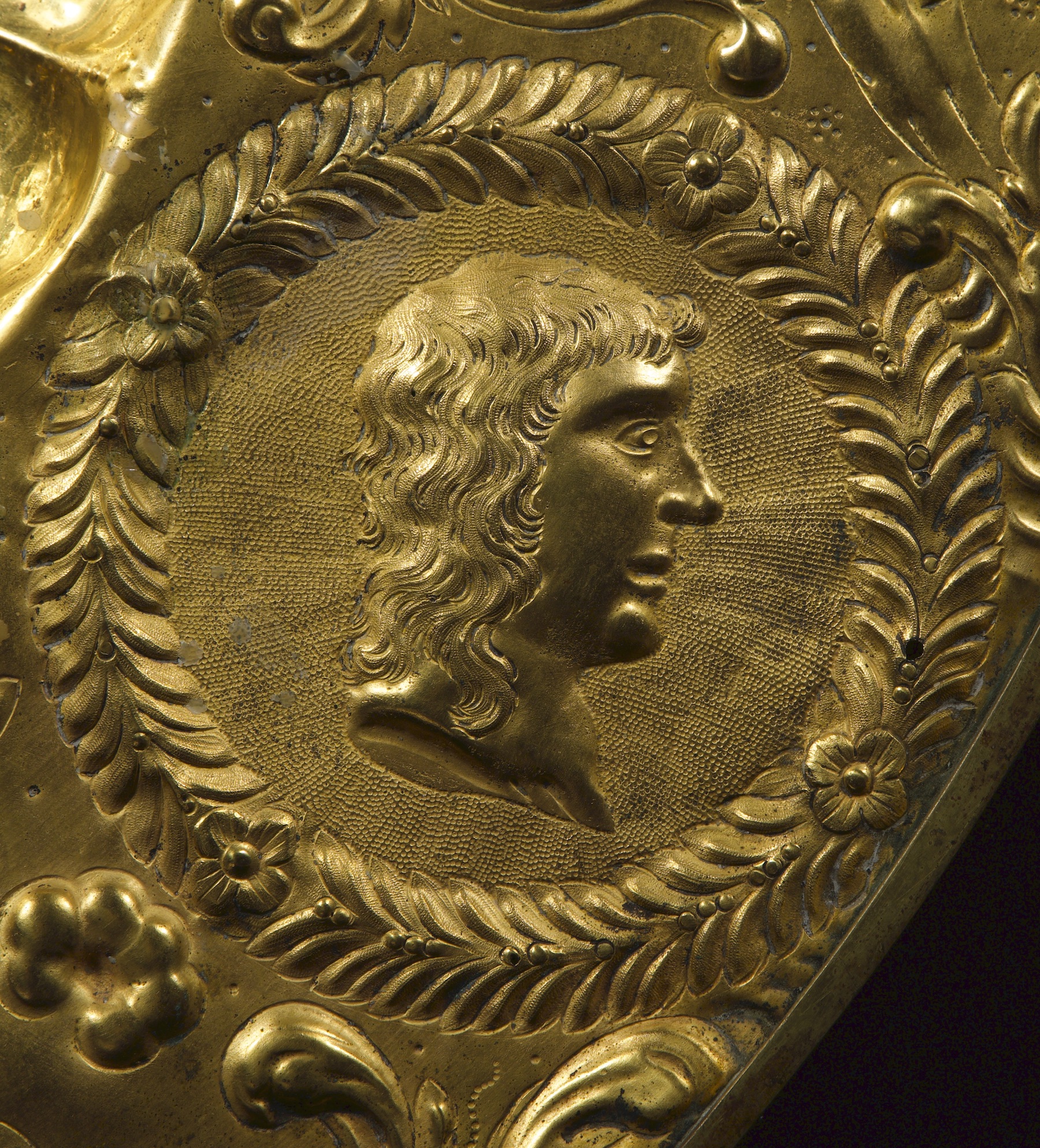
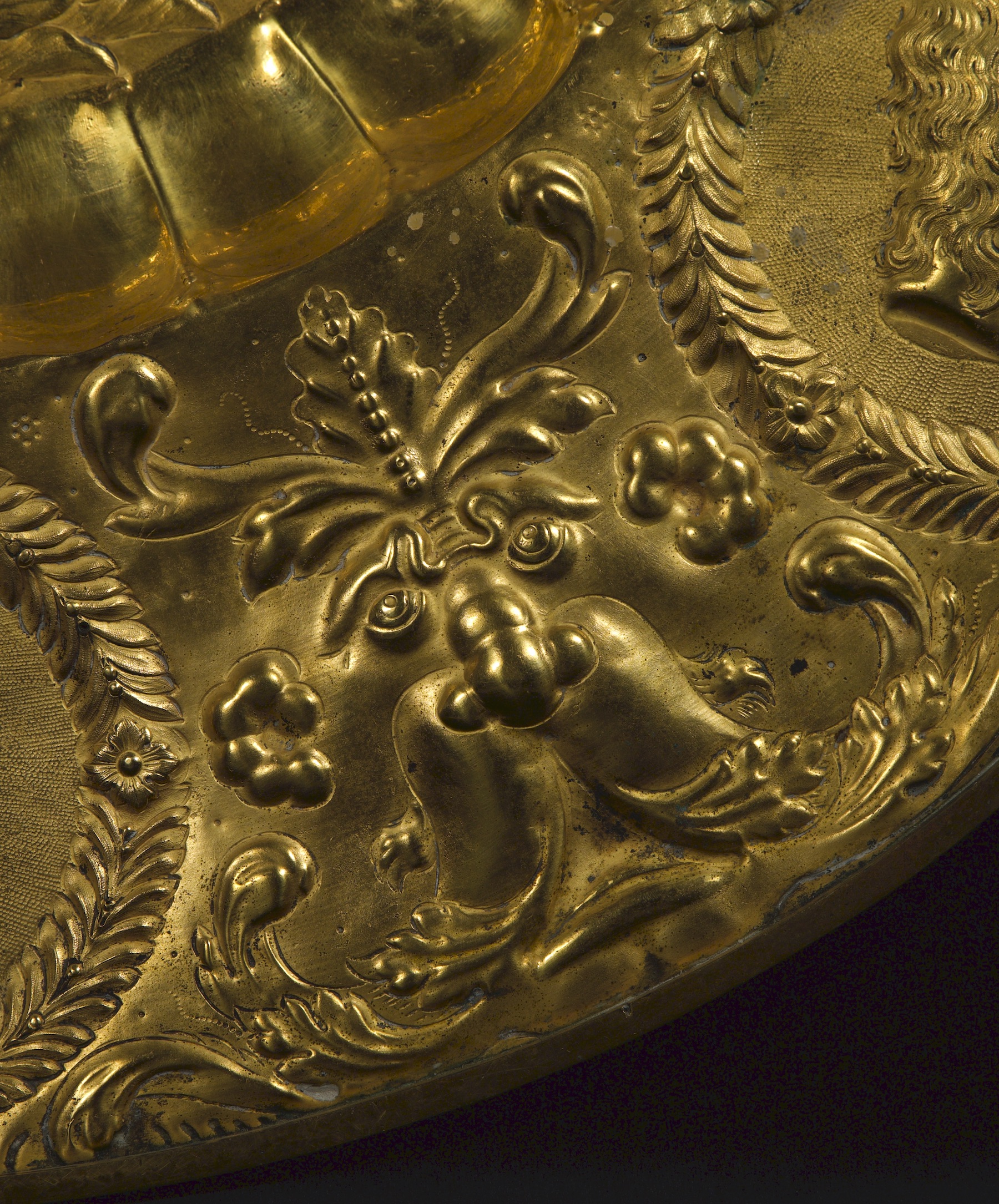
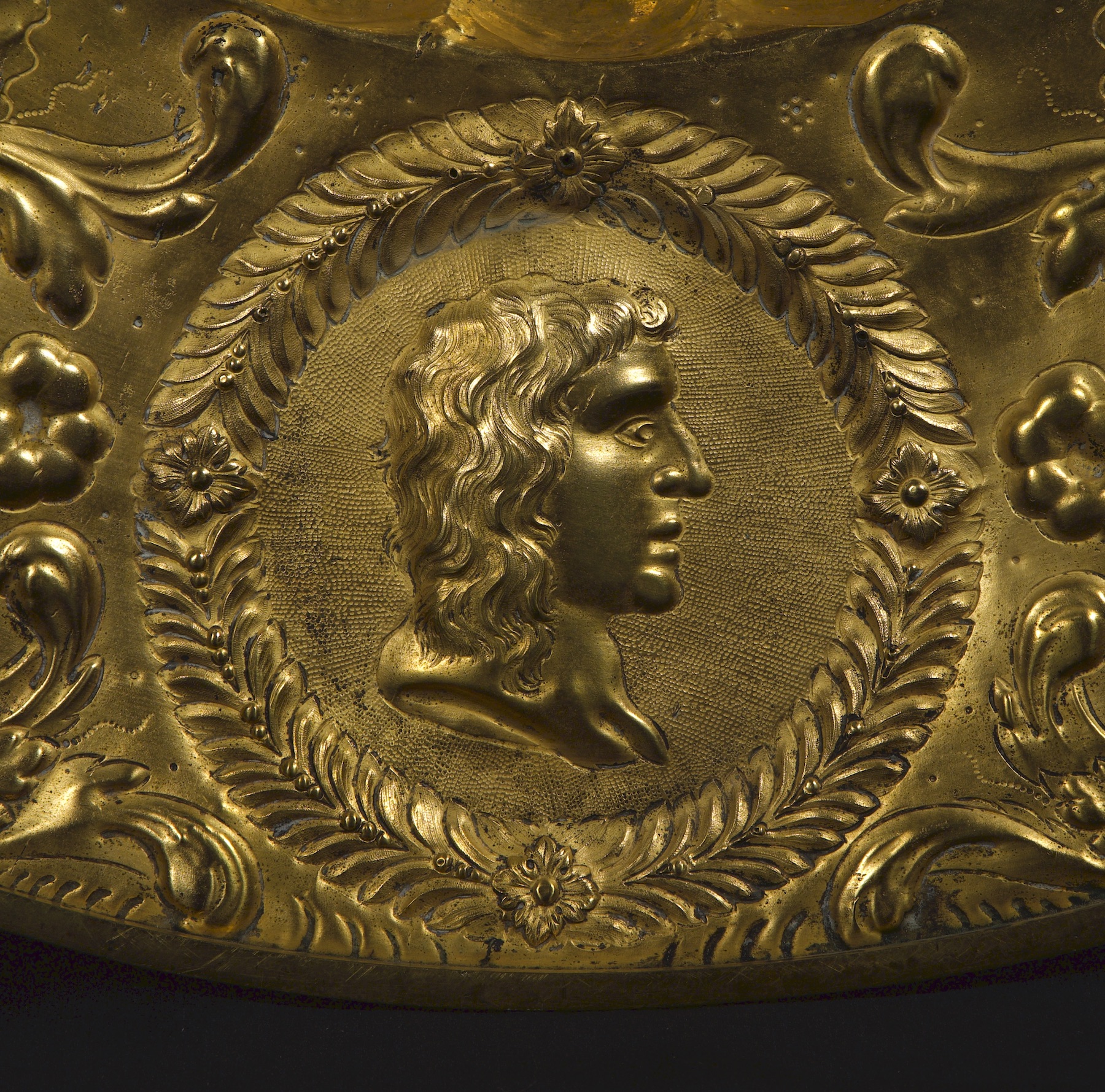
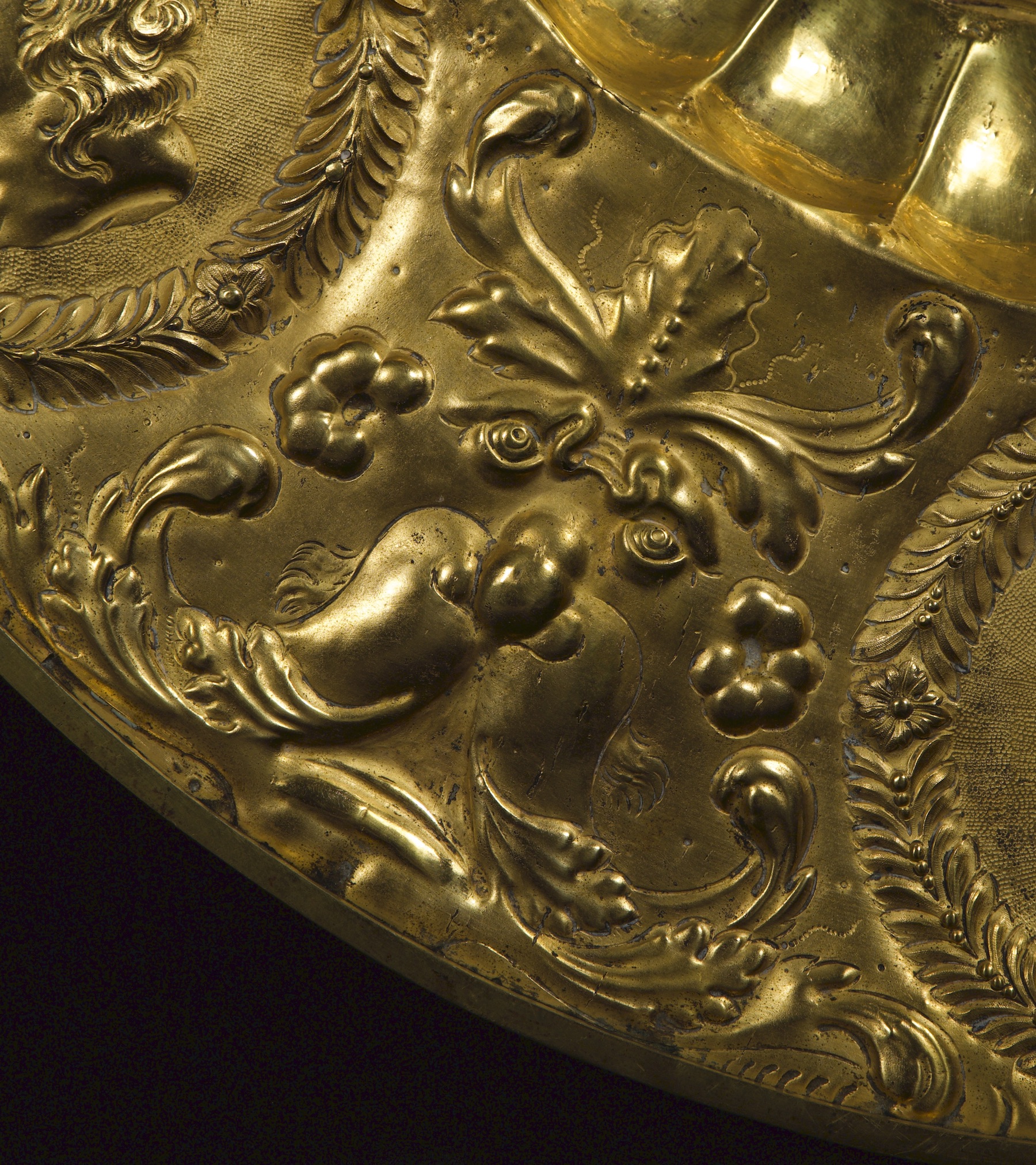
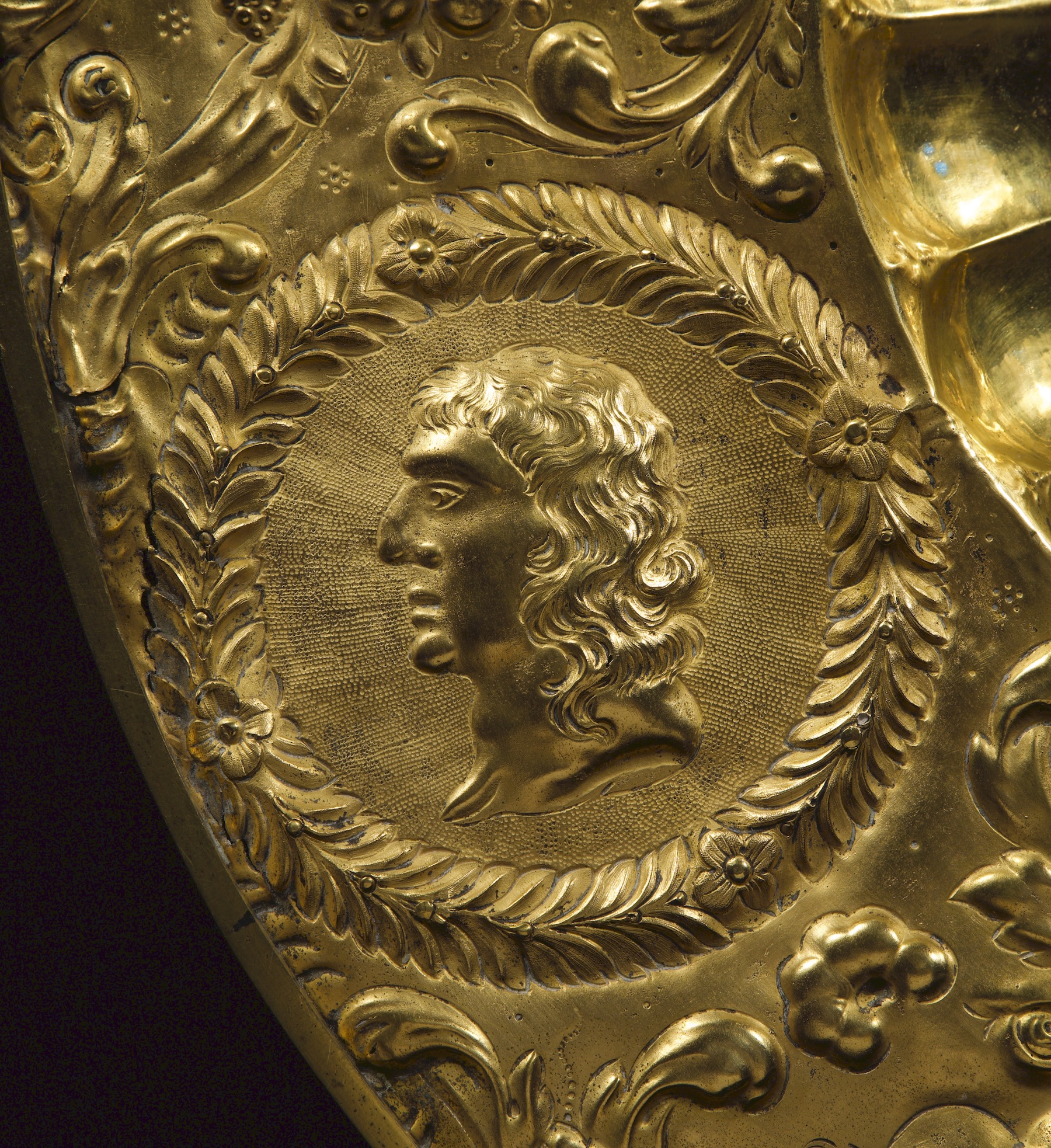
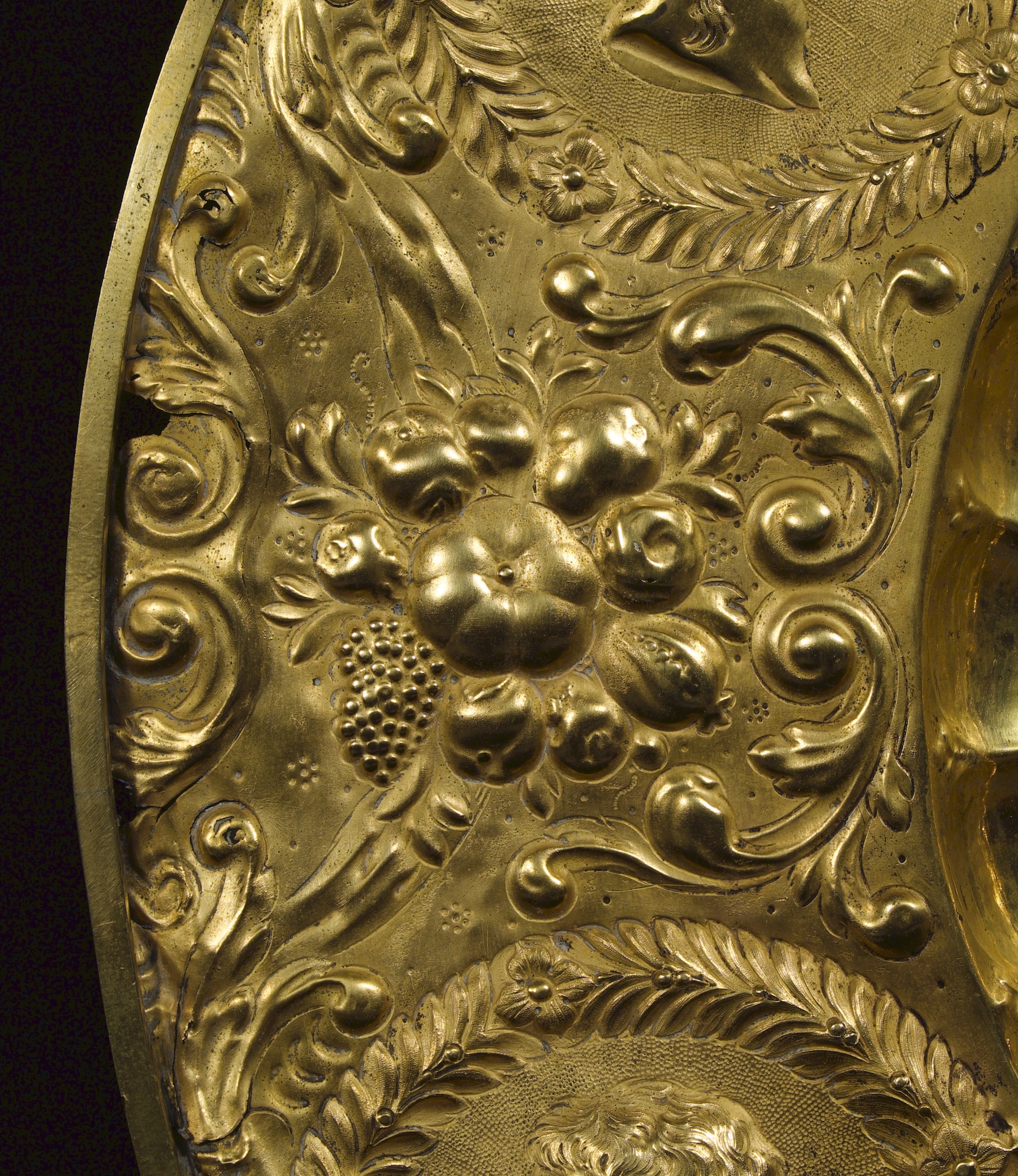
Of mercury gilded brass. The central bowl with repoussé classical bust within a laurel wreath and gadrooning. The rim of the dish containing six satellite busts within laurel wreath frames, interspersed with double headed eagles, fruit, and grotesque mask repoussé decoration. Minor small areas of separation to edge.
This exquisitely detailed mercury-gilded brass charger, of monumental scale, is an outstanding example of the art of dinanderie, a type of metalwork taking its name from the Wallonian town of Dinant, a major production center for metalwork in brass, copper or bronze from the 12th century onwards.
Dinant is located in the Mosane valley, which provided an advantageous location for the industry due to its natural resources; forests providing fuel, waterways supplying power, and deposits of clay and minerals like calamine (the historic name for an ore of zinc), ideal for crucibles and molds. The alliance of Dinant with the Hansa League was also a very important ingredient in it’s success, “for it not only made them supreme among the Mosan towns, but gave them exceptional advantages in their trade,” ensuring export of their wares to the old Low Countries, as well as to France, Germany, Italy, England and Scandinavia.
The present piece falls into a category often described as plats offrandes, or offering dishes, which were initially used to collect offerings and alms by the church. However, these chargers evolved beyond their initial liturgical role. The appearance of decorative elements, which date to the first half of the fifteenth century, corresponds to a change of function. As many of these dishes are highly decorated and of secular subject matter, it is surmised that they were also given a domestic use as objects of status as well as interior illumination. The design of the present piece belongs to a group of other plats offrandes of the period featuring bustes laurées, or laurel-encircled busts.
Full research report available on request.