
Research:
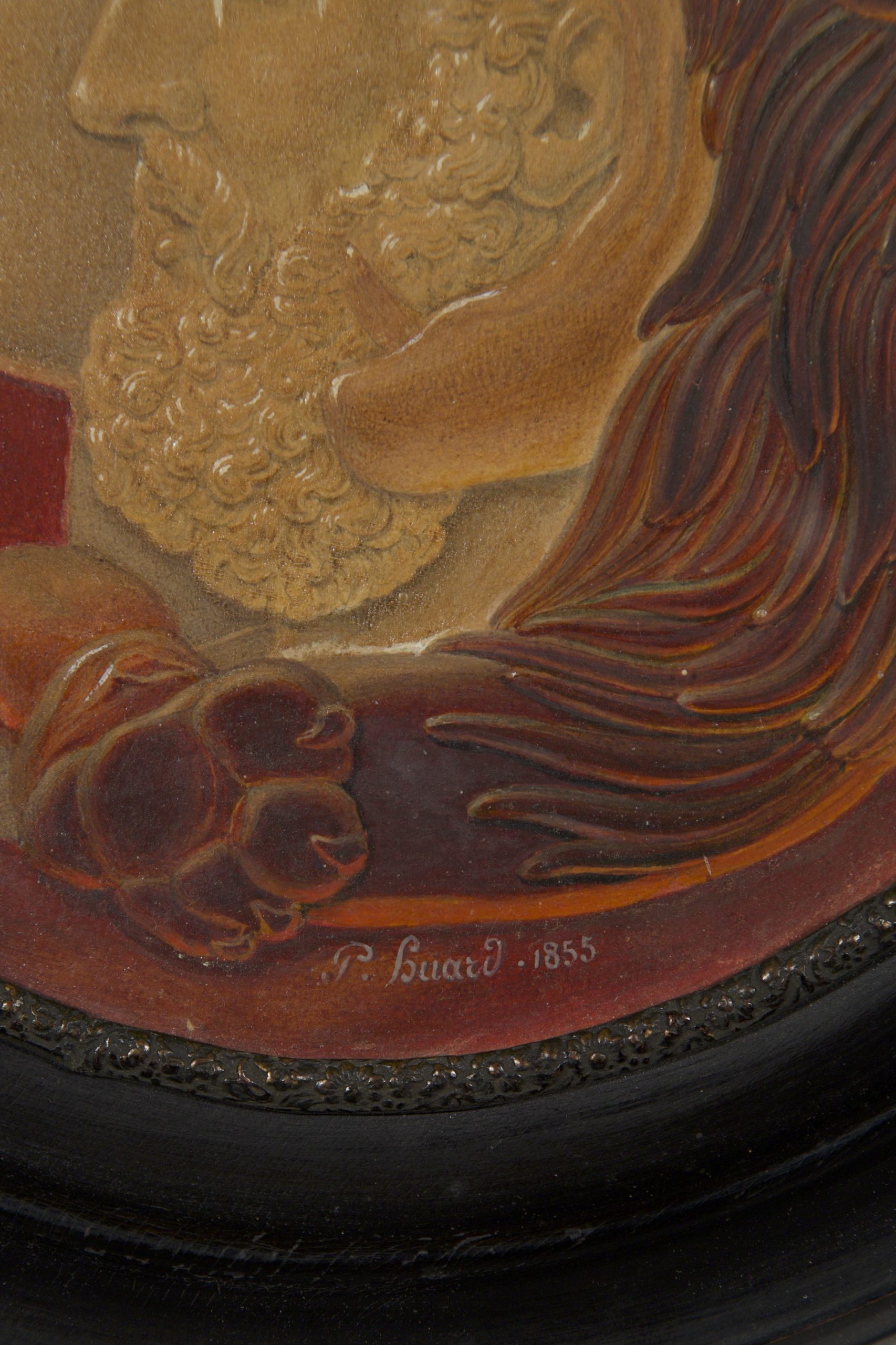
Oil on paper.
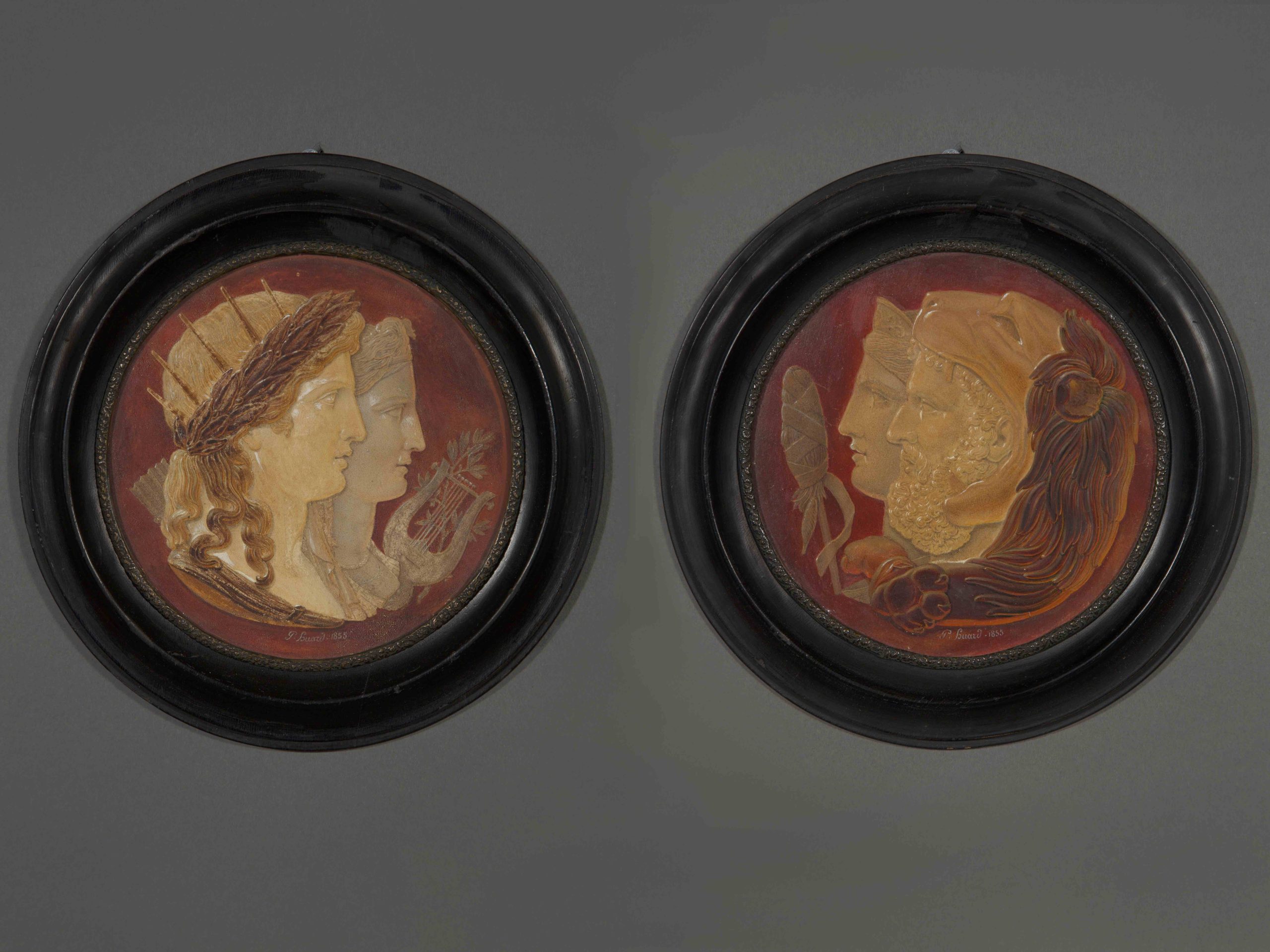
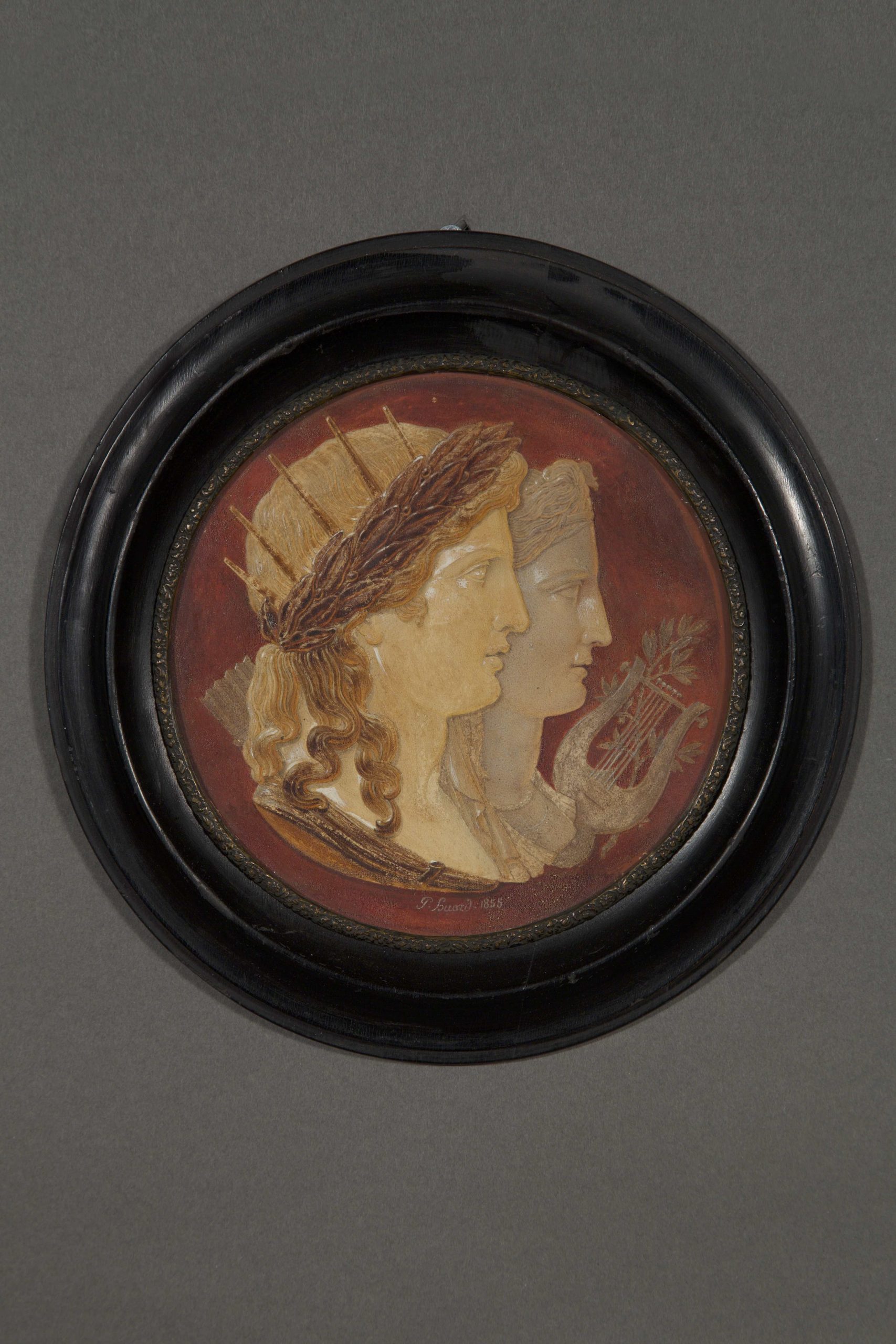
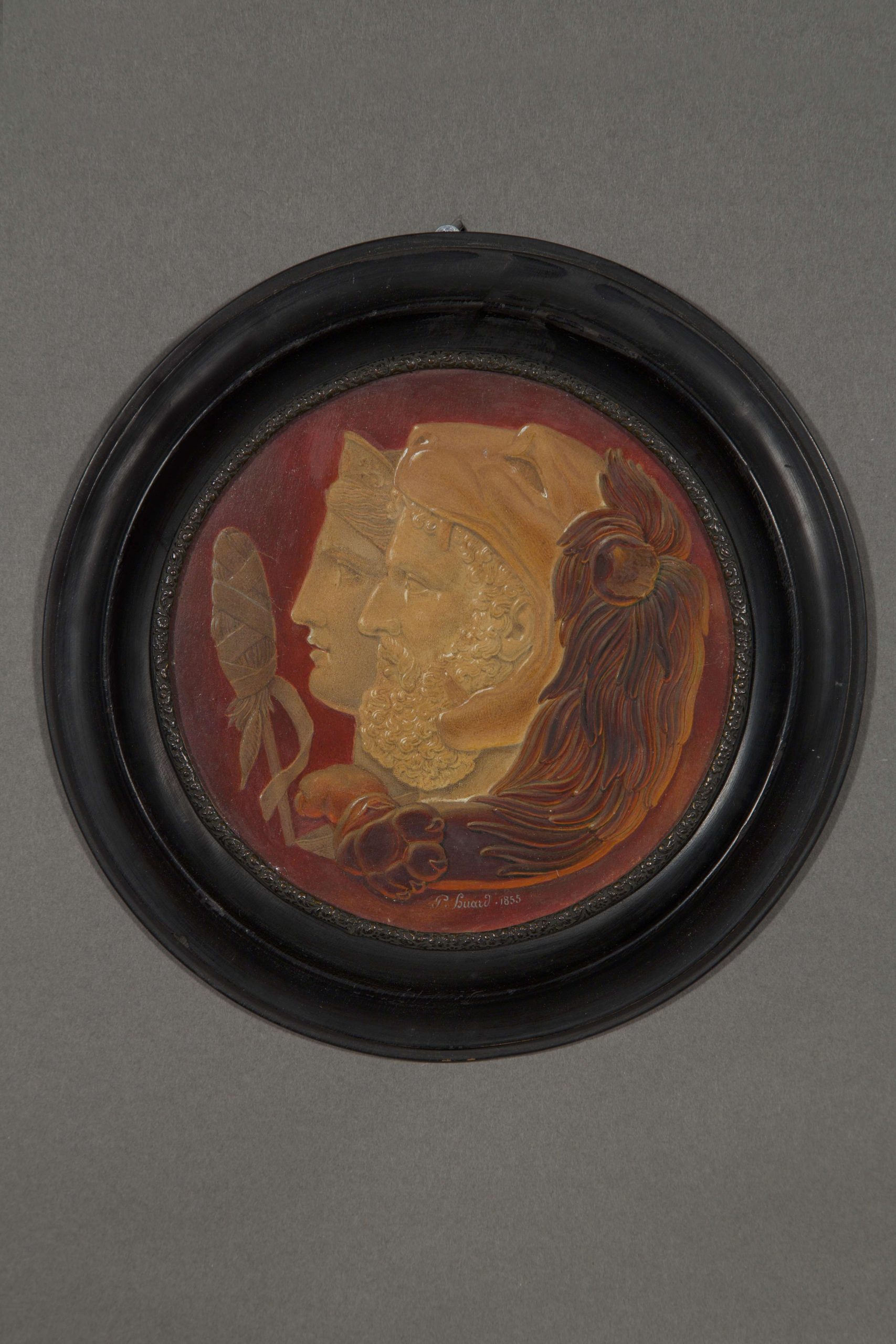
The present roundels are painted as portrait cameos in imitation of sardonyx, an agate with red, yellow, and brown layers. “To be most effective visually, cameos could not be carved from any stone but required multilayered banded agates, usually sardonyxes…This allowed a light figure to stand out from a darkened background, or visa versa, or in exceptional cases, allowed for multicolored compositions.”
“Carving through differently hued layers of stone allows the engraver to distinguish not only foreground from background but also details, such as flesh from hair or drapery, and to create such colorful effects as blushing cheeks or mottled animal skins.”
These examples simulate double portrait cameos, introduced during the Hellensitic period, where their production center was Alexandria in Egypt. A paired portrait cameo of Ptoloemy II Philadelphus and Arsinoё II, his wife and sister carved in the 3rd century BC is a rennowned example of this type, today in the Hermitage Museum, St. Petersburg. “The engraver, as well as the poet Theocritus, likened the subjects to the ‘rulers of Mount Olympus,’ the brother and sister Zeus and Hera who contracted a ‘holy marriage'”3 (figure 1).
The roundels here share a similar subject matter. One portrays Hercules, wearing the skin of the Nemean lion, together with his half sister, Minerva, goddess of wisdom, trade and war, who assisted him during his twelve labors. The other piece represents Apollo wearing a rayed crown, symbolic of his association with the sun. Smaller cameos were set into rings or pendants, while large ones were used as decoration.
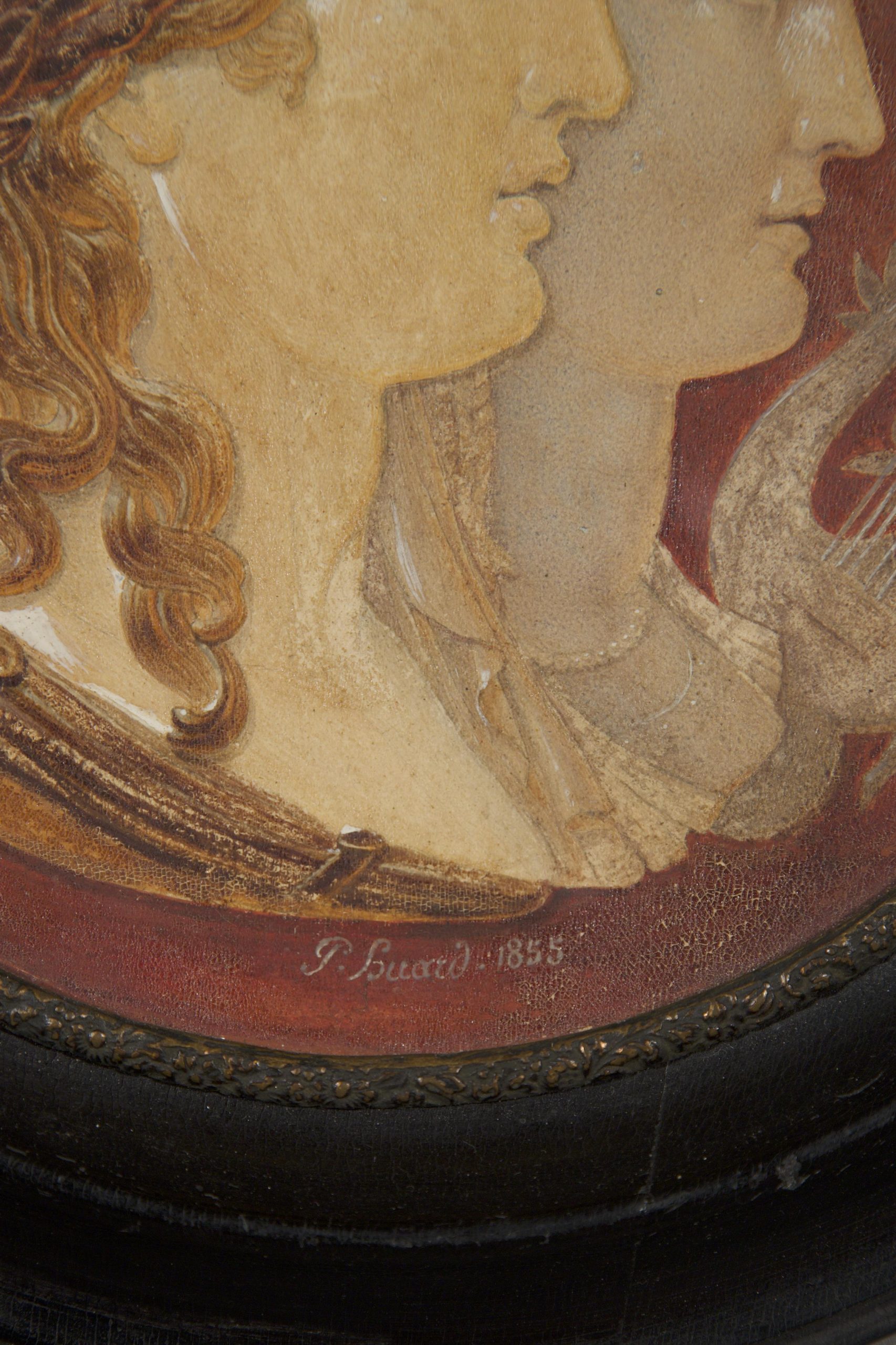
These present roundels are signed and dated P. Huard 1855, almost certainly pointing to Pierre Huard (1783 1857), a was a French porcelain painter, decorative painter and pattern designer for the Manufacture de Sèvres between 1811 and 1847.
Full research report available on request.