

Research:
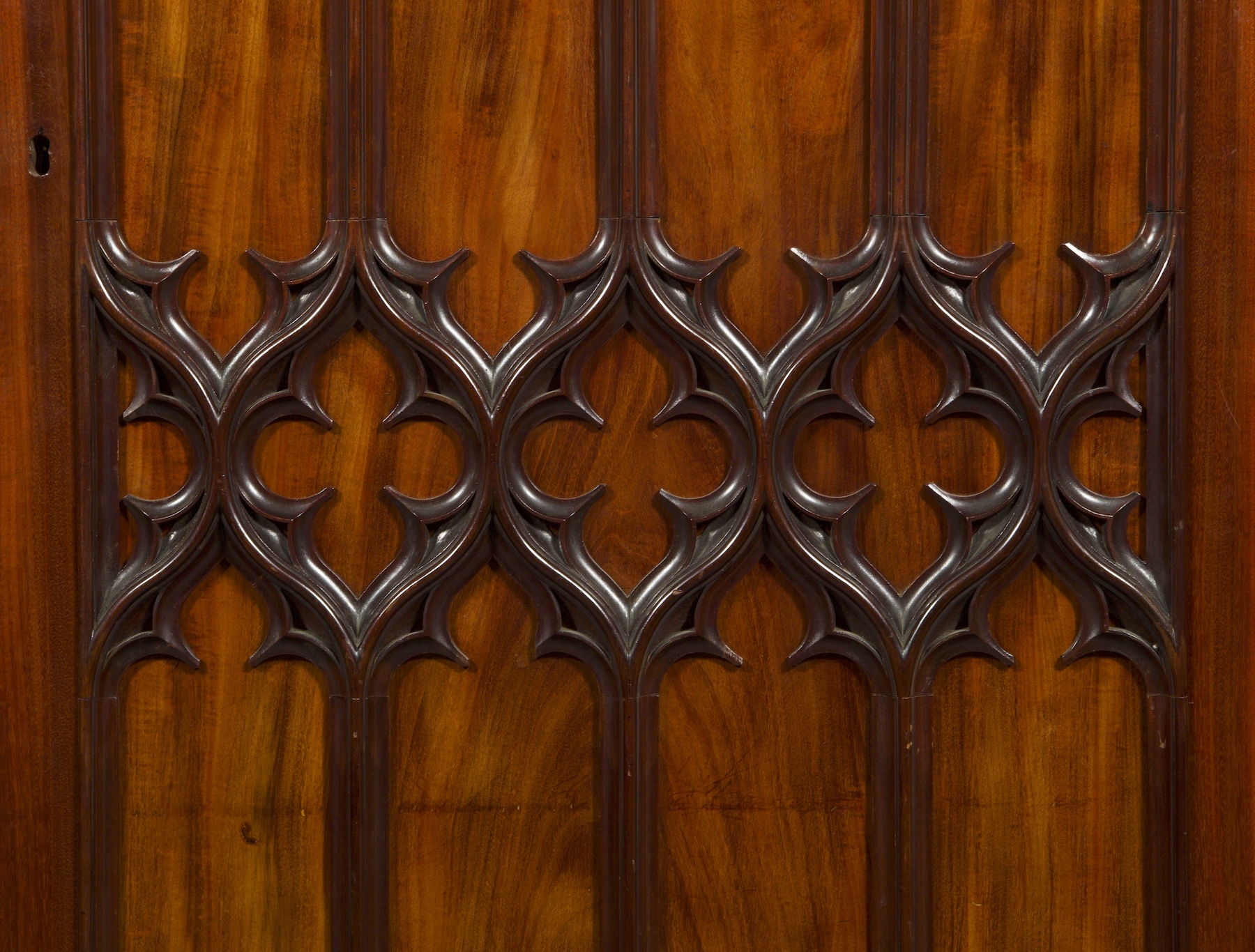
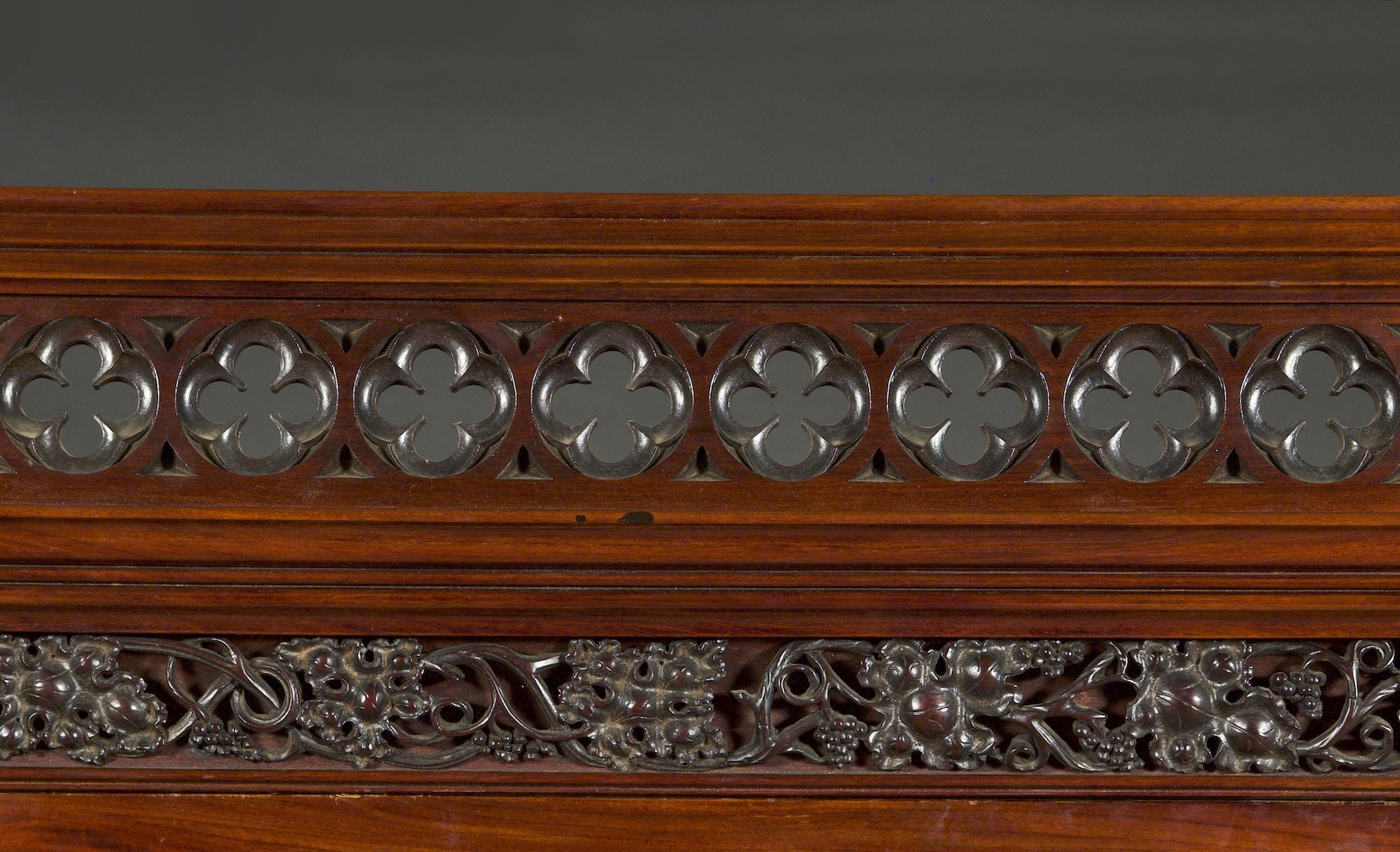
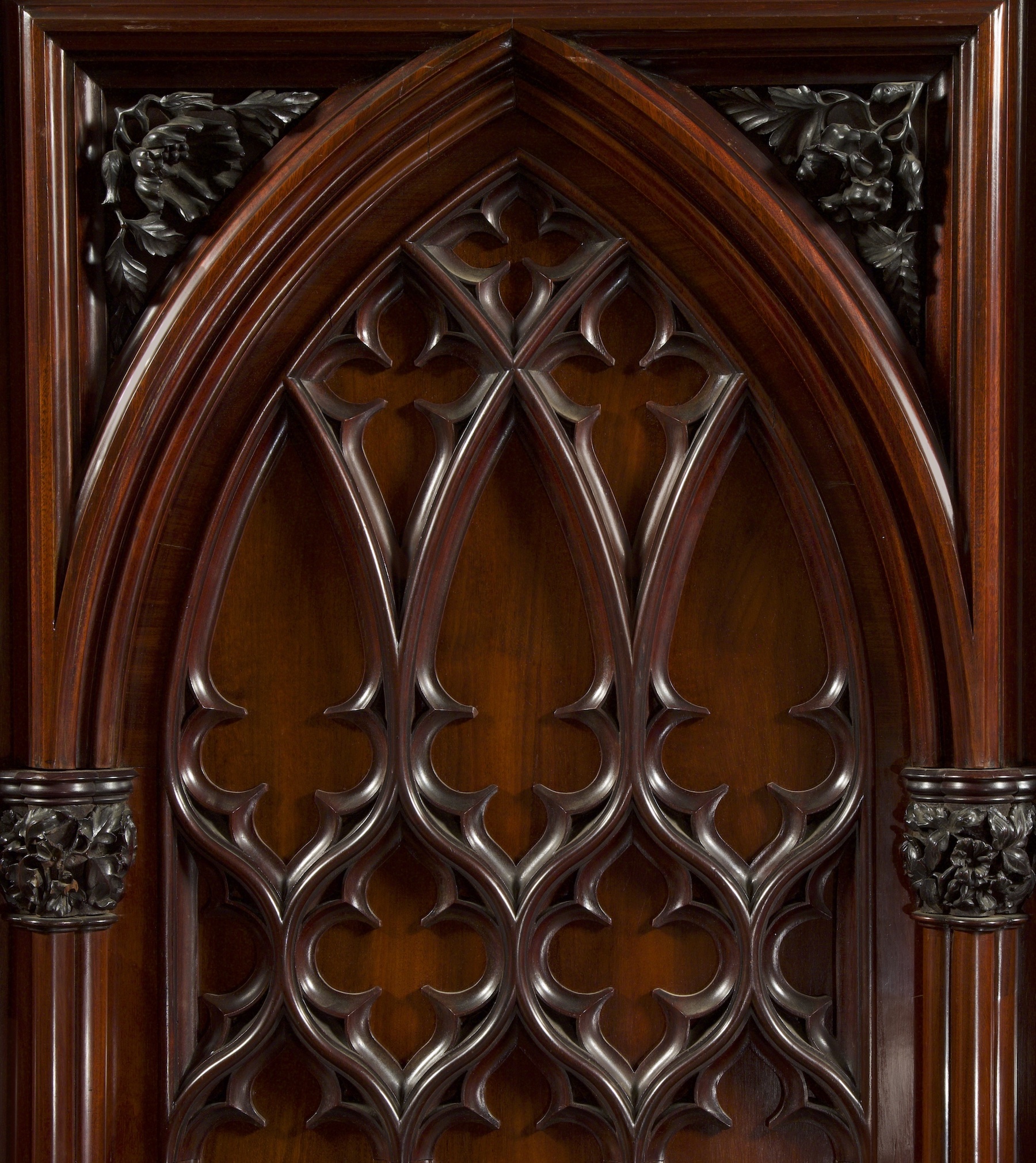
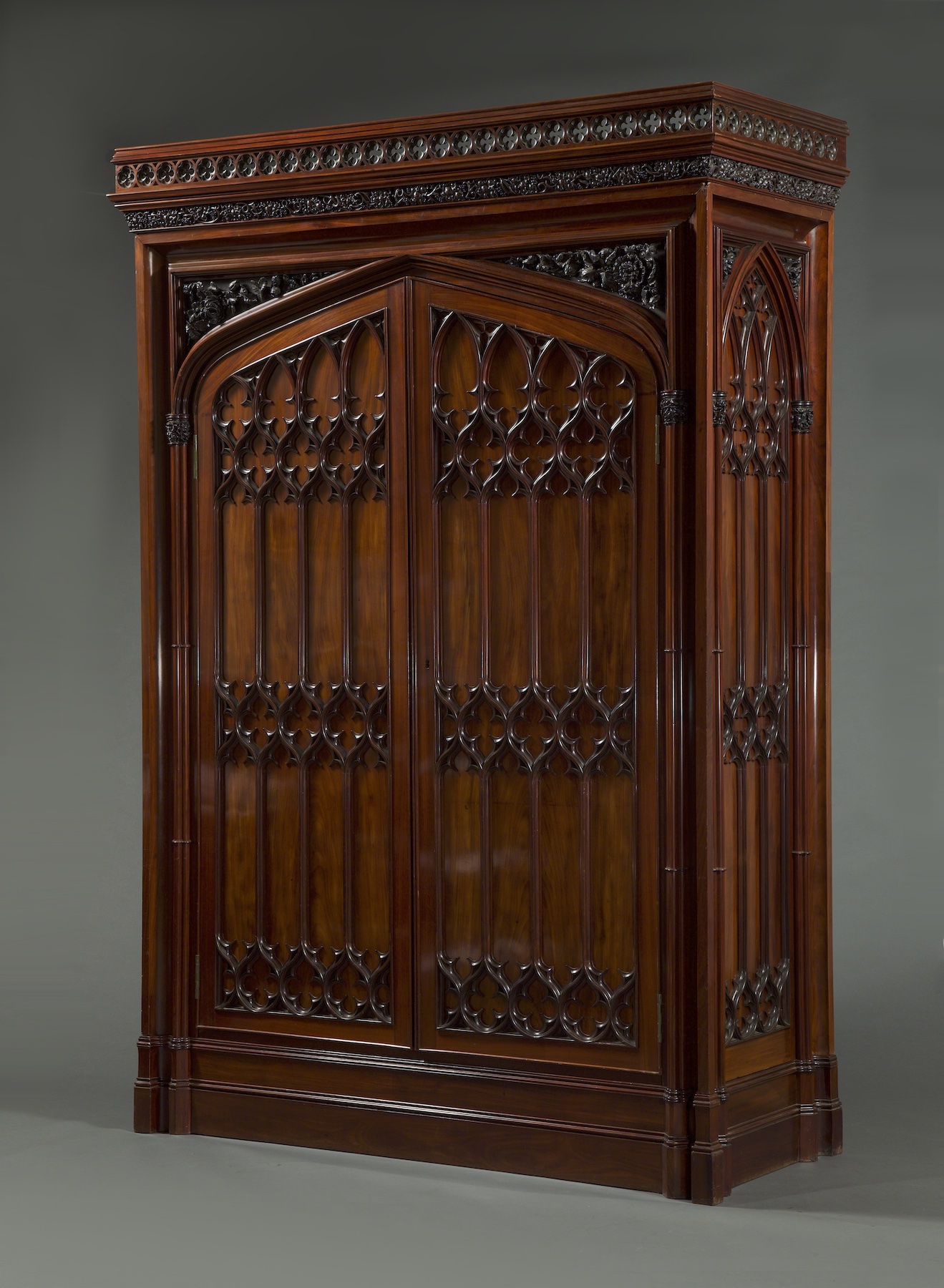
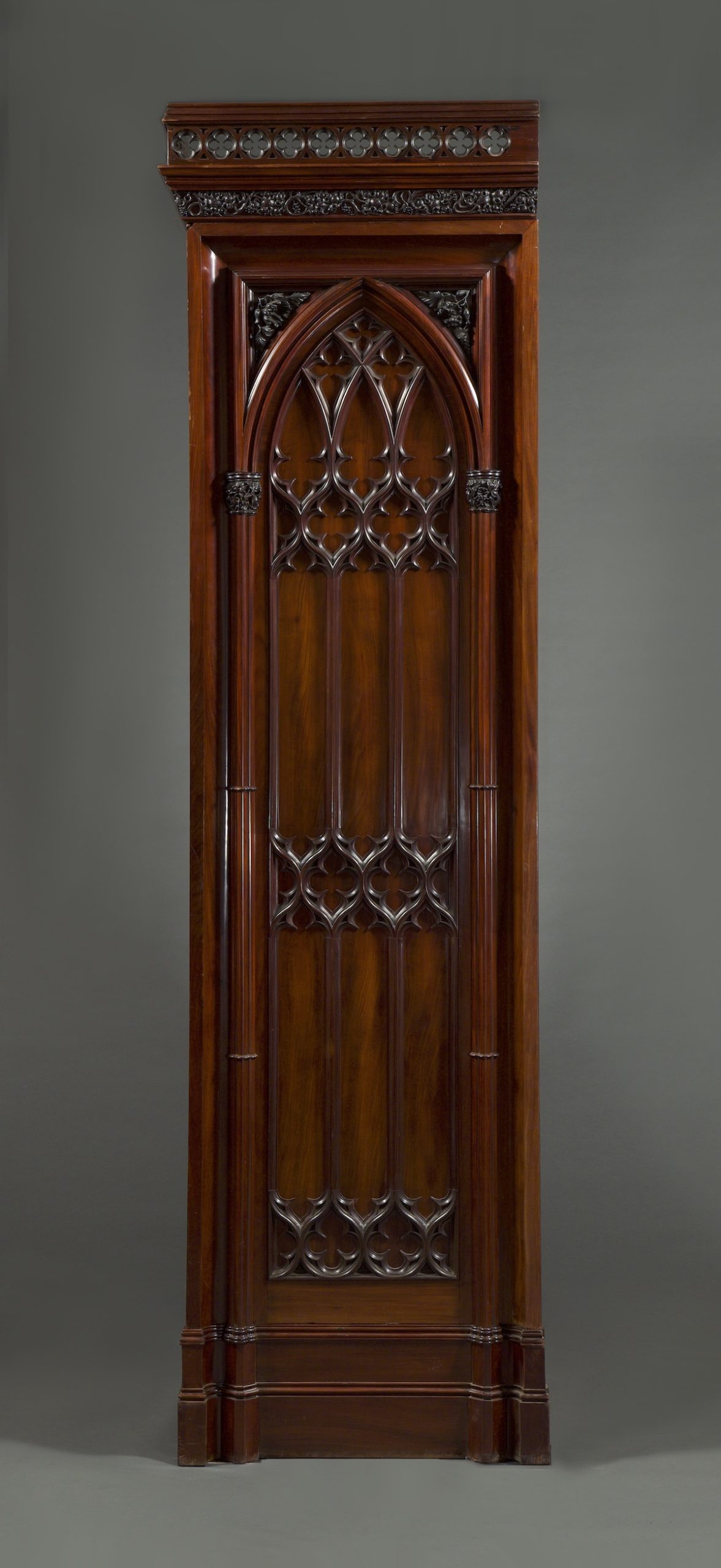
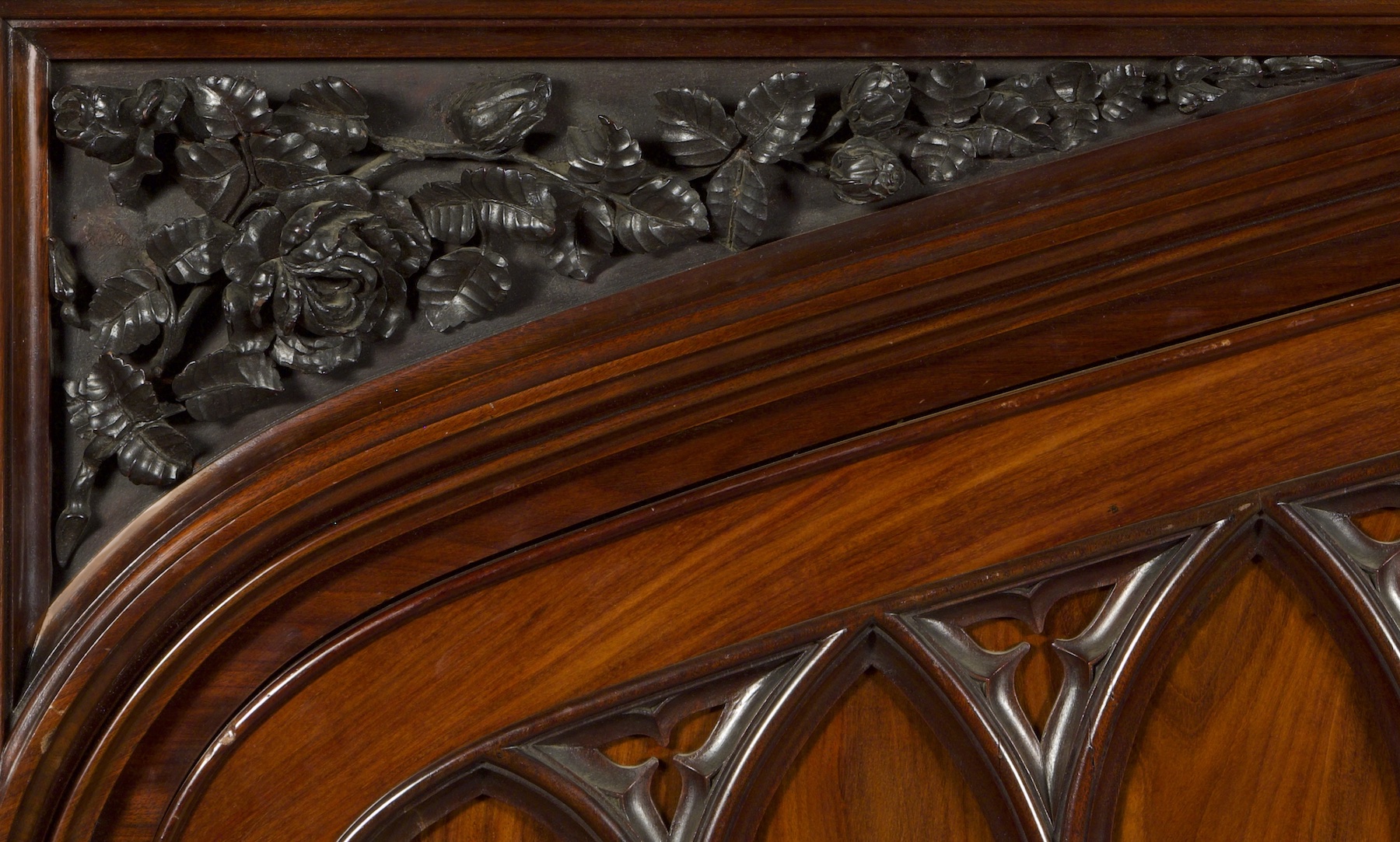
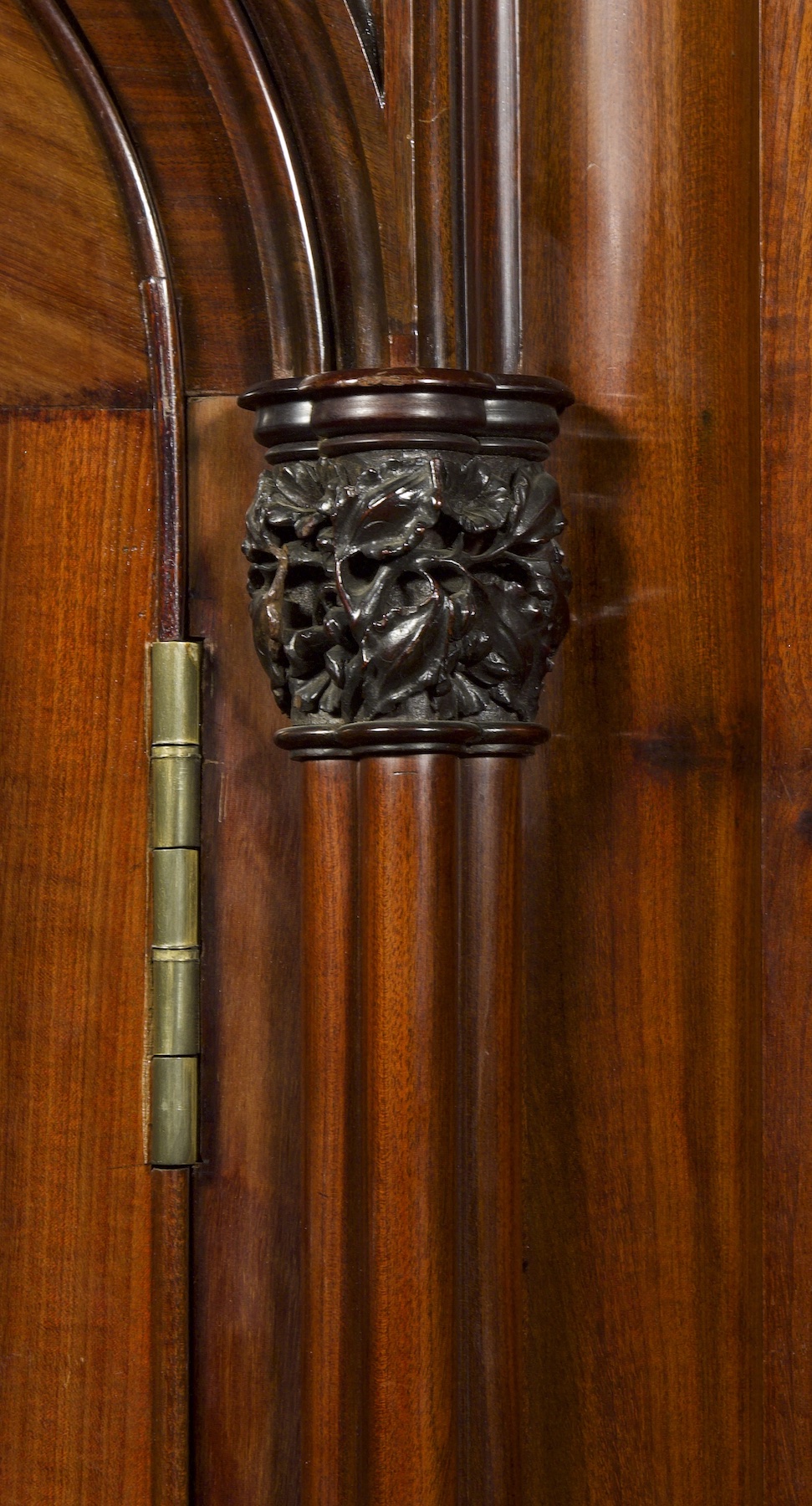
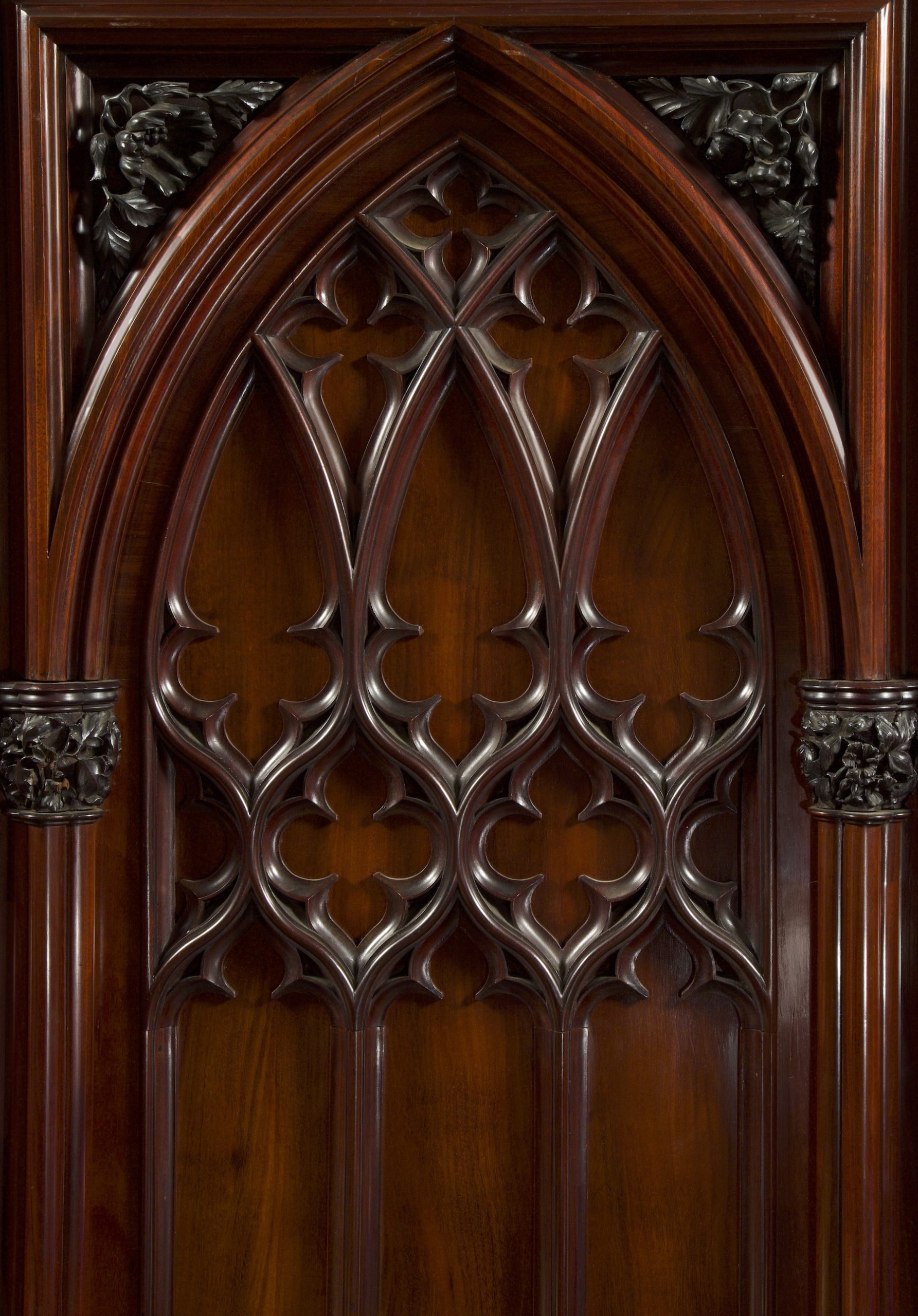
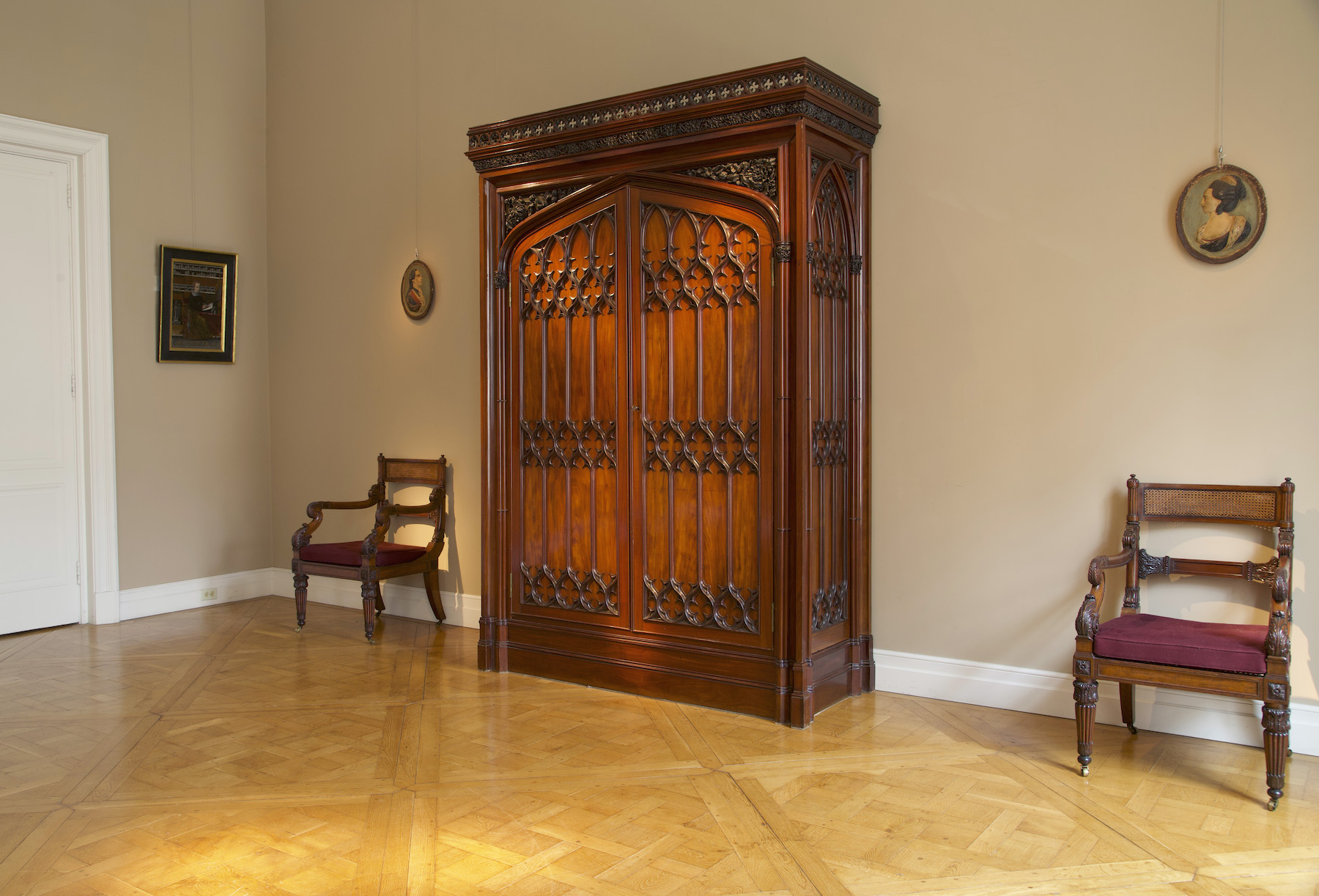
Of mahogany. The rectangular cornice pierced with repeating quatrefoil motif above a narrow frieze of carved grapevines. The pair of cupboard doors with carved molding in the shape of a pointed arch flanked by cluster columns with floral capitals, the spandrels containing carved flowers. Each door panel withcarved blind reticulated tracery. The conforming sides carved in lancet arch form with carved blind reticulated tracery and spandrels containing carved flowers. The whole raised on a stepped plinth. The mahogany-lined interior fitted with single later shelf. Originally the interior was horizontally divided above halfway to form two solid mahogany lined compartments. Apparently the divisions were removed long ago presumably so that the cabinet could be used for hanging garments.
Marks:
The lock stamped: ‘GR‘ with crown / Barrons Patent Strand
Provenance:
London art trade, circa 1986
The ‘Gothick’ style, or Gothic Revival, was an eighteenth-century reinterpretation of medieval Gothic architecture that began in England circa 1740 and remained popular among connoisseurs and aesthetes of the late eighteenth and nineteenth centuries. Rather than a strictly adhere to a purity of form or decoration, “architects and furniture designers perpetuated a revived vocabulary of Gothic ornament…and continually applied it to other styles.” Interiors and furnishings were similarly influenced, and objects of typical Georgian form were applied with tracery, arches, crockets, and pinnacles, often blended with exotic elements. Eighteenth century interpretations of the style were often “not based upon a sound understanding of medieval sources,” but by the nineteenth century, designs tended to be more scholarly in nature.
The cabinet was almost certainly designed by an architect owing to its fine proportions and highly accomplished handling of Gothic detail. Its scale, combined with the extremely high quality of the present cabinet’s design and execution suggest that it was conceived for a grand scheme in the private apartments of an important interior of the caliber of Eaton Hall.
Full research report available on request.