
Research:
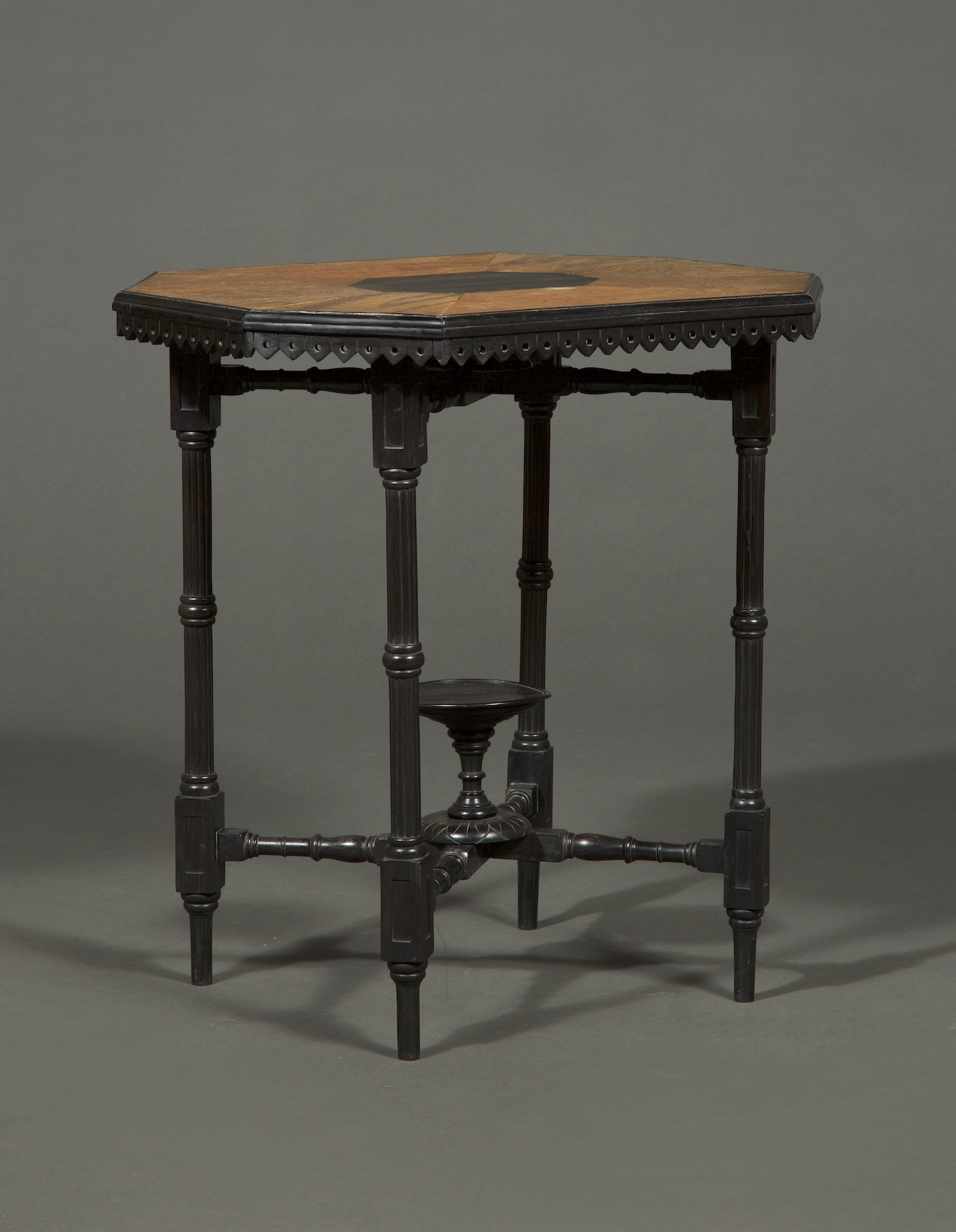
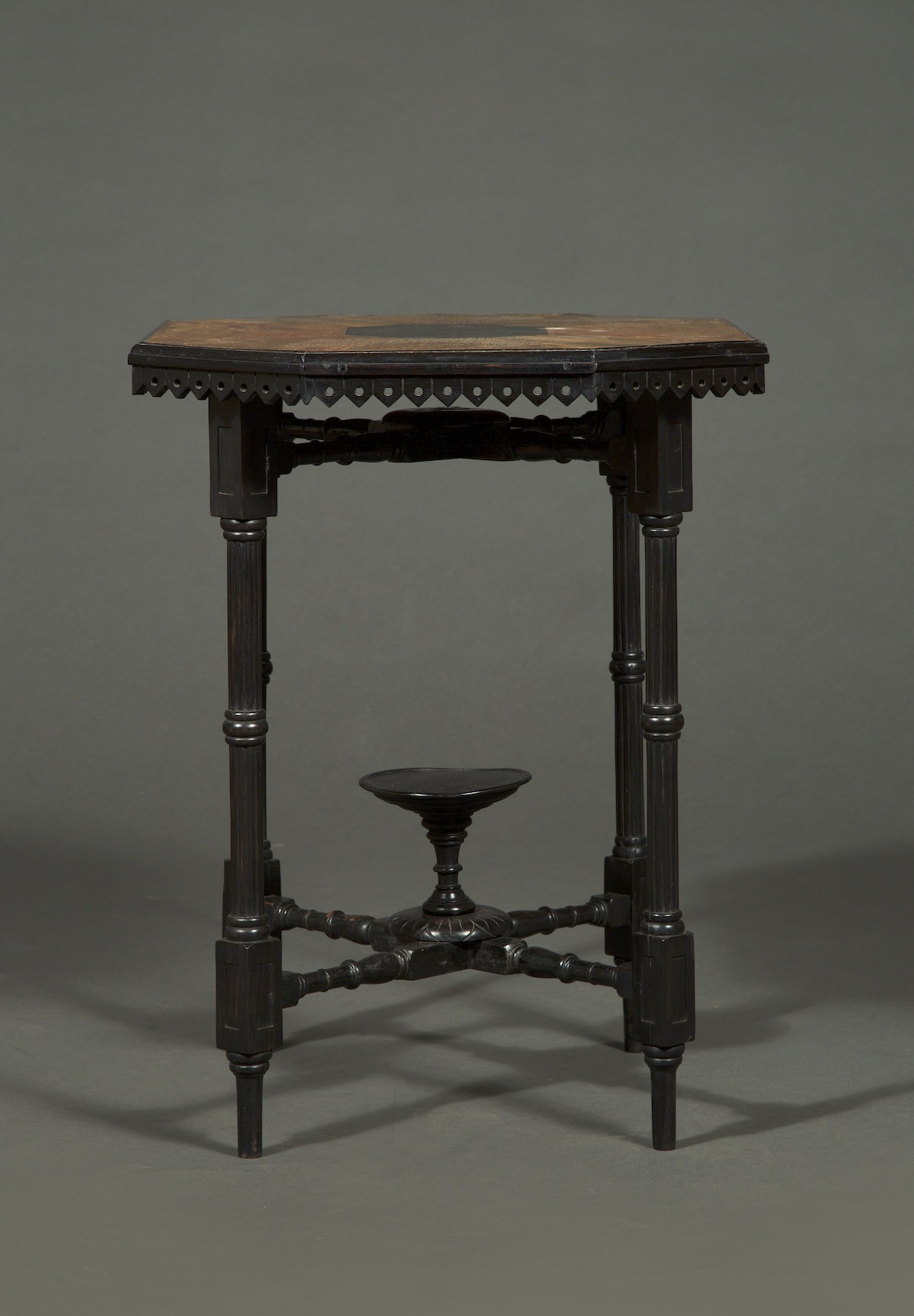
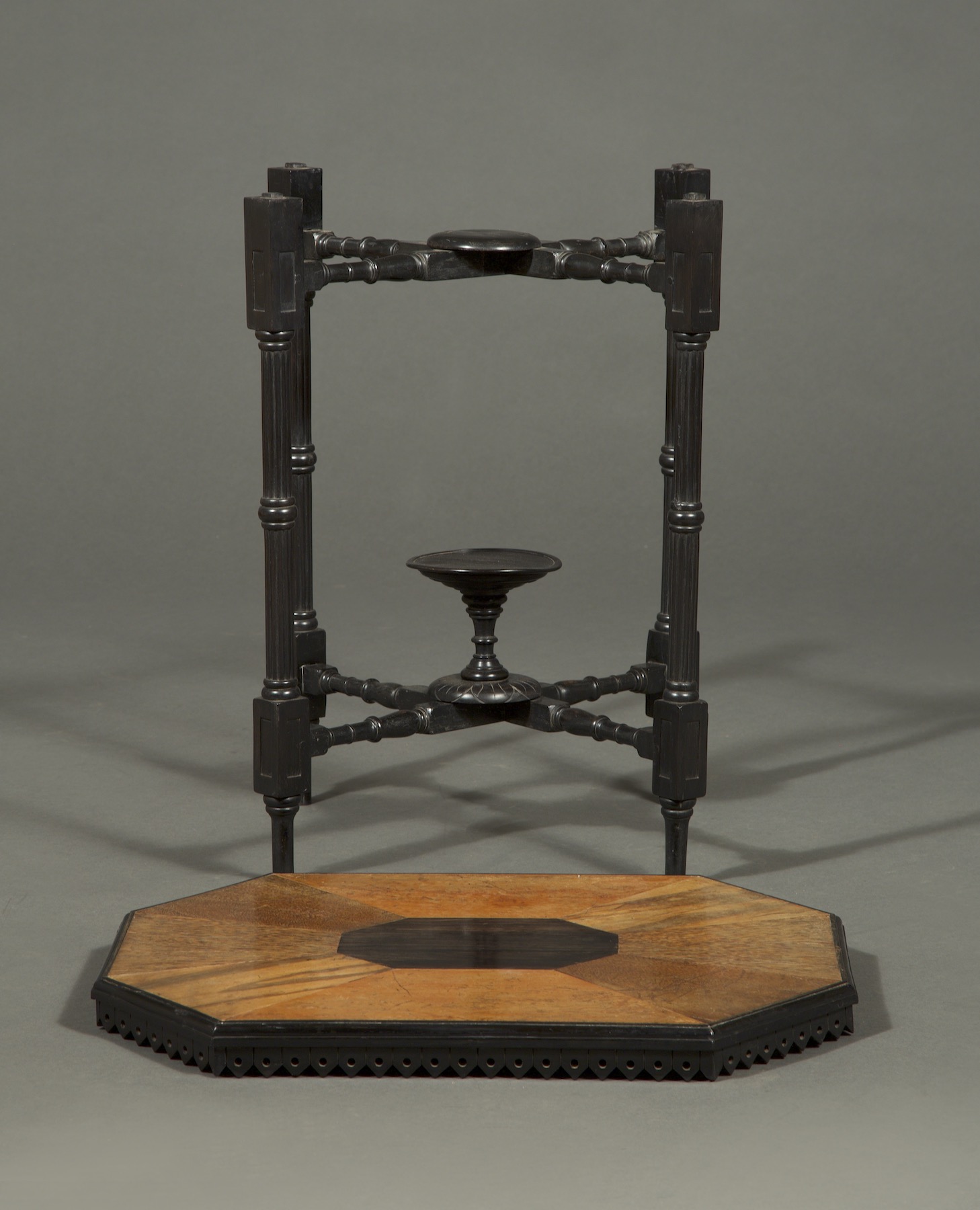
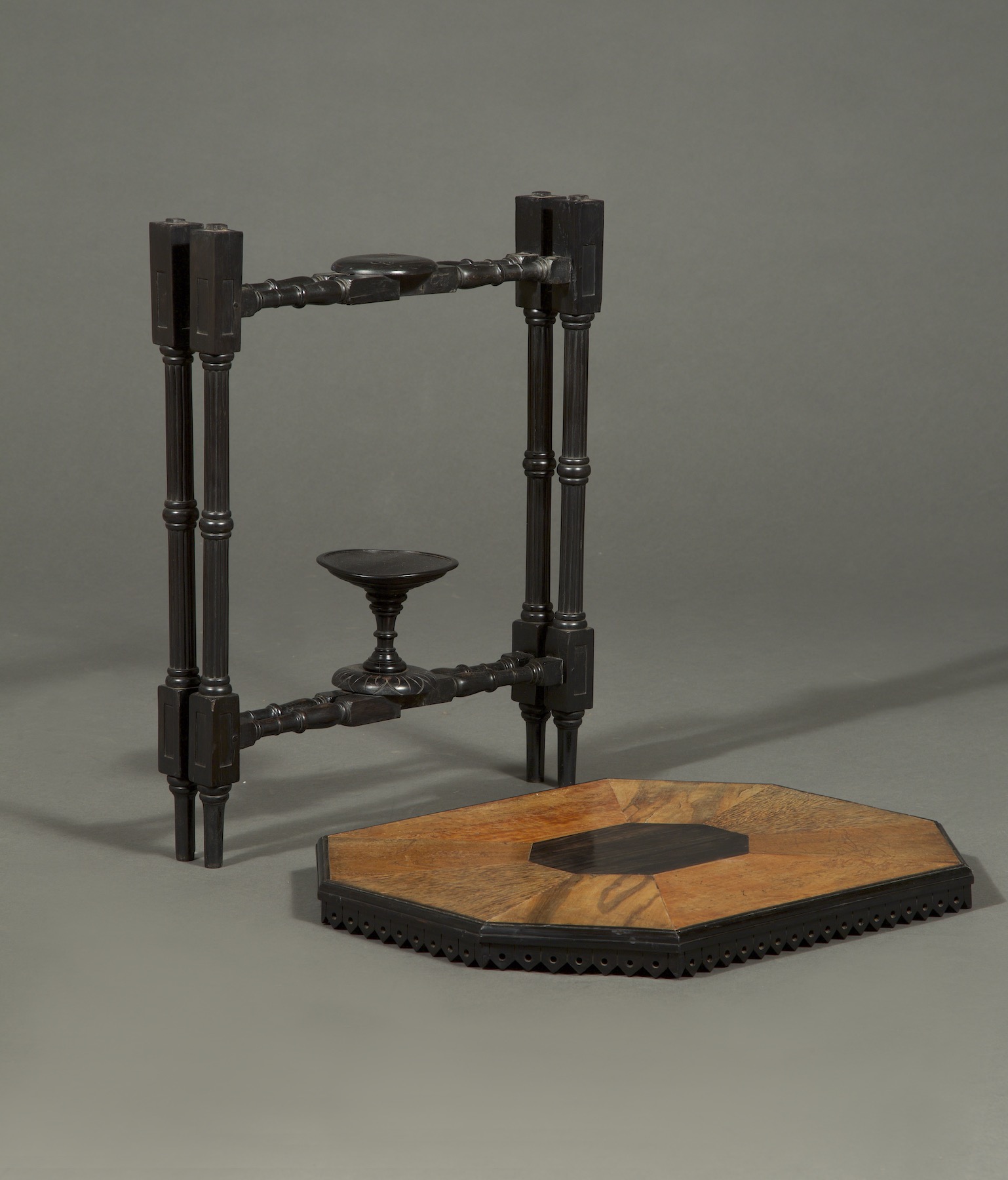
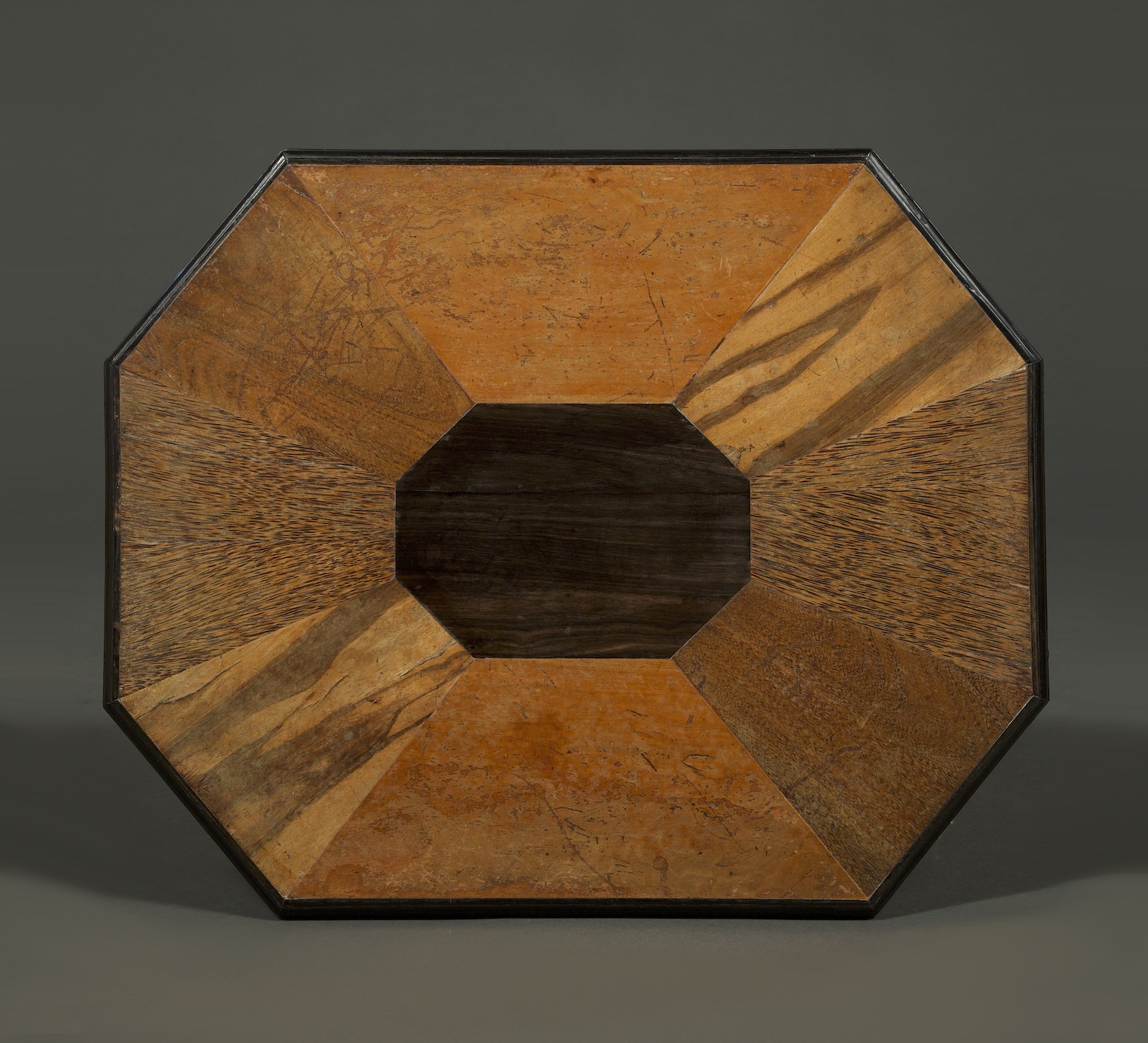
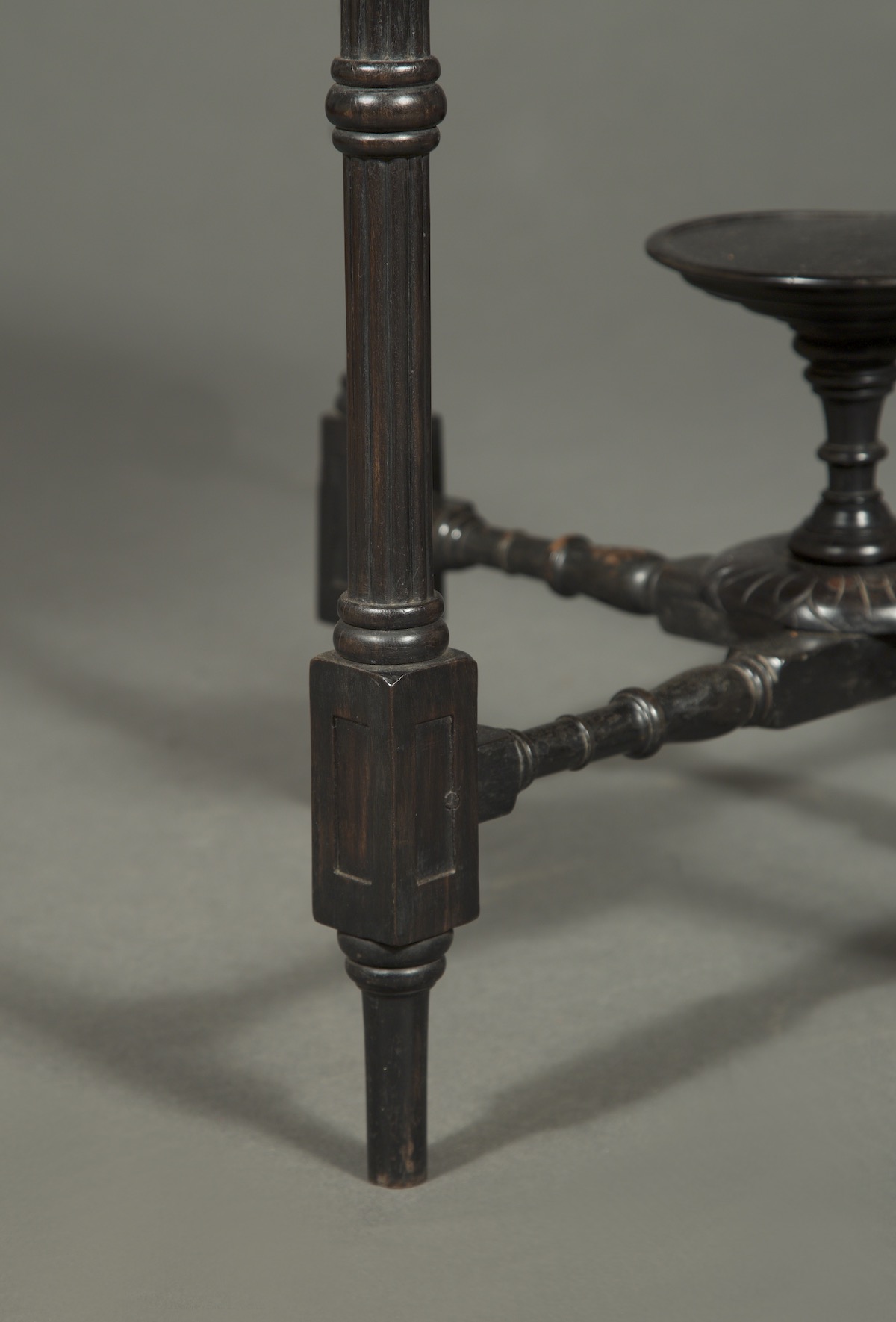
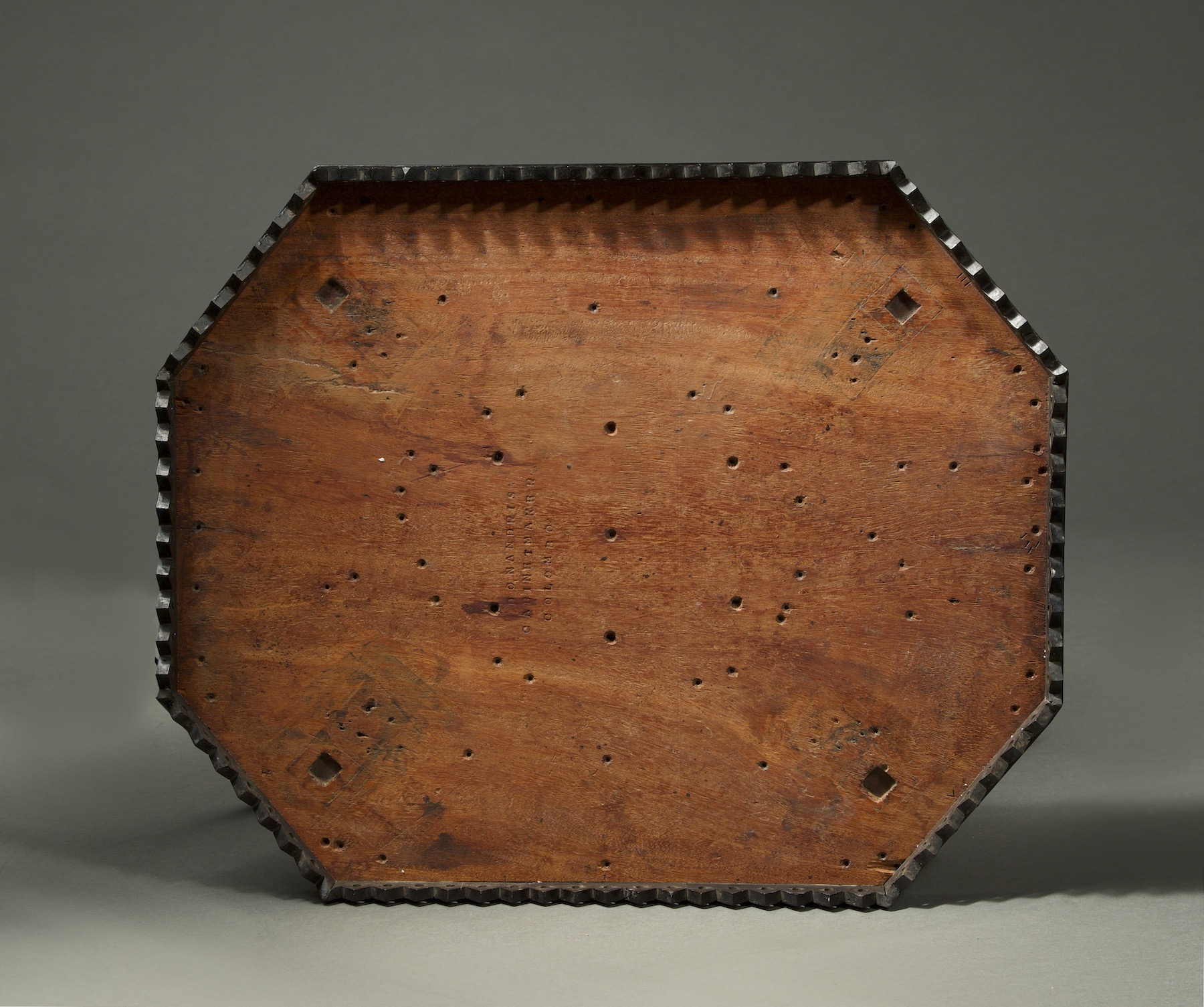
Of ebony and various tropical woods. The octagonal segmented top divided into nine tropical wood botanical specimens. The table edge with repeating pierced V pattern apron. The base of four turned and fluted legs with a pair of recessed paneled rectangular blocks at the top and bottom. The legs untied by two staggered ‘X’ stretchers centered by a tazza-form upstand. The whole raised on plain turned tapering feet. Minor restorations.
Marks:
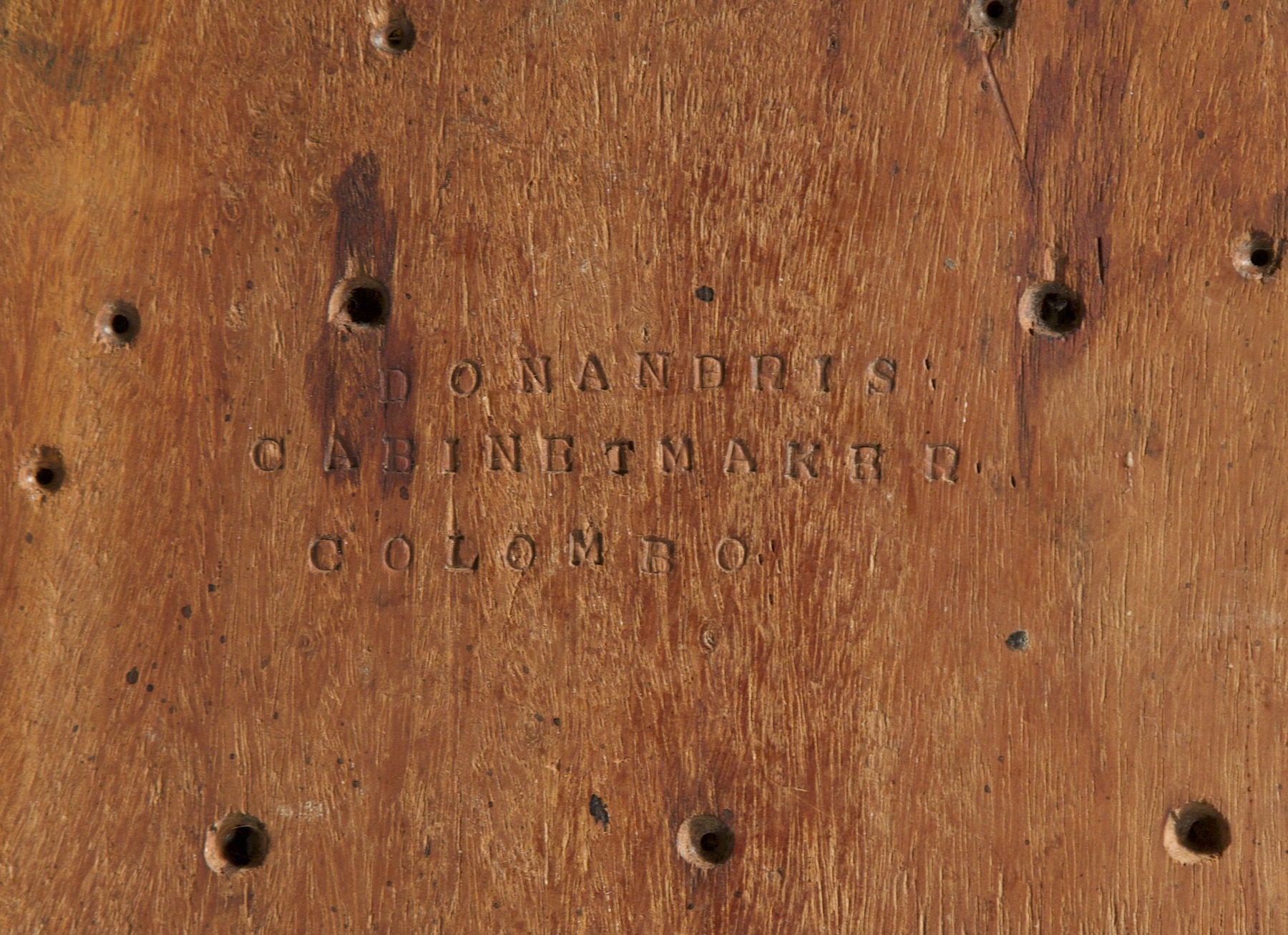
Stamped to the underside:
DON ANDRIS / CABINETMAKER / COLOMBO
This exceptionally well drawn example of a Ceylonese center table, composed of a solid carved ebony base and a hexagonal top inlaid with various indigenous tropical woods, was produced in the British colony of Ceylon (today Sri Lanka). Furniture production centers there included the major coastal city of Galle and the capital city of Colombo, where the Native Industrial School was located. The present table was executed in Colombo, and bears such a stamp to the underside.
While much colonial furniture is familiar in terms of form and style, it is distinguished by the use of native timber, ornament and construction methods. “Most furniture made in Sri Lanka during the British occupation was intended for local consumption by officials, planters, merchants and high status Sinhalese. However, evidence of a healthy furniture making industry on the island is shown by the recording of ‘cabinet ware’ in the Ledgers of Exports From Colonies—Under Countries“1 sent to places like Great Britain, Mauritius, the African ports in the Red Sea, and British and French possessions in India.
Whereas there is a tendency for nineteenth century cabinet makers to heavily embellish furniture with profuse carving, in the present table a distinctly more geometric, linear approach is the keynote, with no florid ornament, giving rise to a more austere aesthetic somewhat in line with furniture of the Arts & Crafts movement.
Full research report available on request.