
Research:
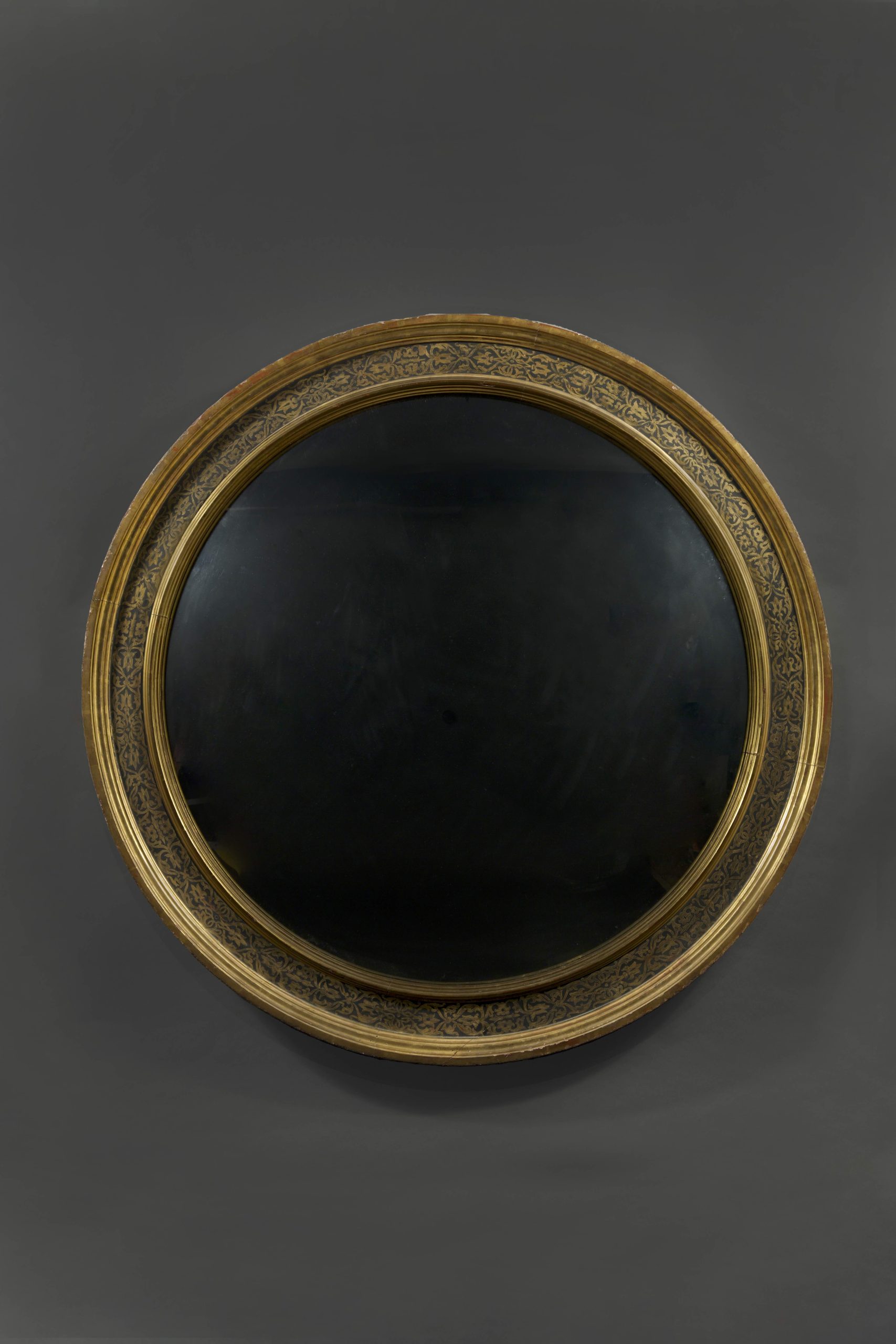
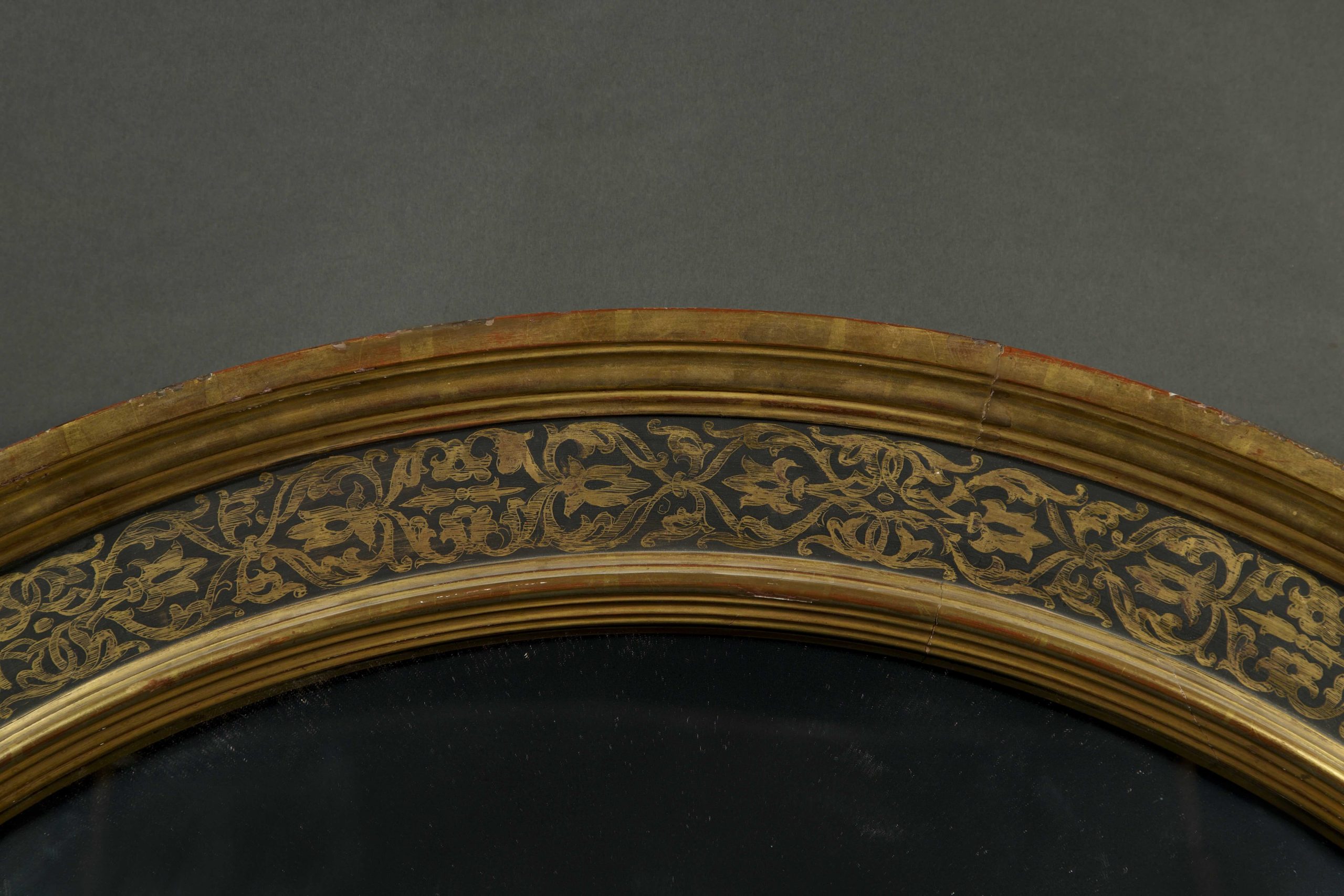
Of gilt and ebonized wood. Possibly originally conceived as frame for a painting. The later convex mirror plate bordered by a circular frame with gilt molded edges surrounding a frieze of ebonized arabesque decoration.
The present mirror frame is executed in the Renaissance Revival style, which grew in popularity beginning in the middle of the nineteenth century. A number of pieces displayed at the 1851 Great Exhibition in London were designed in this fashion, leading Ralph Nicholson Wornum, keeper and secretary of the National Gallery of London, to note in his prize essay, The Exhibition as a Lesson in Taste, that ‘The best understood style is that which we have been obliged to designate the mixed Cinquecento or Renaissance: the apparently most able designers of Italy, France, Austria, Belgium and England, have selected this style for the Exhibition of their skill: if, therefore, the Exhibition can be considered as a test of the favourite style of the day, it is evidently the Cinquecento Renaissance.”
The ebonized arabesque decoration on the frieze of the present frame relates to sgraffito work, a decorative technique by which scratching through an outer layer reveals a contrasting underlying color or surface. The technique features prominently on sixteenth century frames, where gold leaf is applied and painted over, with a design then etched into the paint to allow the gilt areas to come through, and was often executed in cauliculi or vine leaf pattern.
Full research report available on request.