
Research:
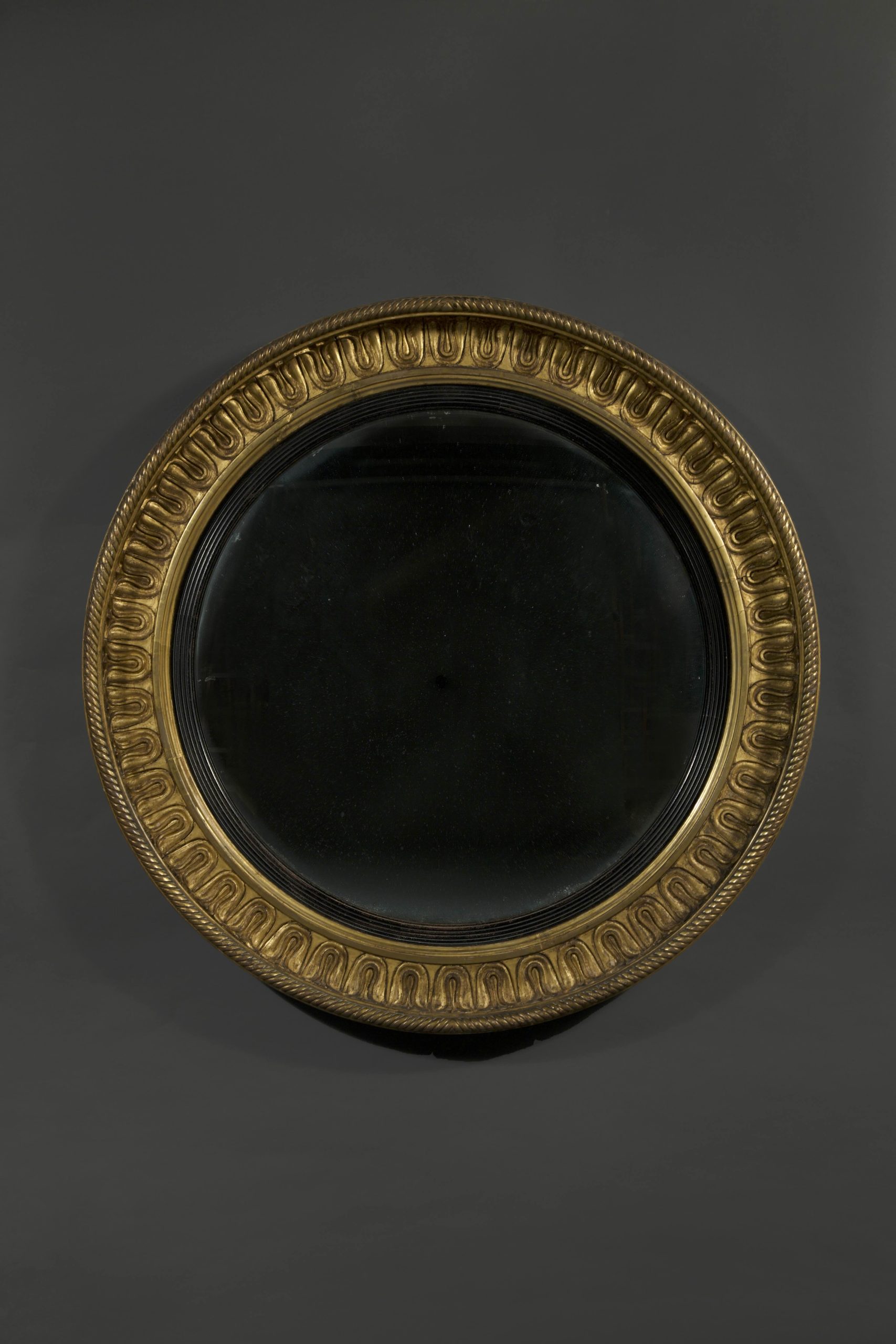
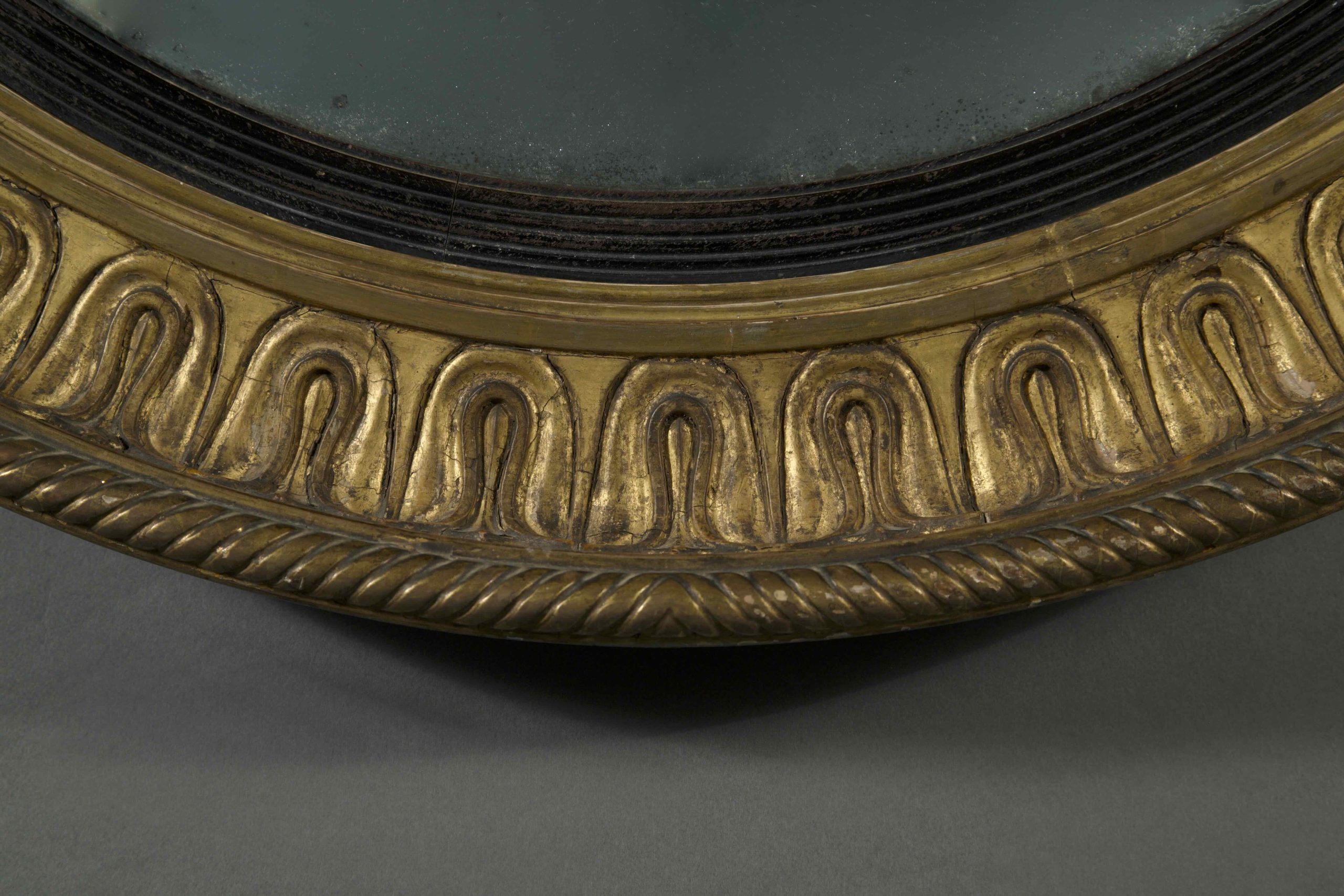
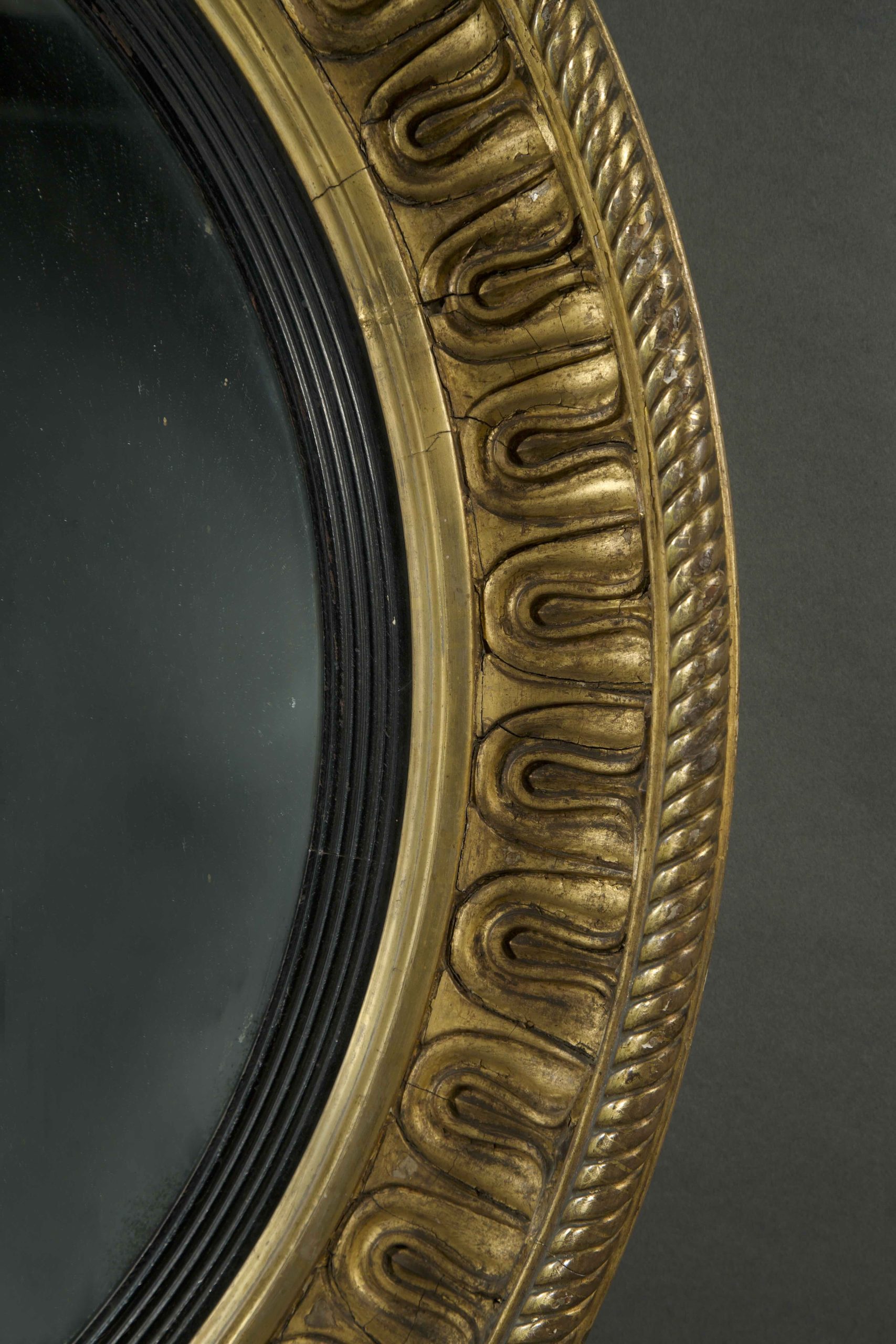
Of giltwood and composition with ebonized reeded slip. The original circular convex mirror plate with reeded slip bordered by a circular frame with repeating stylized lotus leaf motif, flanked by a twisted rope border.
One of the earliest and best-known depictions of a convex mirror occurs in the Arnolfini Wedding Portrait by Jan Van Eyck in 1434. To make a convex plate at this early date probably involved use of the blown method, an extremely skilled and costly process that made such pieces the preserve of the very wealthy. It was not until the latter part of the eighteenth century that such mirror plates could be made in a mold, thus allowing a wider scale of production. This more efficient, less costly approach promoted a great fashion for this type of mirror in England and it was widely popular among the high society.
Curiously, no other European country adopted the convex mirror type as widely; it remained a peculiarly English fashion. Often the decoration of convex mirrors alluded to victory and military – particularly naval – excellence, with common symbols of might and triumph being the eagle, cannon balls and palm fronds. The present mirror, however, deviates from the more formulaic examples by adopting an Egyptianized grammar of ornament in its lotus bud frame, illustrative of the revival of interest in ancient architecture and decoration that informed the English furniture design of the early nineteenth century.
Full research report available on request.