
Research:
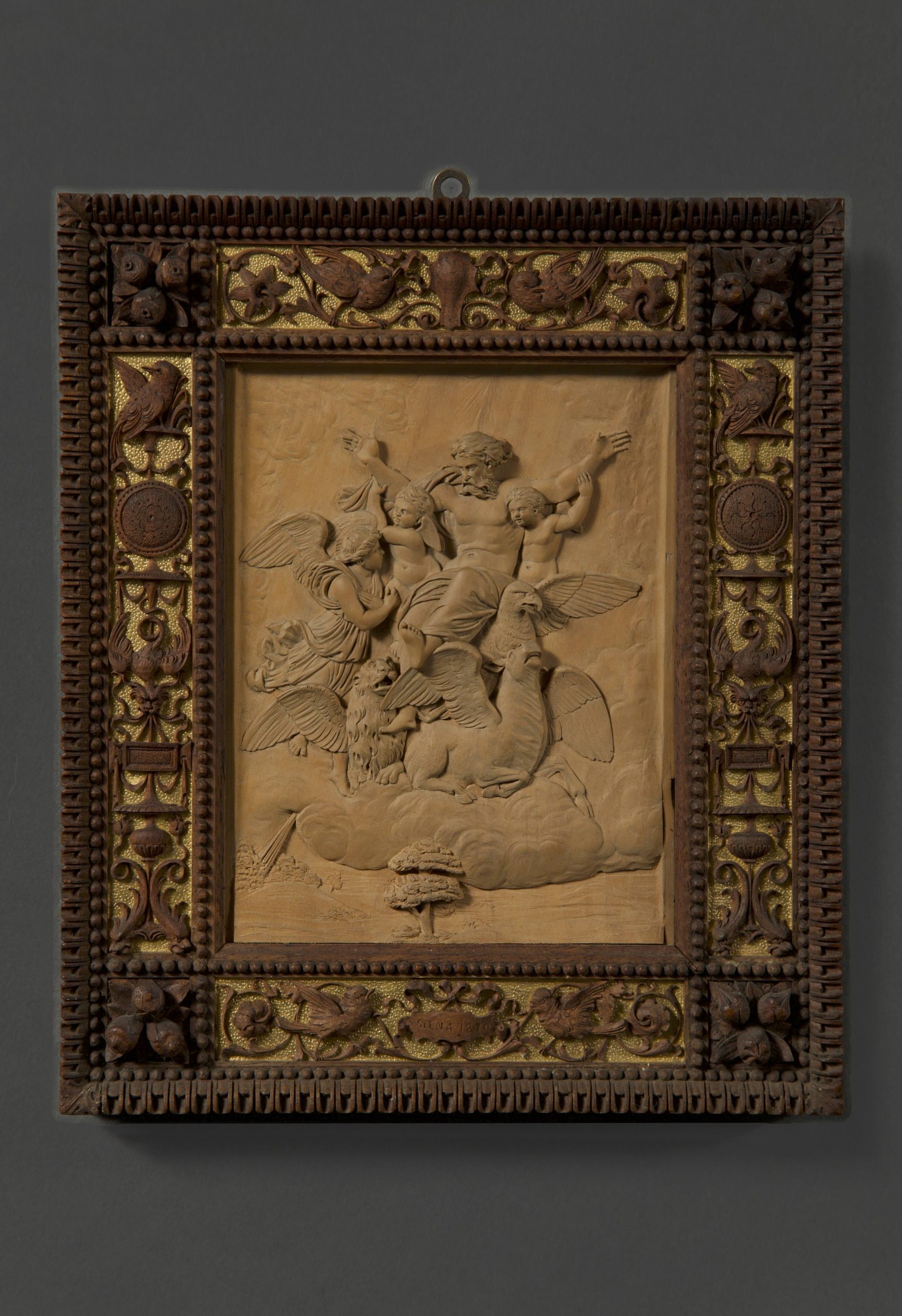
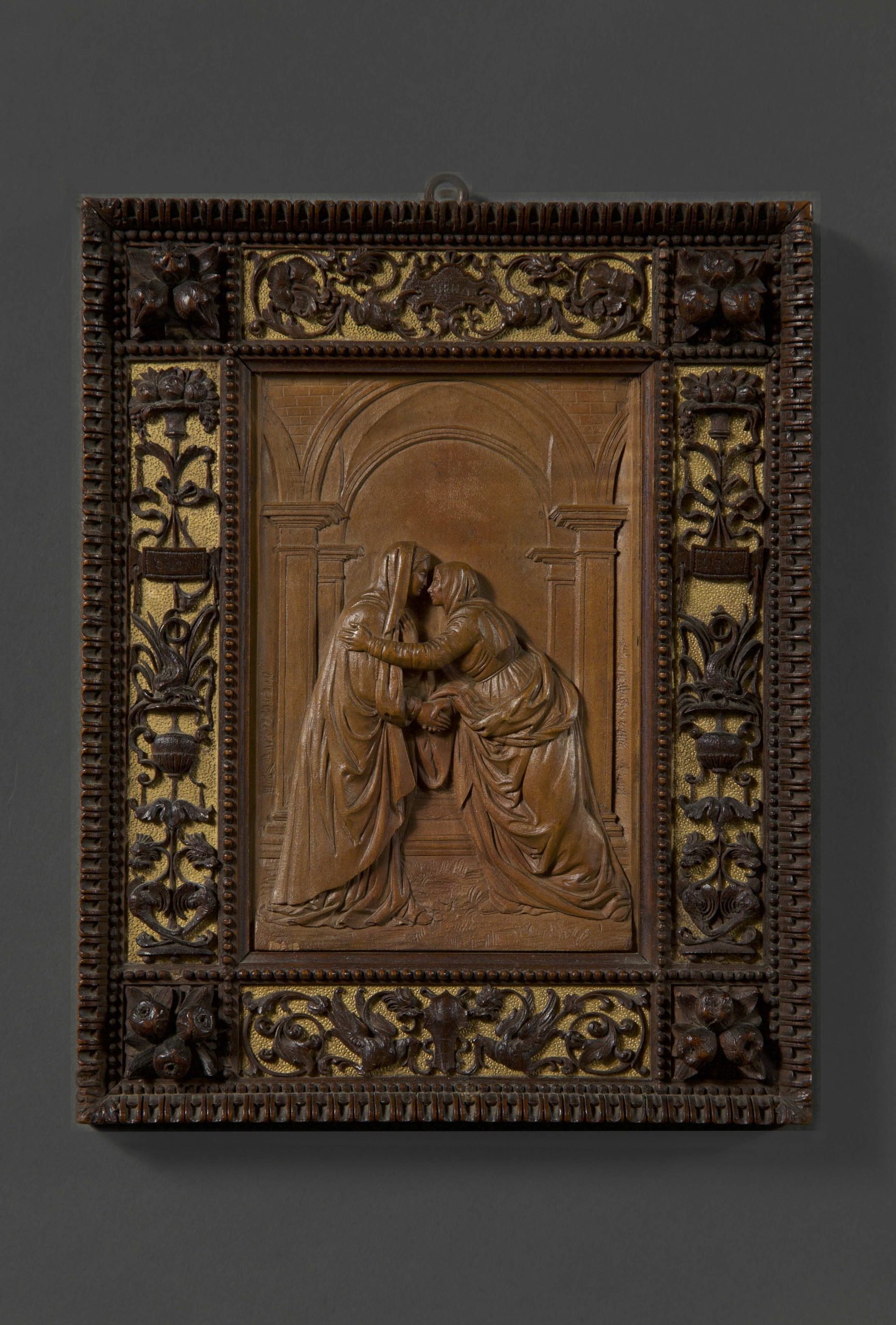
Of boxwood and walnut. Each rectangular carved low relief panel surrounded by a carved walnut frame with parcel gilt ground.
Marks:
Panel of The Visitation:
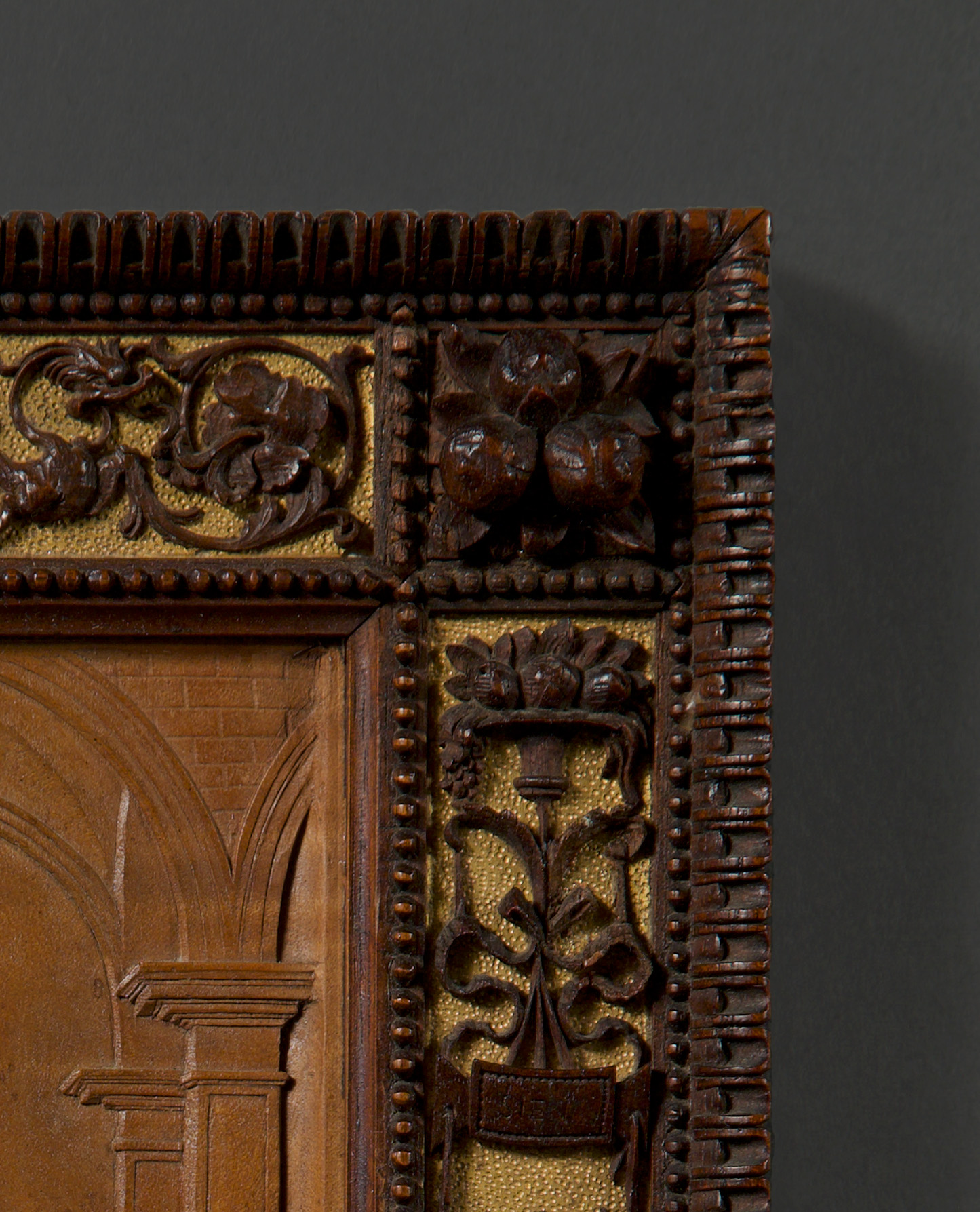
Inscribed on the front of the frame SIENA in top center cartouche, GIUSTI within the left hand tablet and SIENA within the right hand tablet.
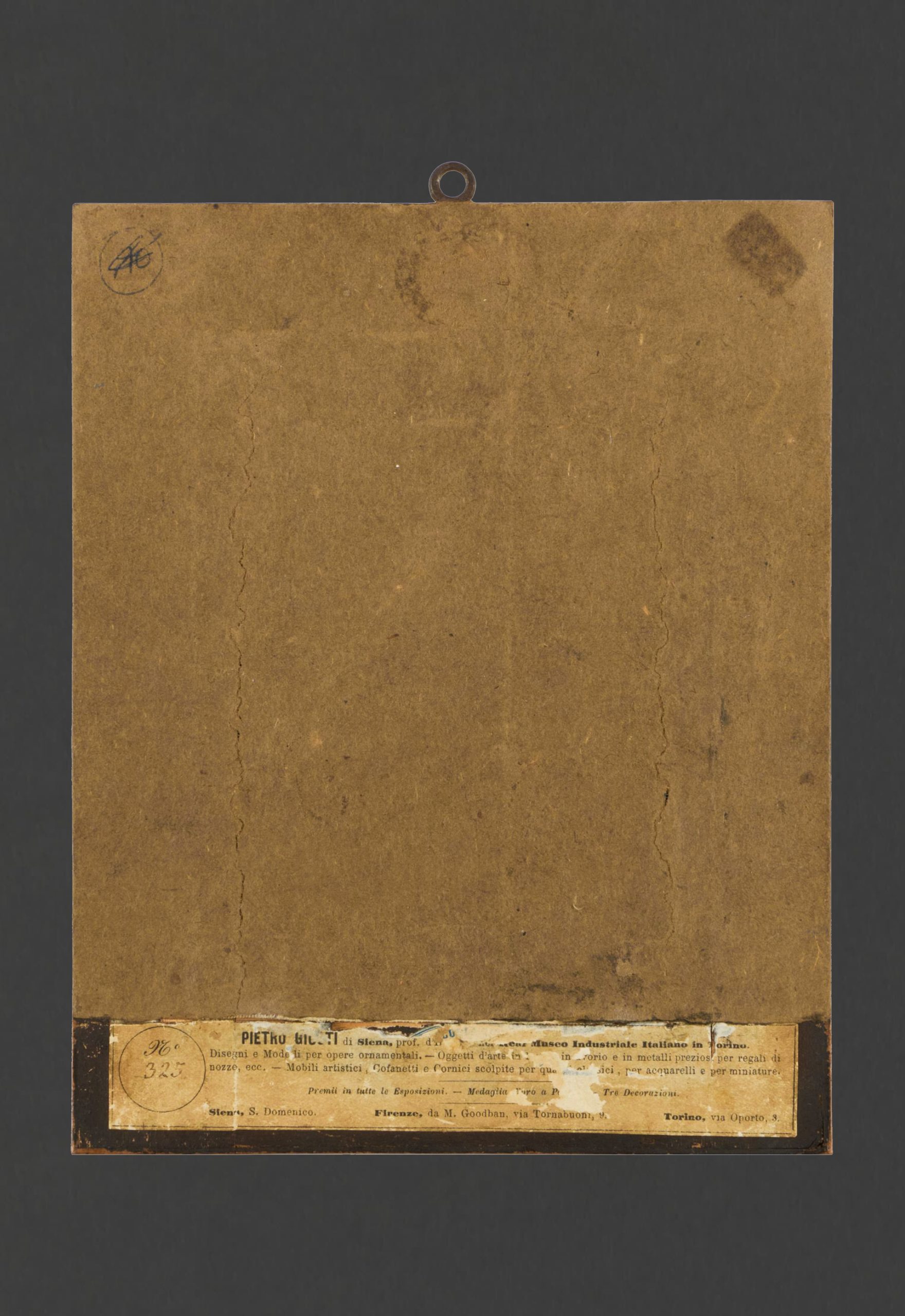
Extensive printed label for Pietro Giusti’s workshop to reverse with the number 325 written in ink
Panel of The Vision of Ezekiel:
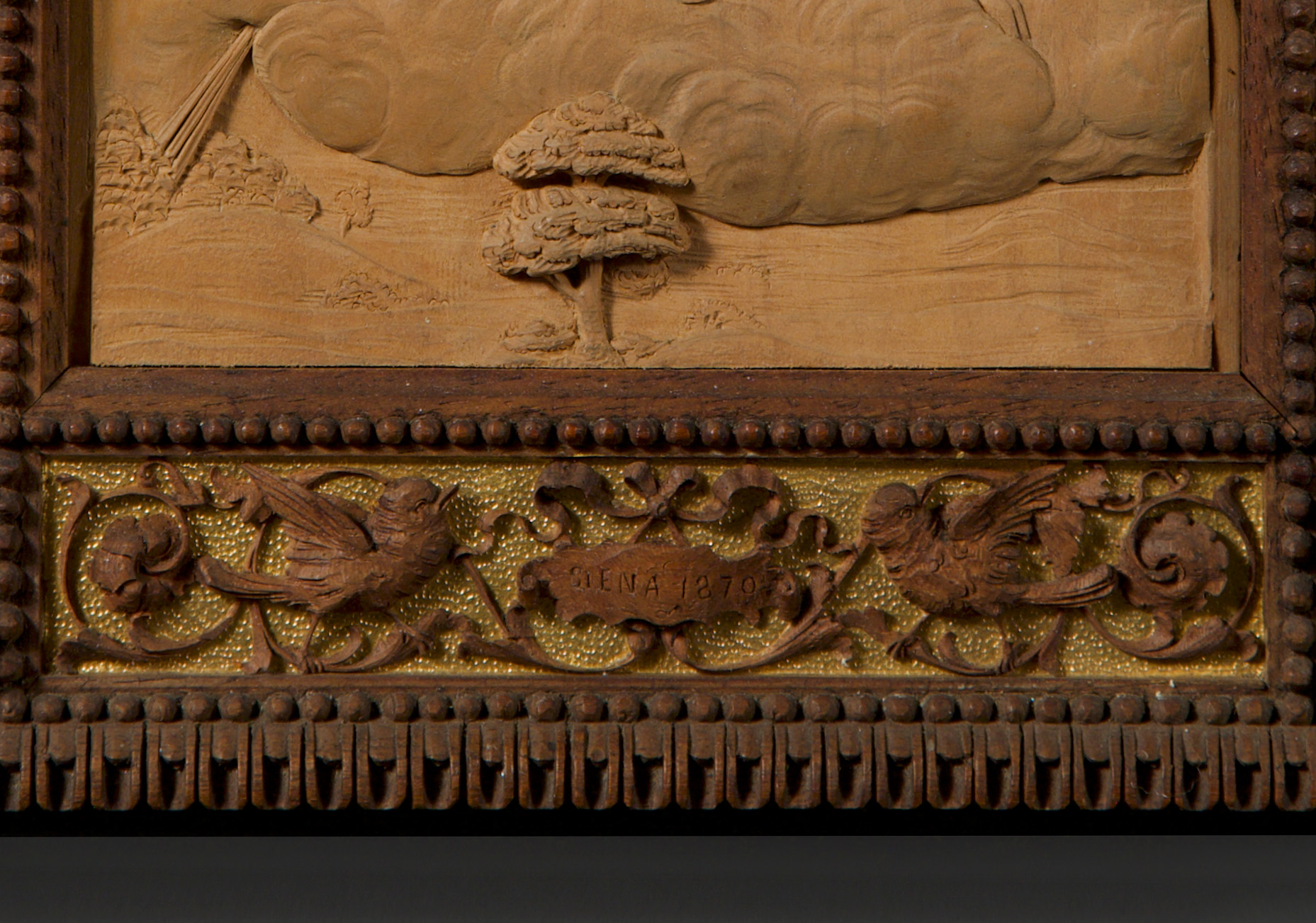
Inscribed on the front of the frame SIENA 1870 in bottom center cartouche.
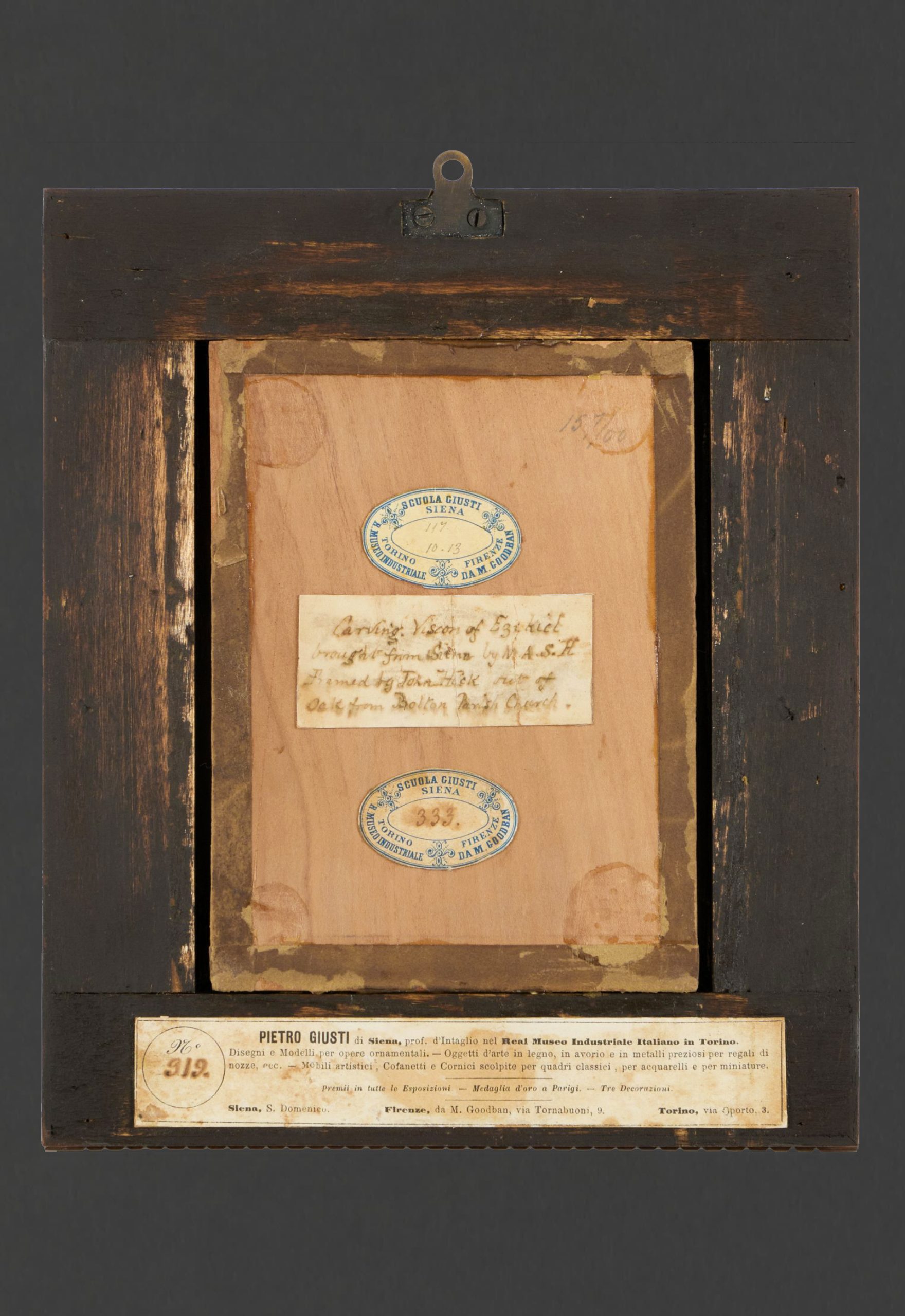
Two oval labels for the Scuola Giusti numbered 117 and 333
Extensive printed label for Pietro Giusti’s workshop to reverse with the number 319 written in ink
Paper label inscribed in ink: Carving. Vision of Ezekiel / brought from Siena by NASH / Framed by John Hick out of / oak from Bolton Parish Church.
Provenance:
Panel of The Visitation:
H. Blairman & Sons, London
Collection of Mr. Aso Tavitian
Panel of The Vision of Ezekiel:
Collection of John Hick, Esq. M.P. of Mytton Hall
Pietro Giusti (1822–1878) was one of the most renowned designers and intagliatore of the nineteenth century in Tuscany, a region long celebrated for its wood carving. Toward the middle of the nineteenth century there was a “growing fashion for a weighty, opulent and fantastic vision of the 16th century interior” and this area, particularly Siena, fostered a neo-Renaissance style in the manner of artisans such as Antonio di Neri Barili (1453–1516). Siennese carving was “notable for its perfect, smooth, sharp finish, without flaws and often found in a combination of different colored woods” and made eclectic use of motifs and forms from other eras in the Renaissance style.
The present frames belong to a group of works by the artist that employs highly delicate carving in dark wood against a parcel gilt ground. The most elaborate example is the tabernacle frame now at the Victoria and Albert Museum mentioned above. “The use of a punched gold background to set off the extremely attenuated [carving]…is characteristic of the high-pitched virtuosity of such craftsmen;” Giusti’s mentor, Barbetti, for example, also employed this technique as seen on a frame for a sixteenth century painting of Madonna & Child with John the Baptist in the National Gallery.
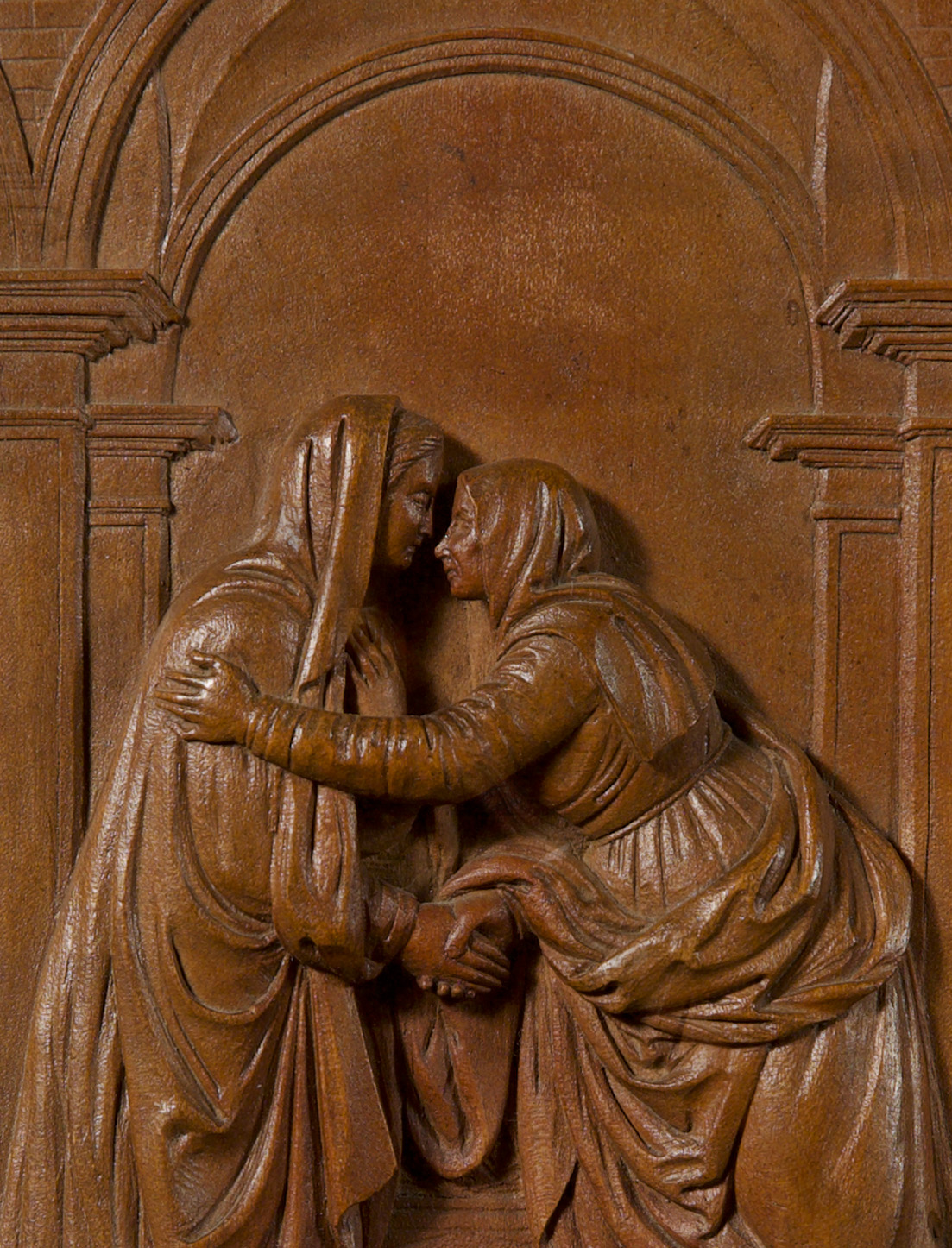
The carved boxwood relief of The Visitation was taken from an oil painting of the same name by Mariotto Albertinelli (1503), in the Uffizi Gallery, Florence. The frame, carved in walnut with parcel gilt background, resembles the grotesque decoration of ancient Roman villas and reimagined by the likes of Raphael at the Vatican Palaces circa 1516, comprising scrolling foliage, vases, dolphins, and griffins. Two tablets on the left and right read GIUSTI and SIENA, respectively, while a cartouche at top center is also inscribed SIENA.
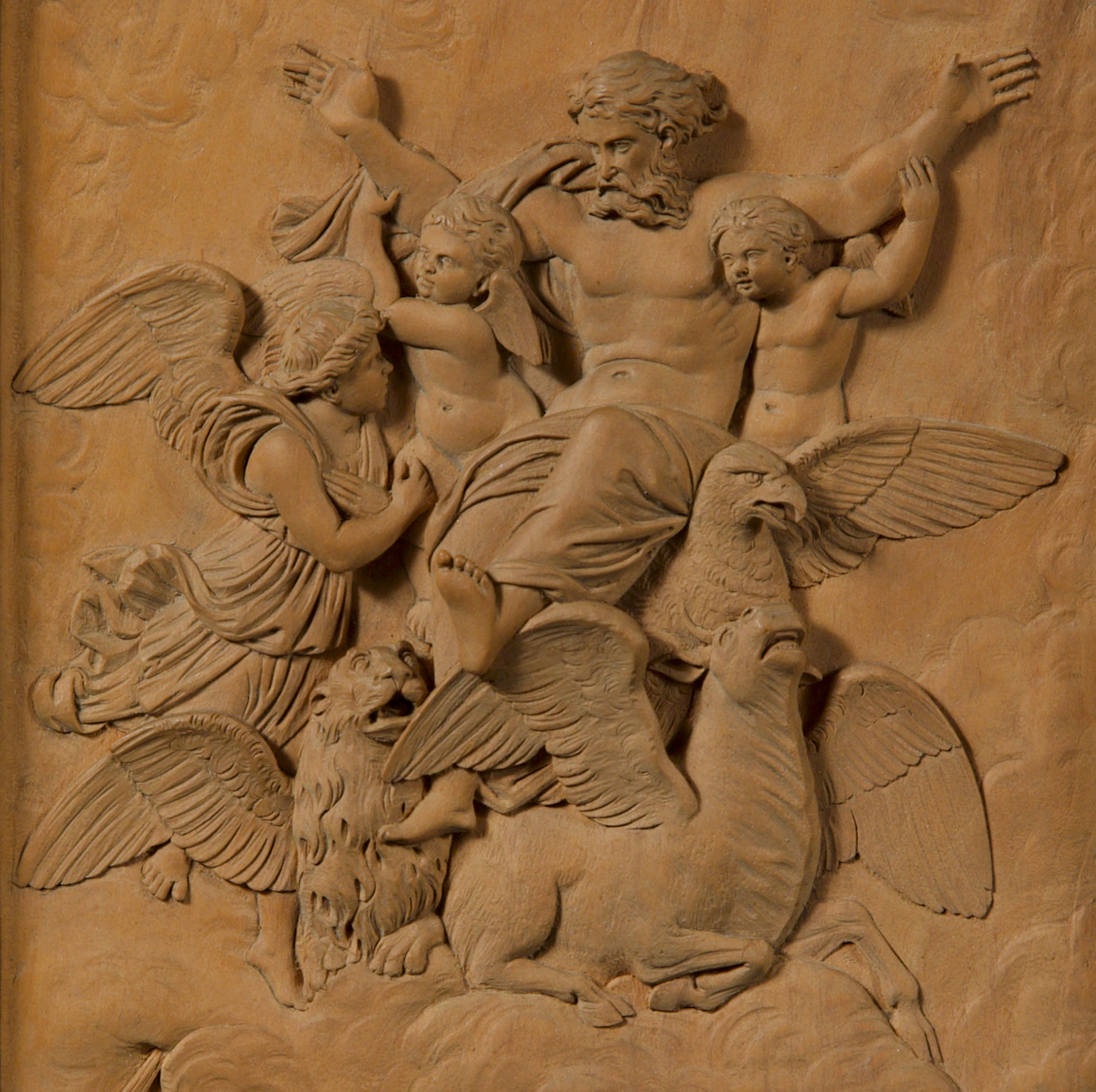
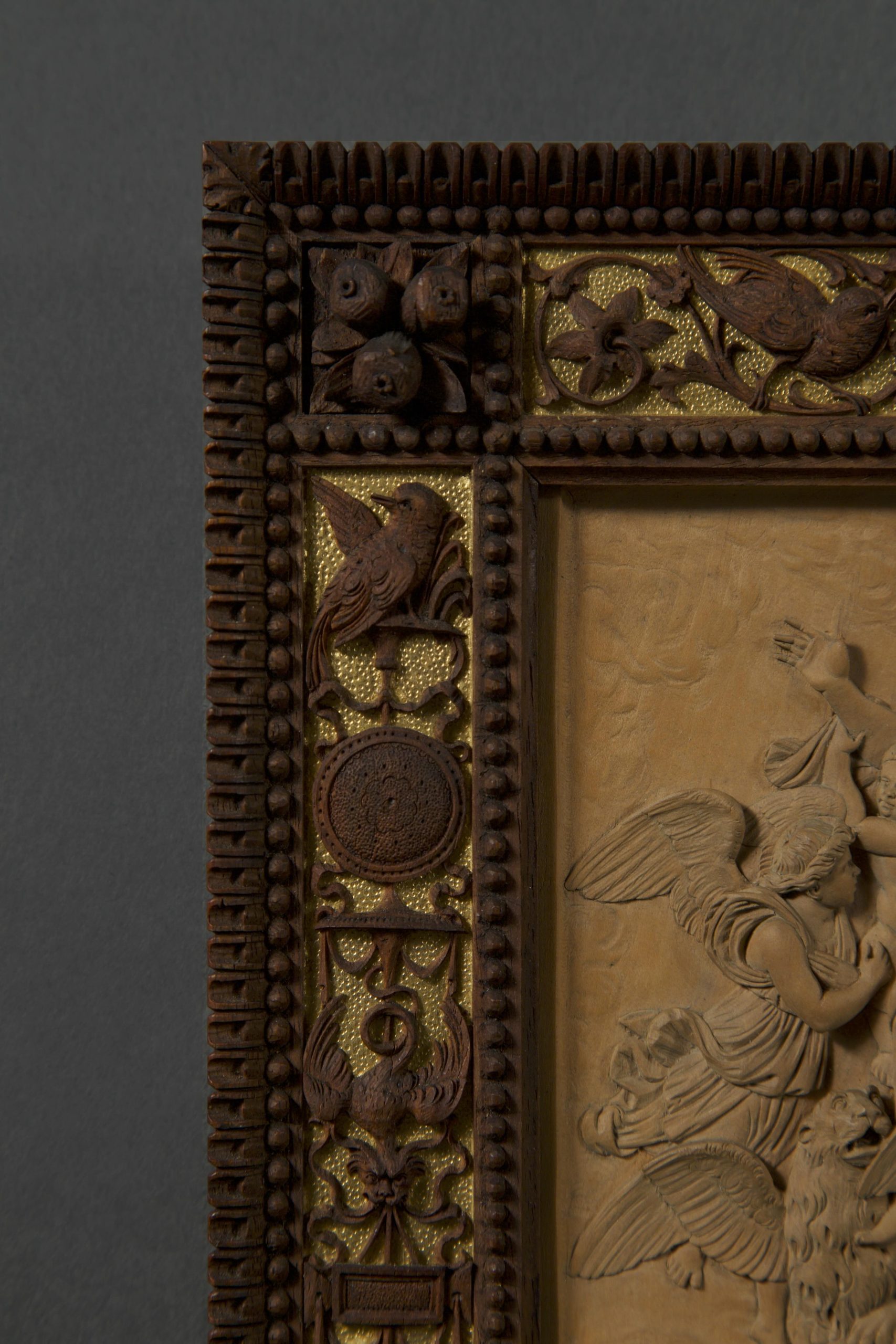
The carved panel of the Vision of Ezekiel is taken from a circa 1519 painting by Raphael in the Pitti Palace, Florence, and is similarly framed, the chosen motifs including, birds shields, vases and mythical beasts. It is centered at the bottom by a cartouche that is inscribed SIENA 1870.
Full research report available on request.