
Research:
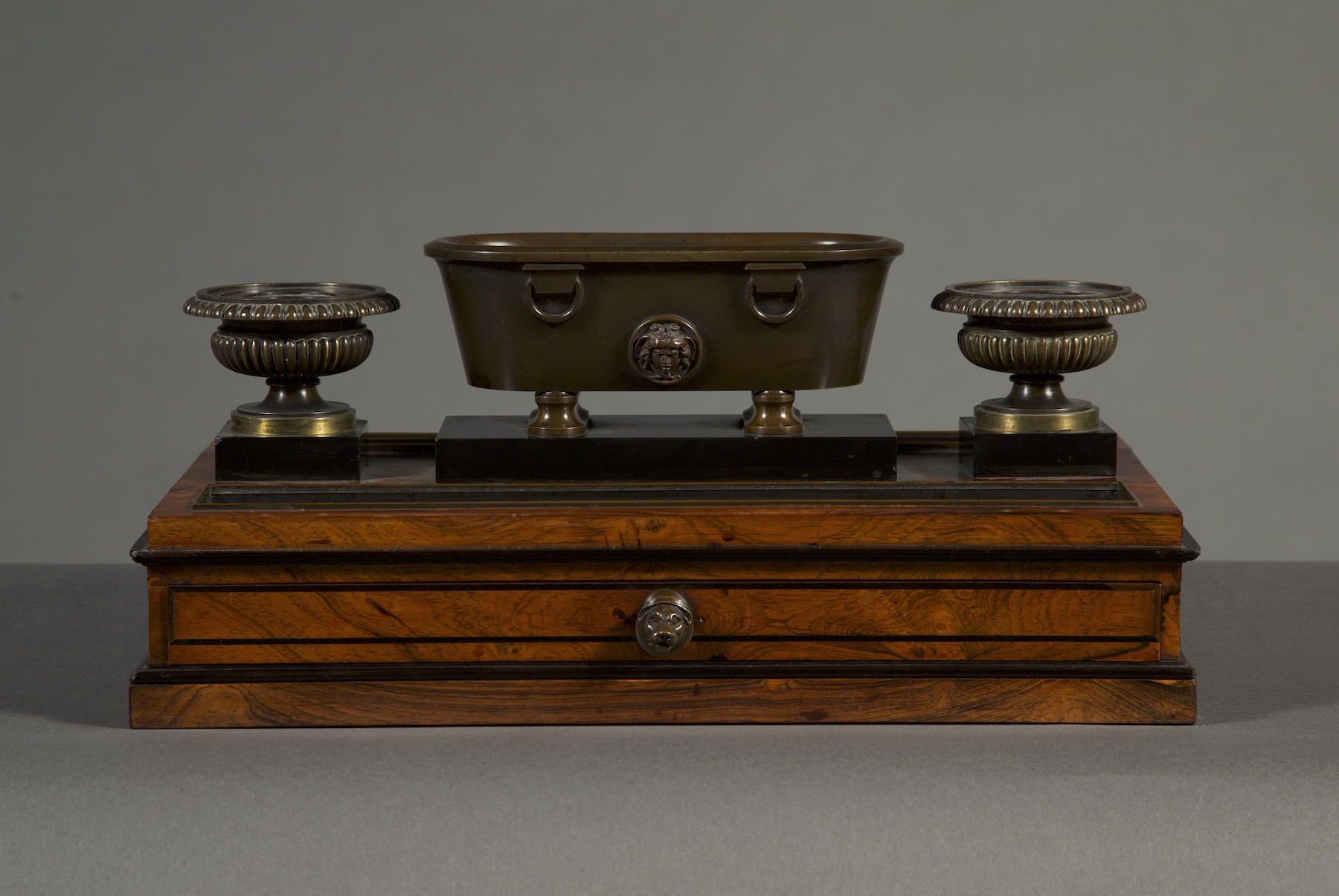
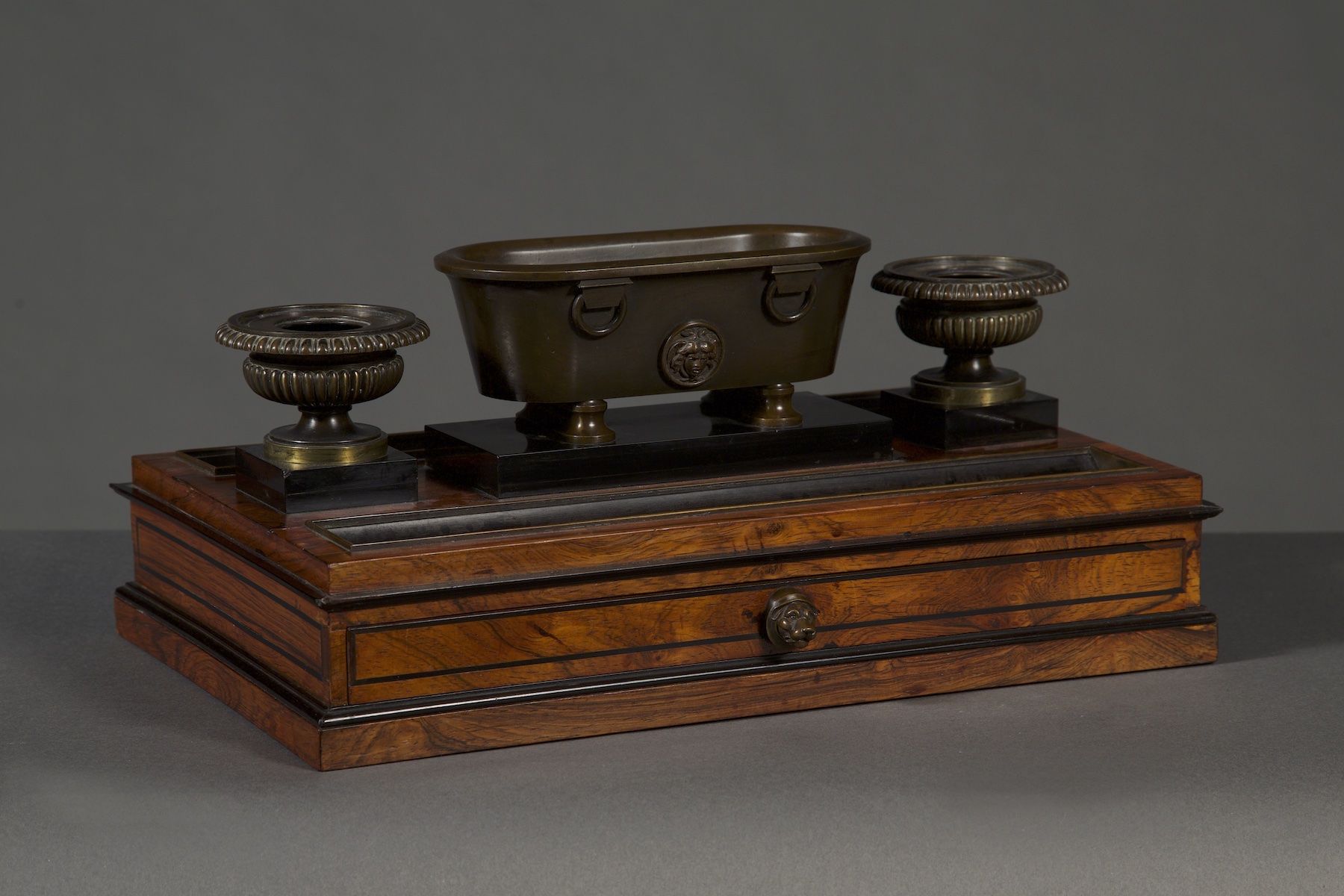
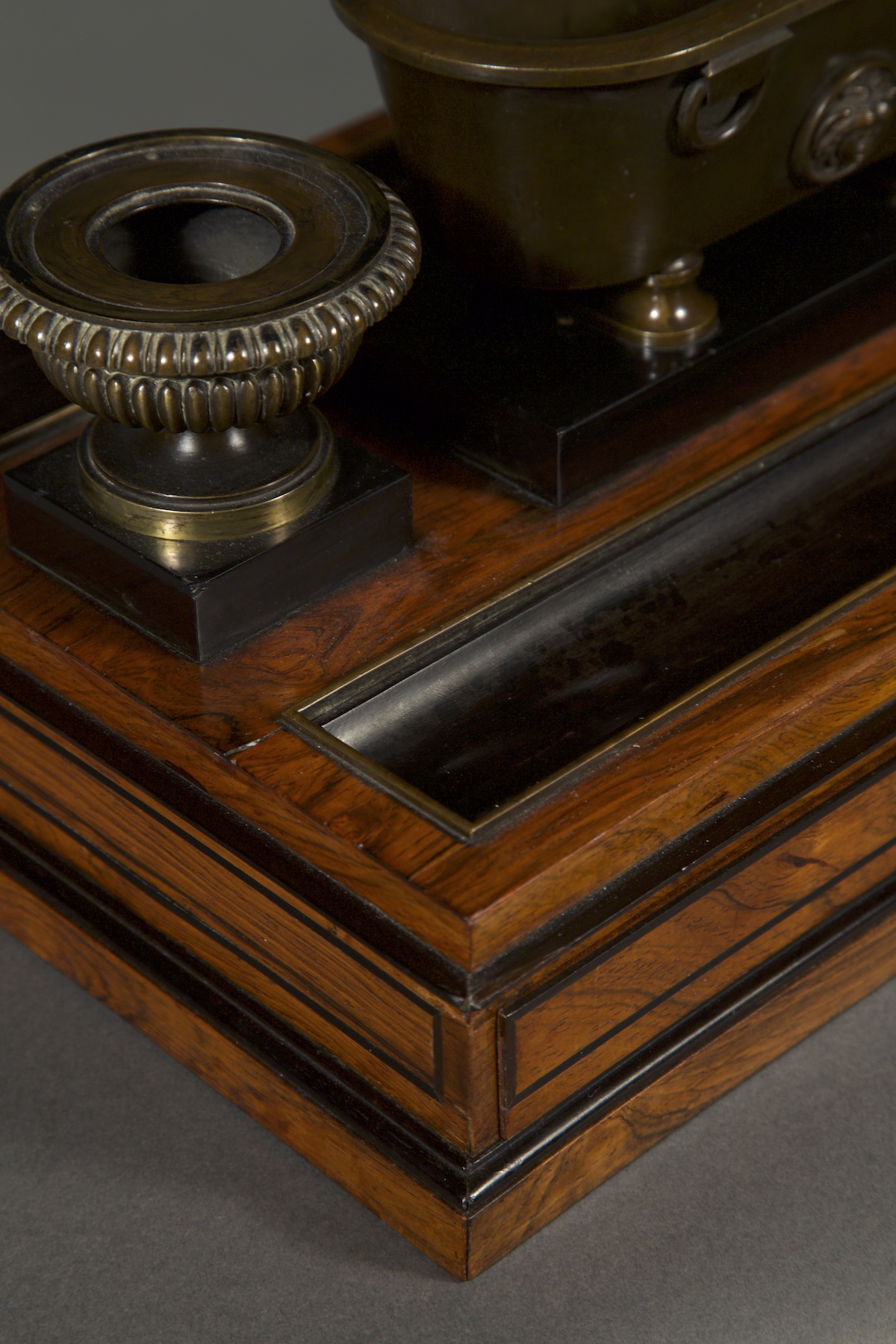
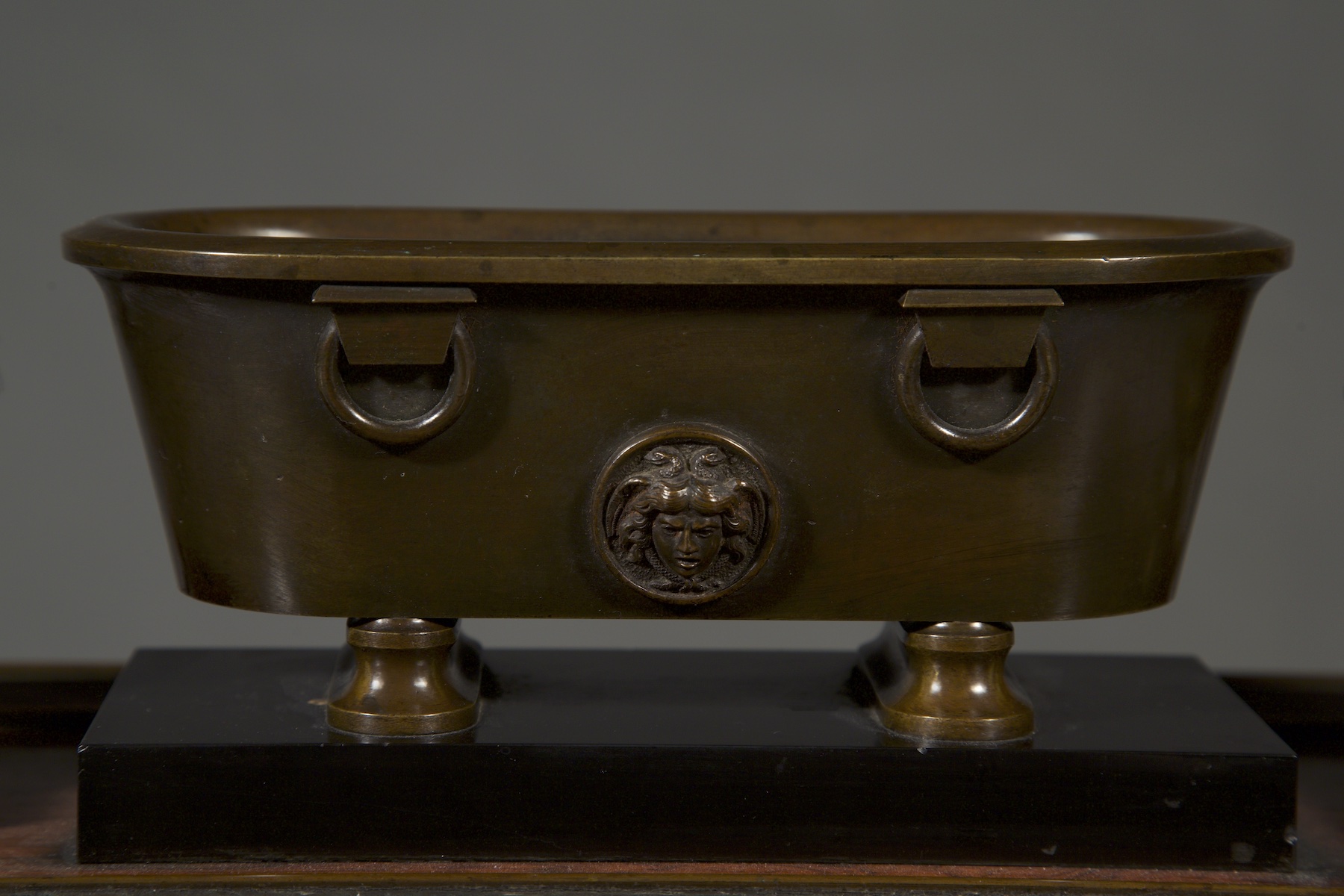
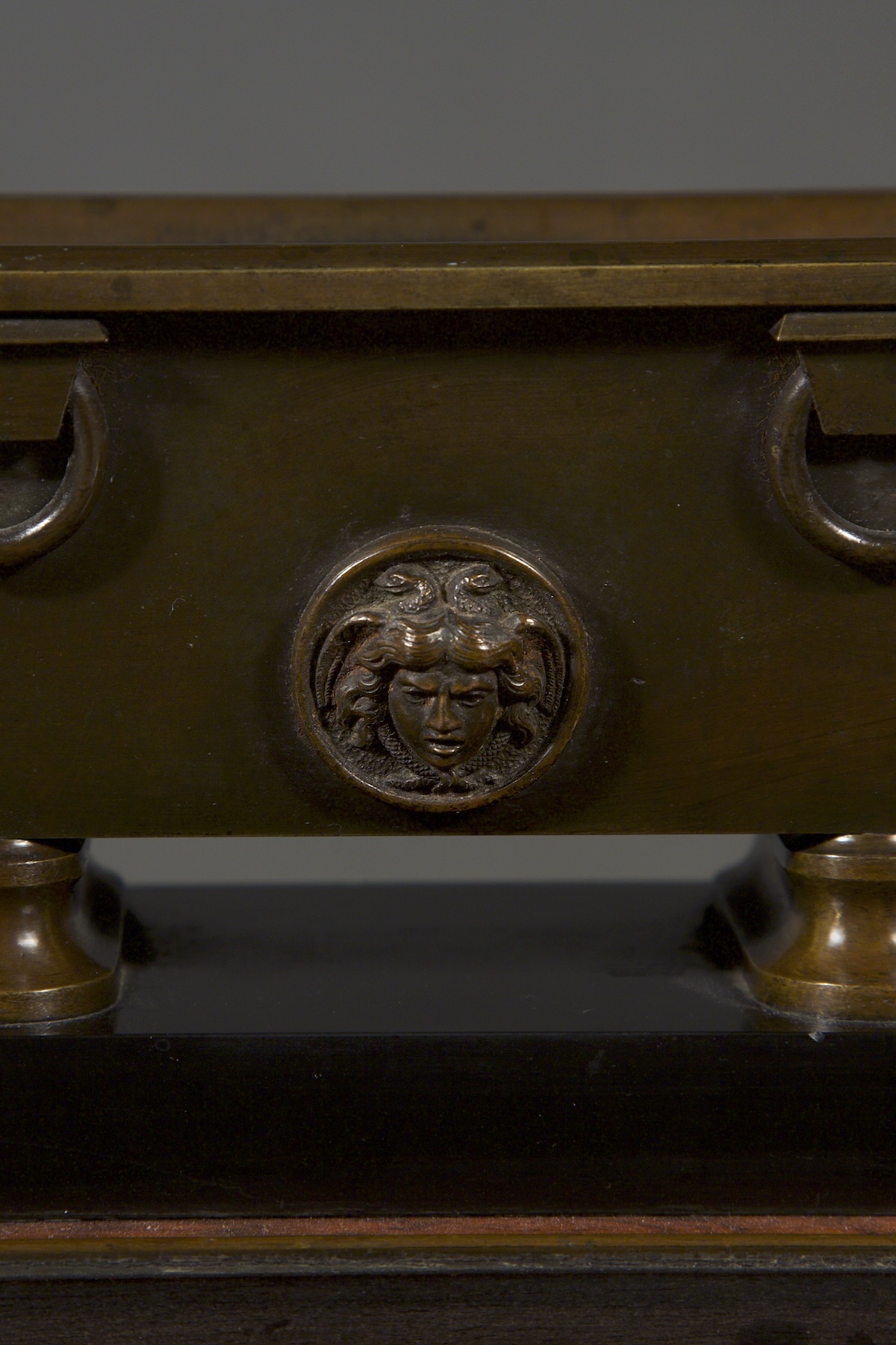
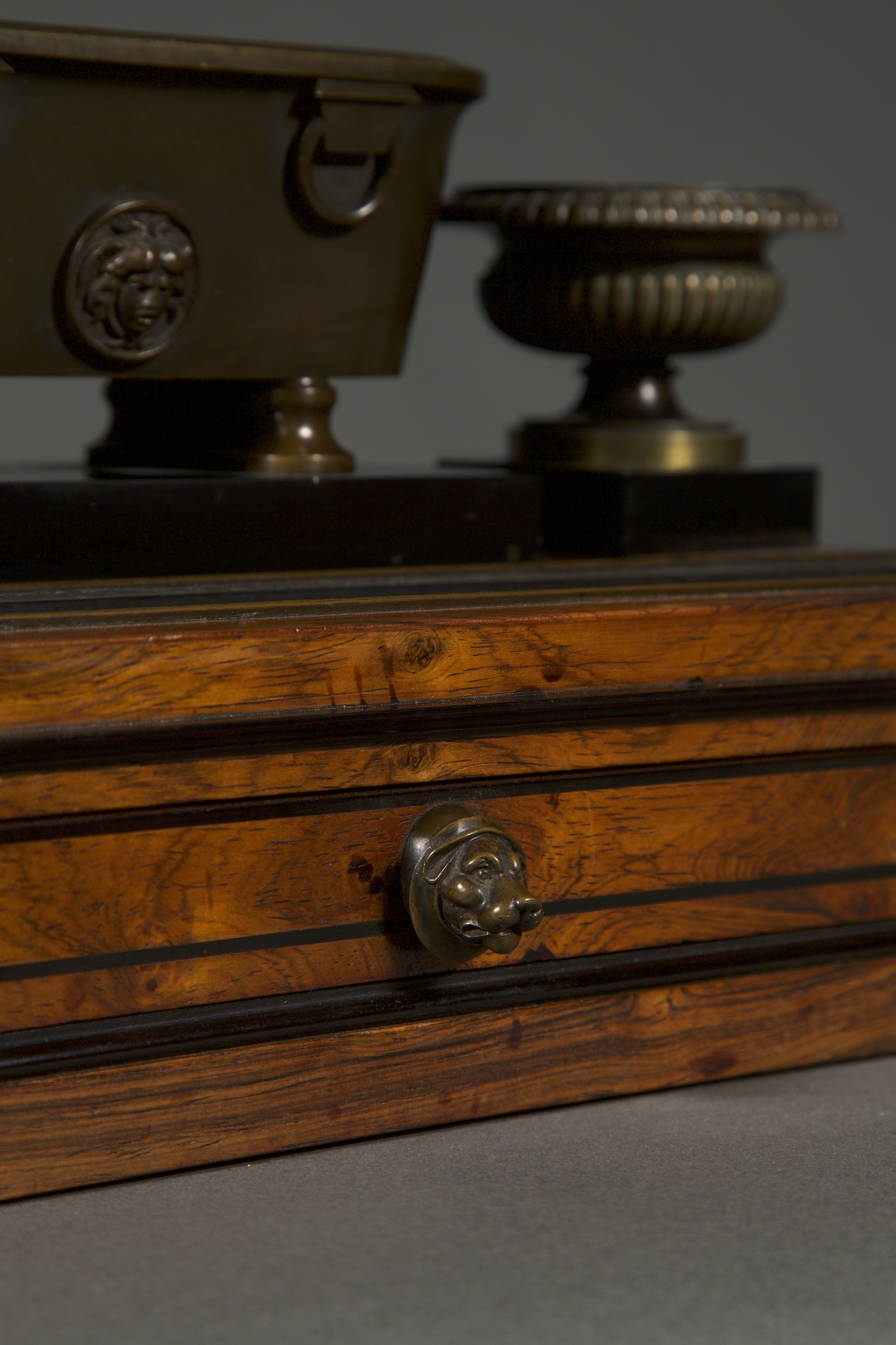
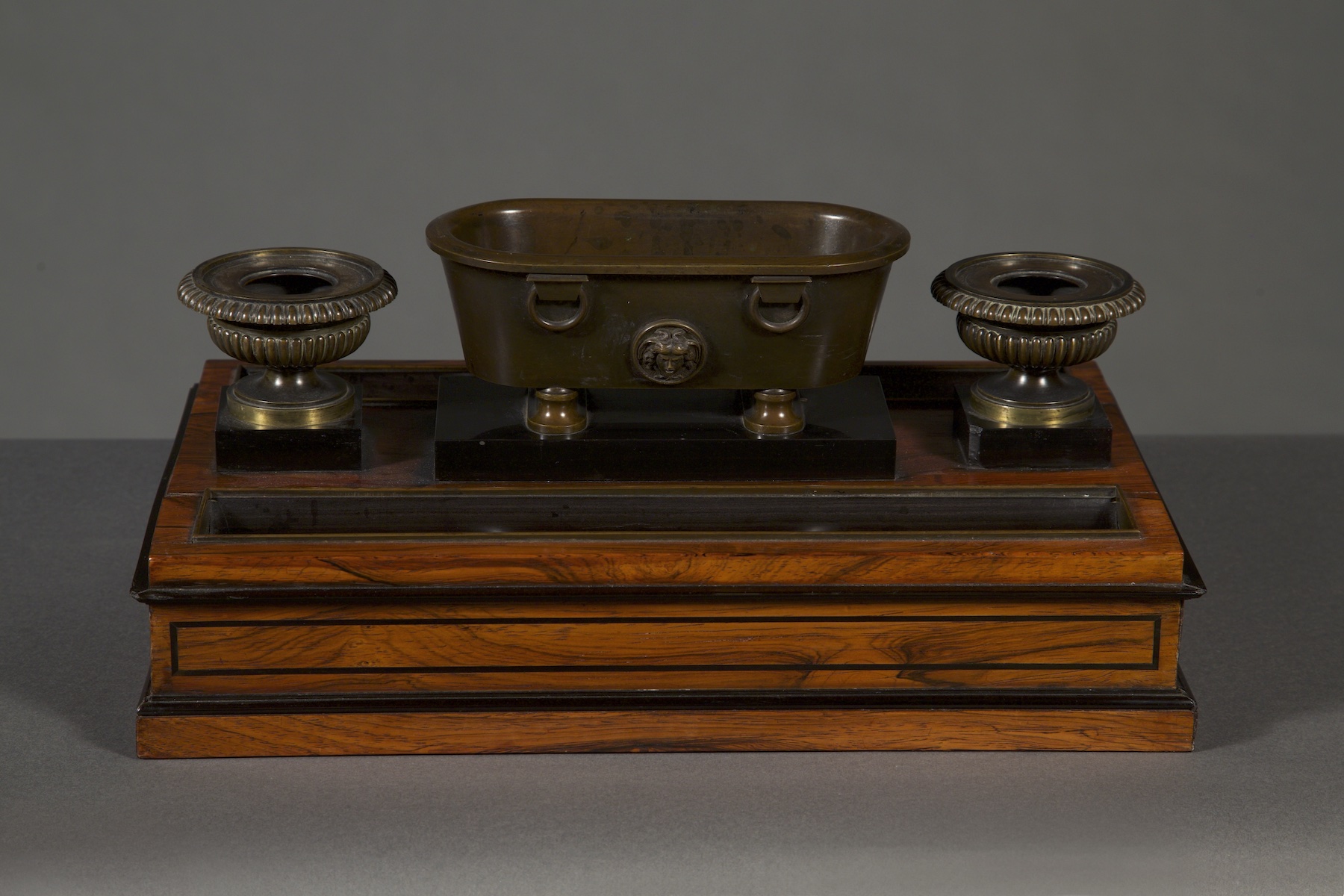
Of rosewood and patinated bronze. The rectangular wooden case with single long frieze drawer centered by a lion mask pull, fitted to the top with two narrow patinated bronze-lined wells and mounted with three receptacles in the form of a classical labrum (bath) flanked by two urns.
The explosion of interest in classical art and architecture in the eighteenth and nineteenth centuries, bolstered by privileged travelers making their Grand Tour to Italy, led to sculptures, artwork and decorative art objects made to be taken home and incorporated into authentic neoclassical decorative schemes and connoisseurial collections.
The present inkstand relates in its forms to ancient Roman urns and to the labrum, or bath, a common feature of bathing facilities called thermae. Versions of these architectural elements in miniature were popular among the Grand Tourists, and an example of a related inkstand firmly attributed to Benjamin Lewis Vulliamy (1780–1854) featuring a trio of urns is in the Royal Collection.
Full research report available on request.