
Research:
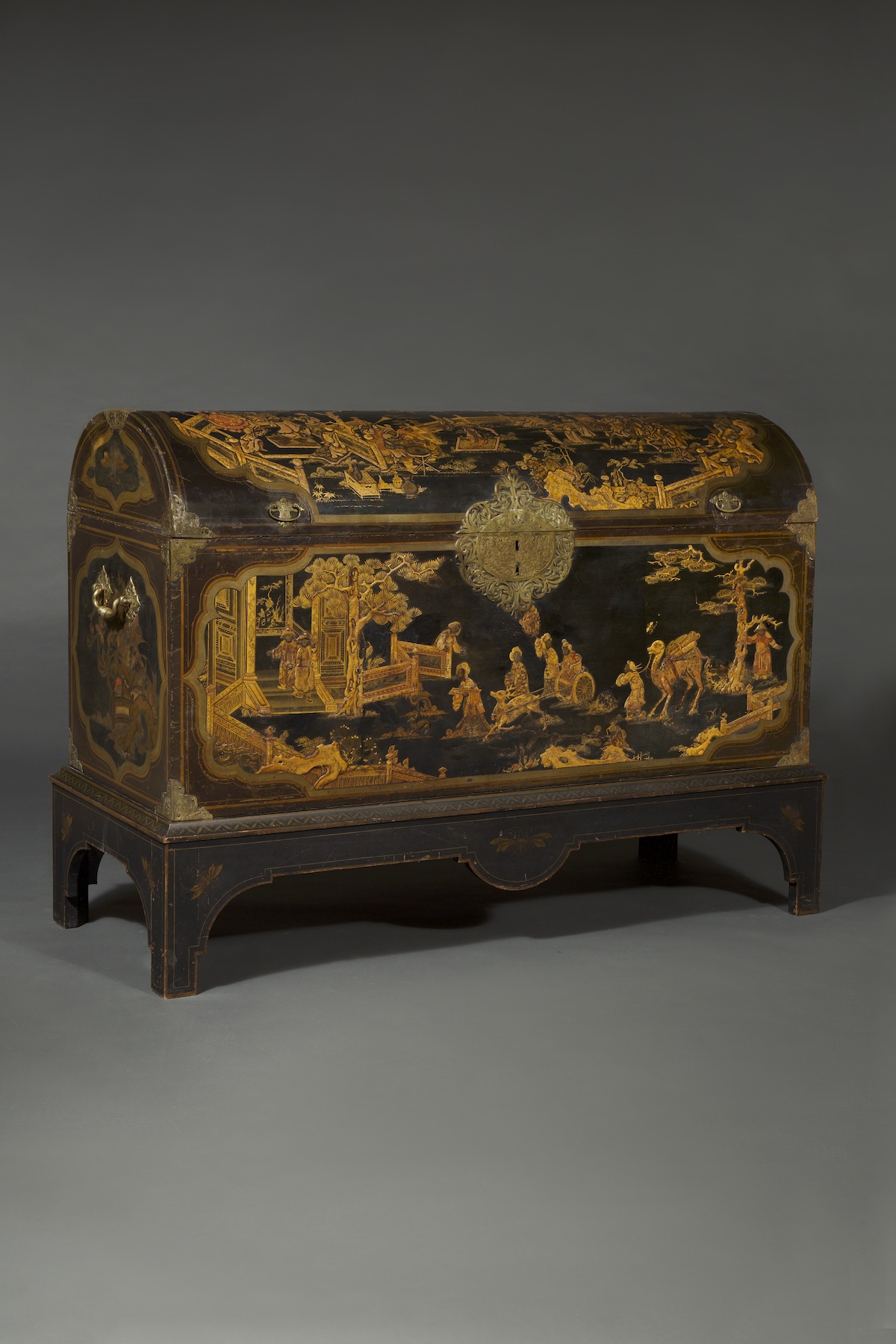
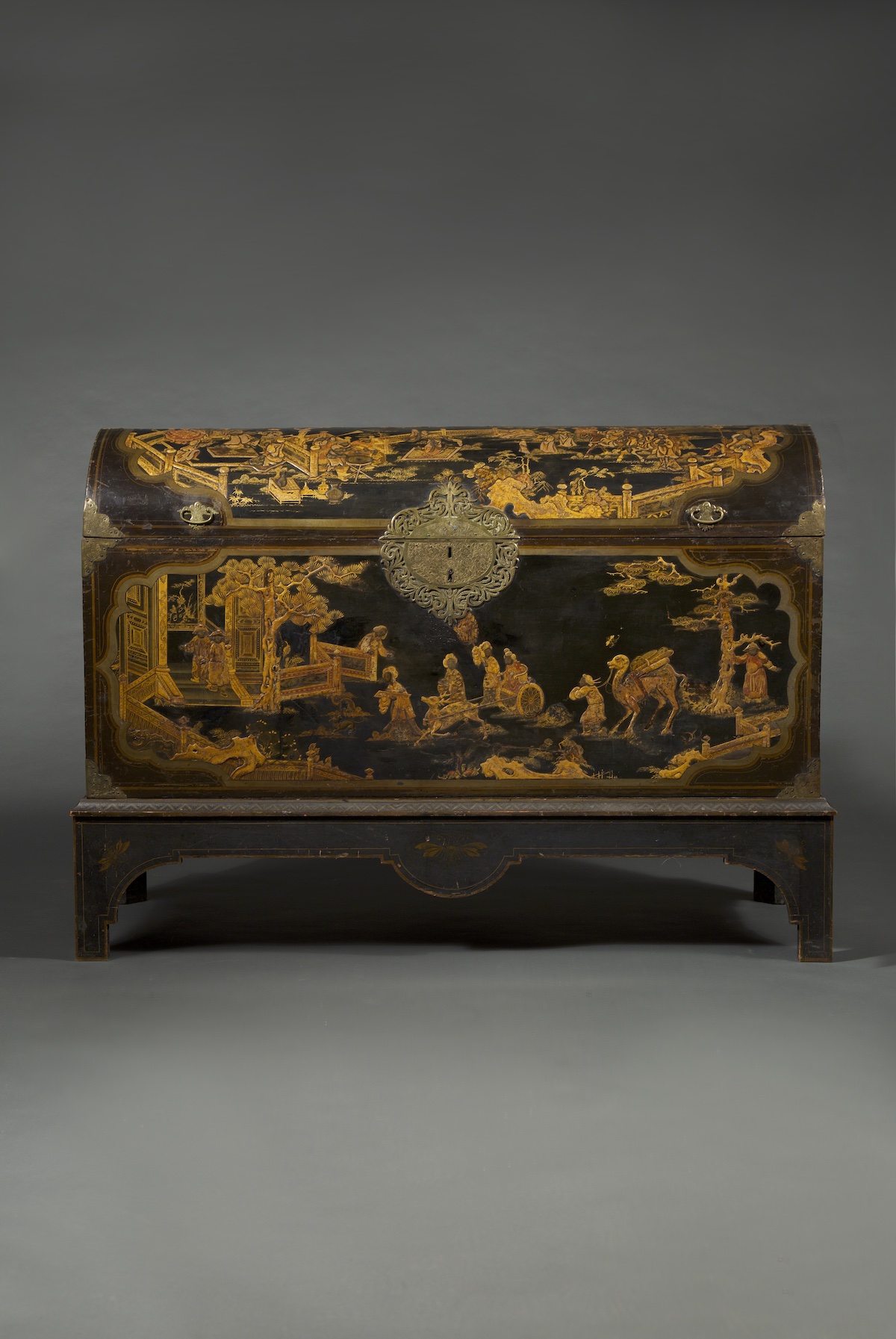
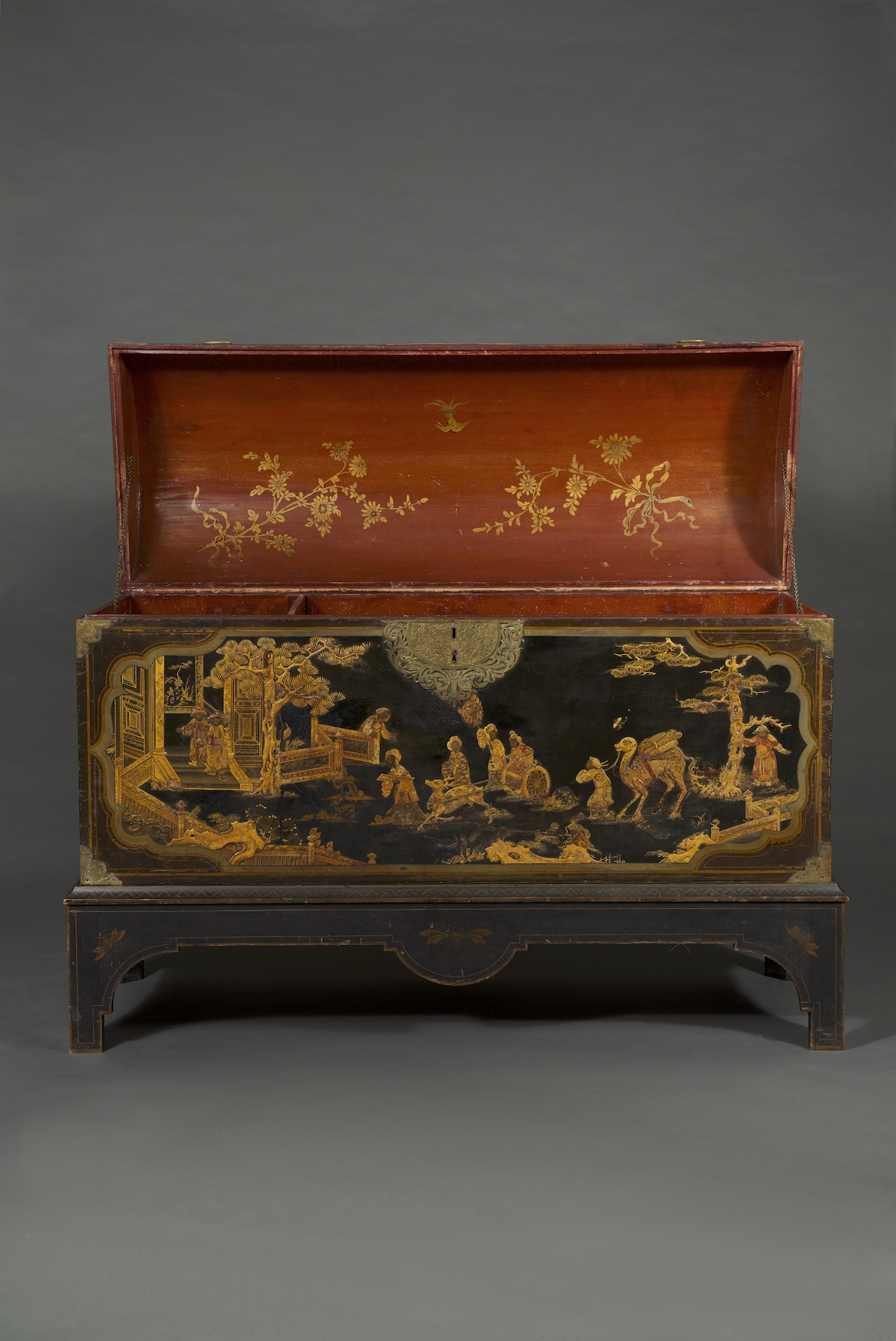
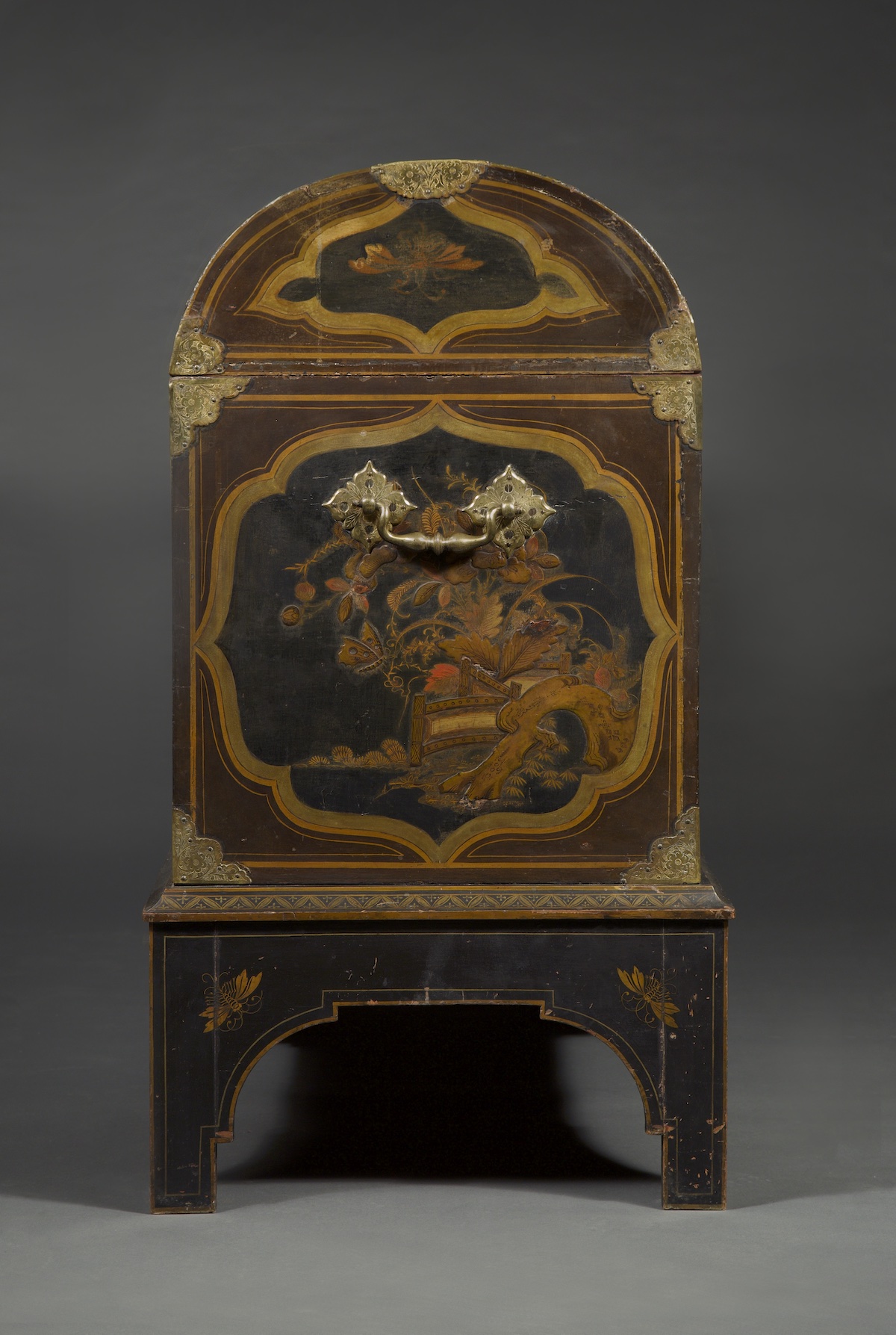
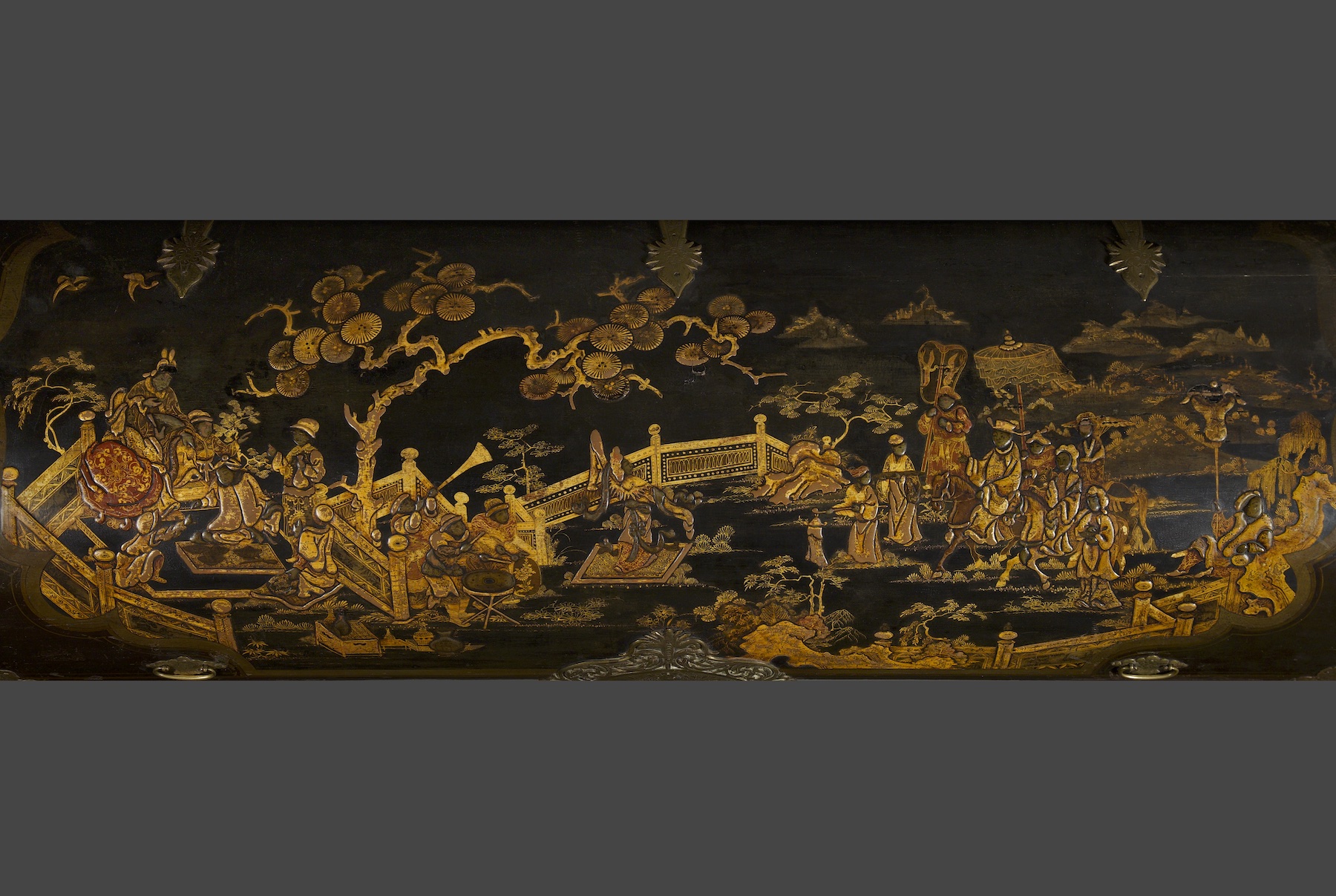
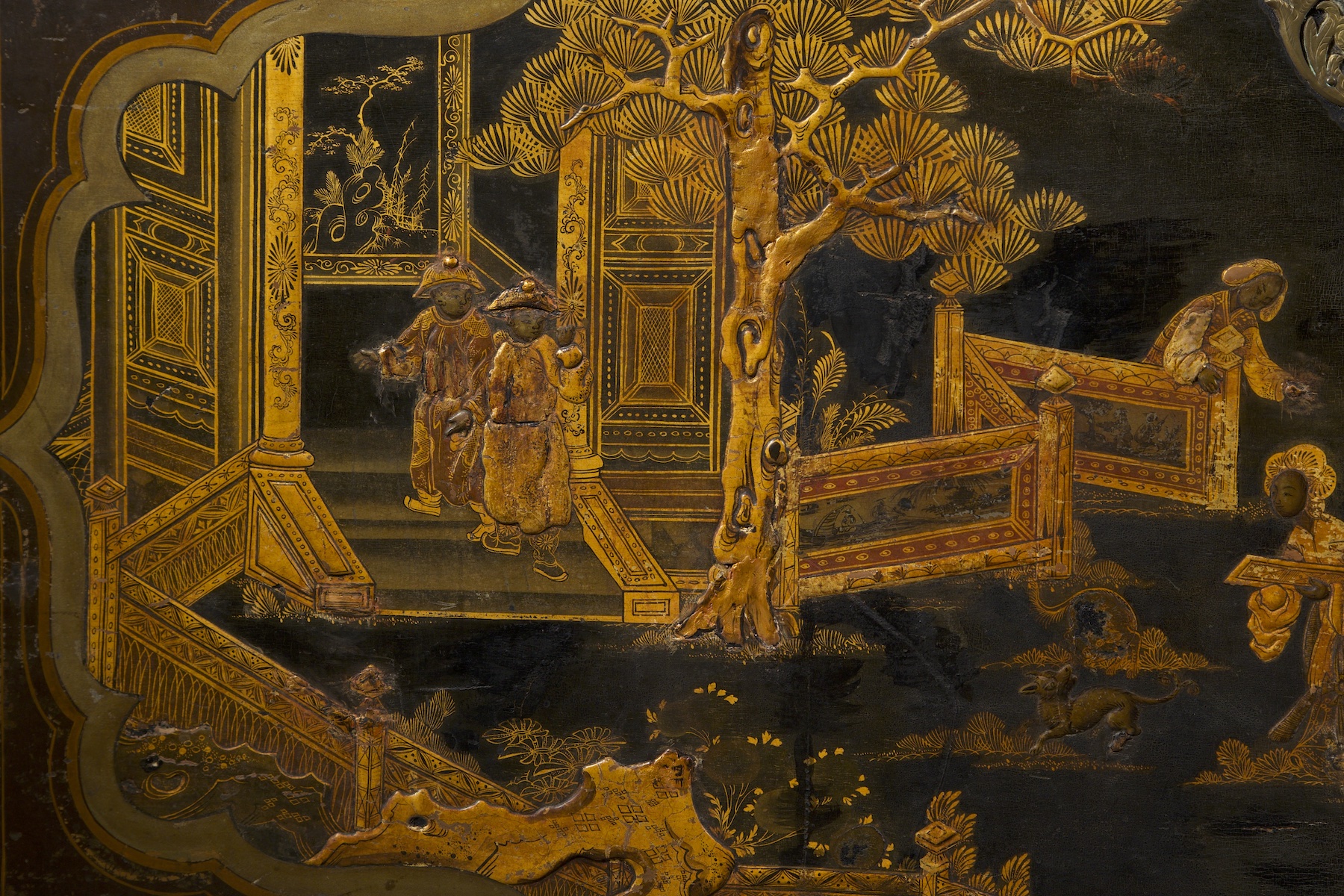
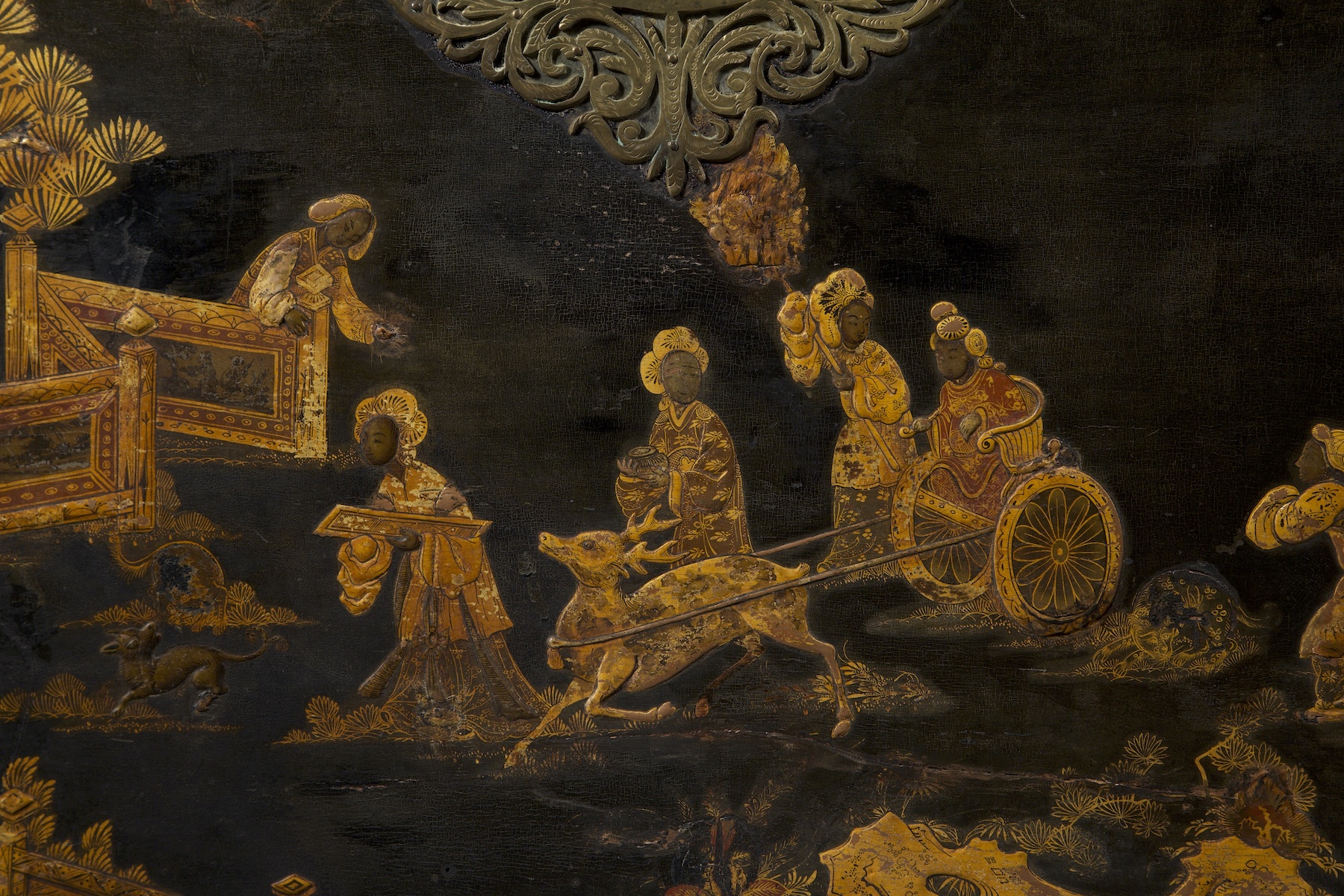
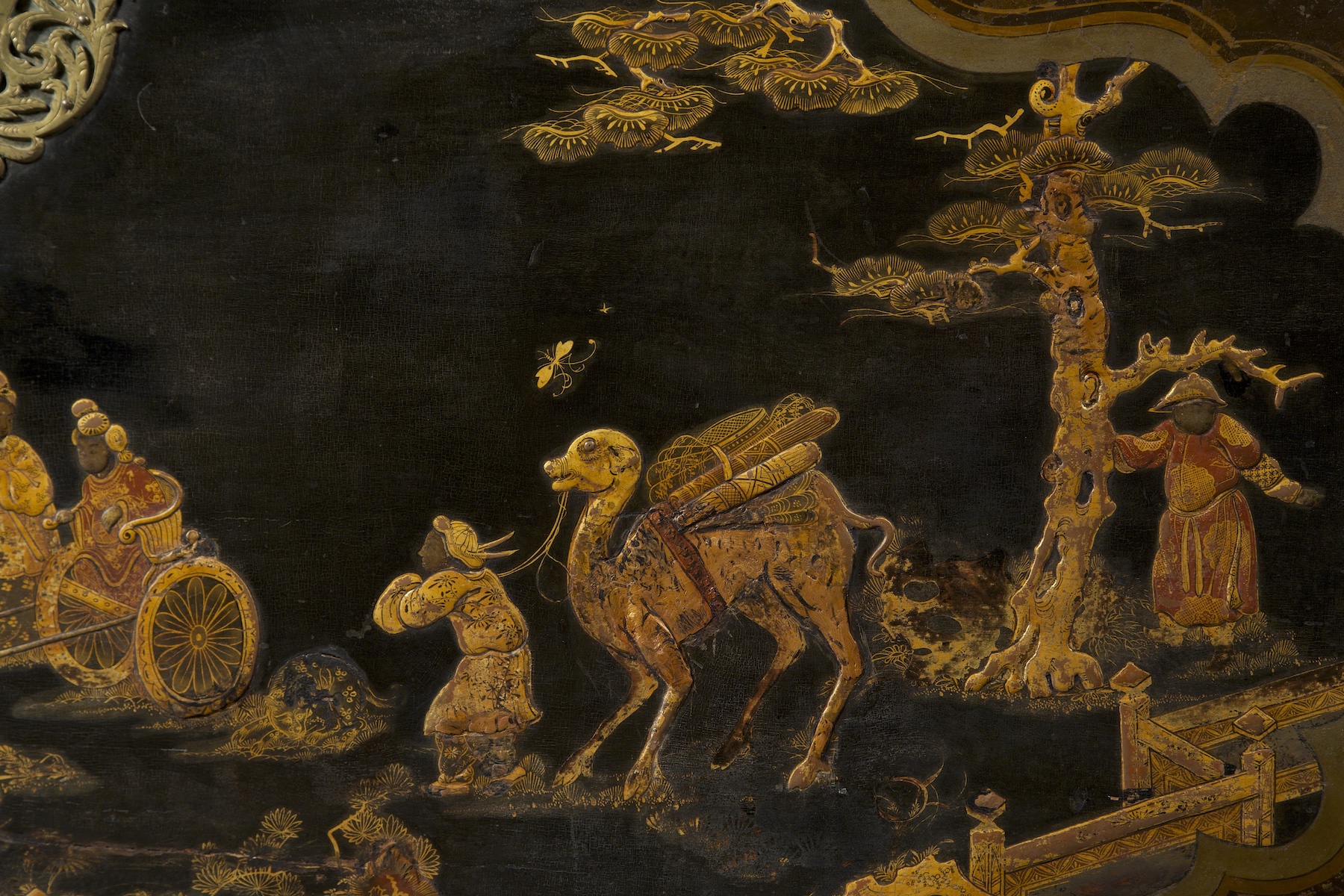
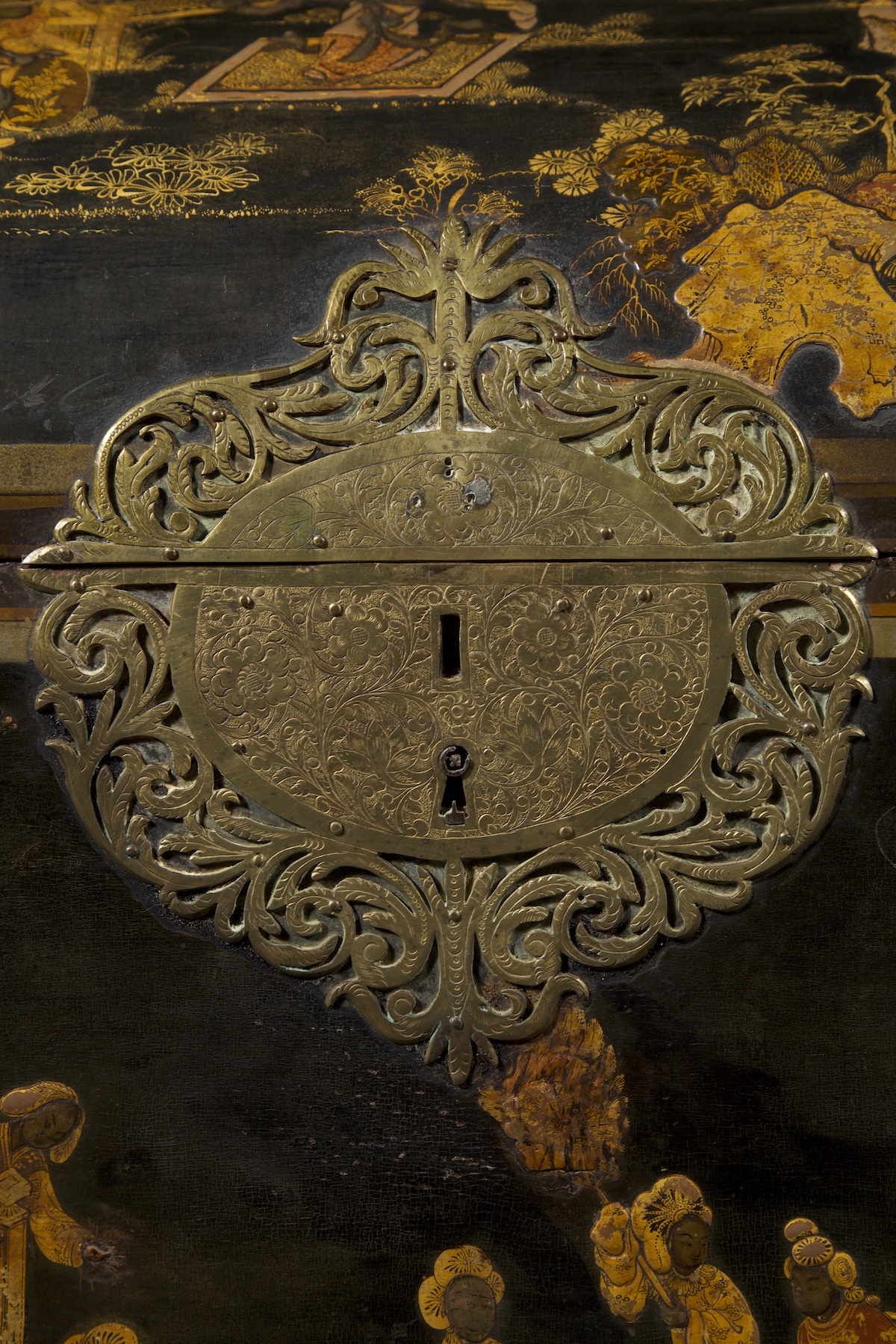
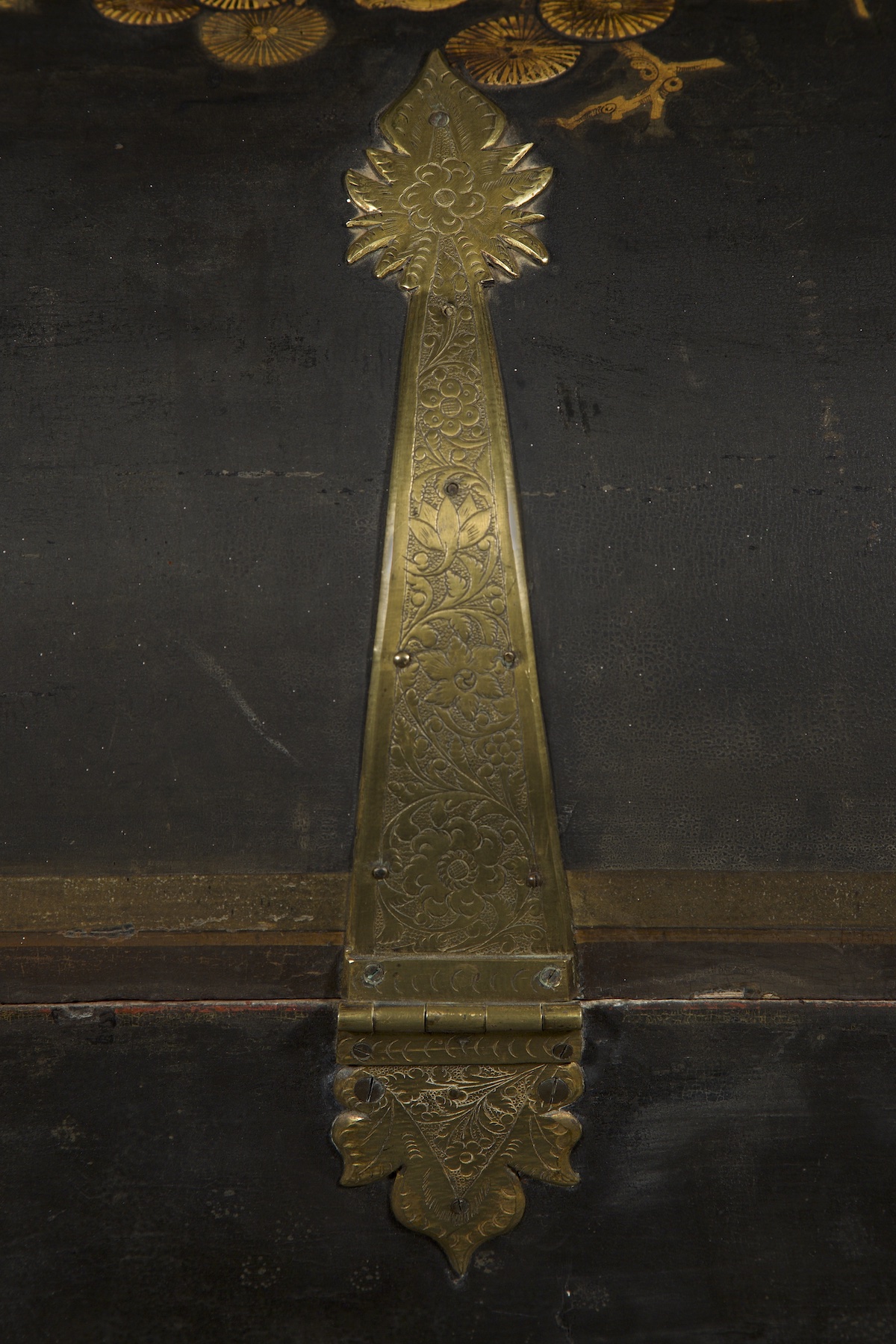
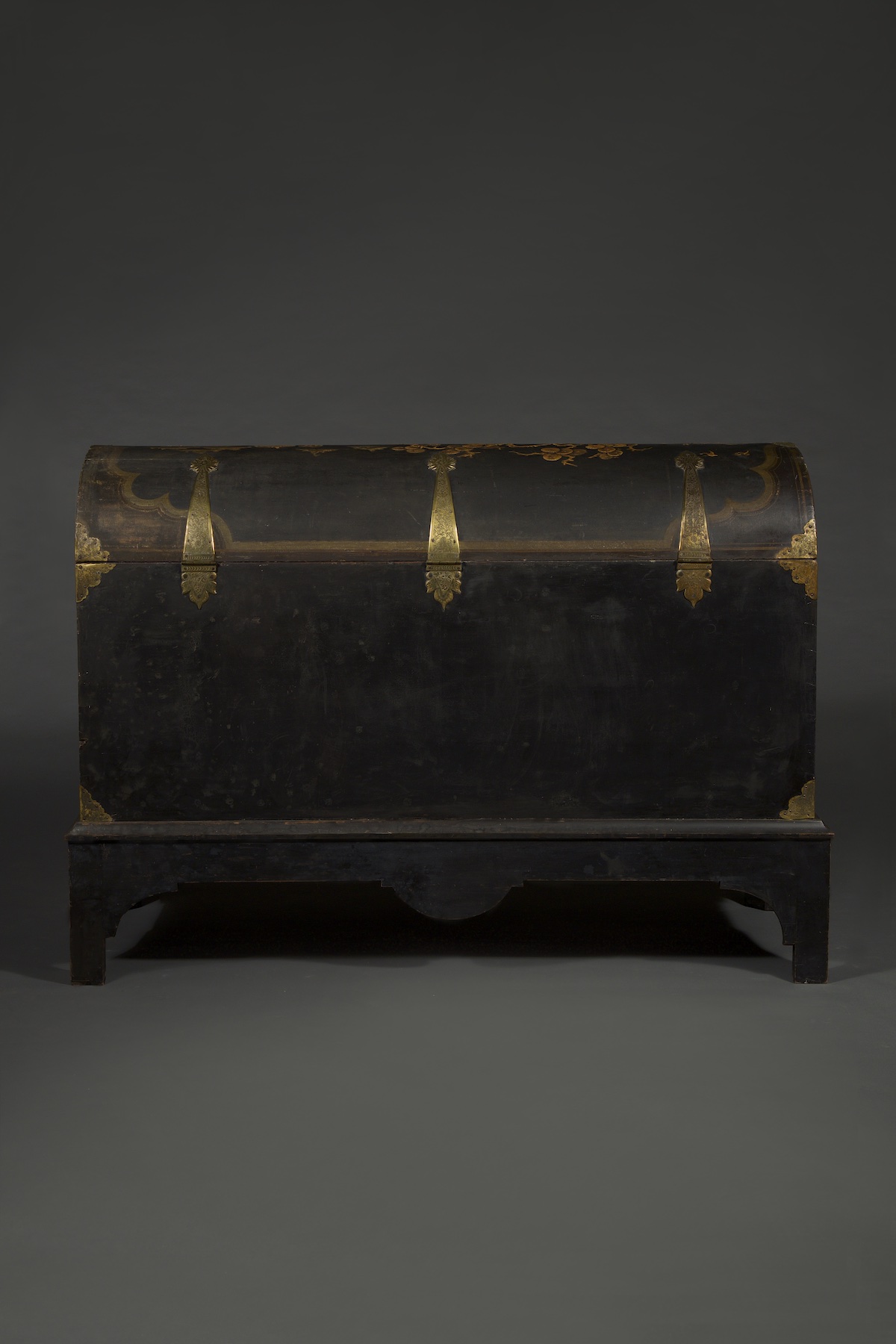
Japanned with gilt-brass mounts. Of rectangular form with domed hinged lid. Decorated on all exterior sides in various shades of gold with red highlights on a black ground, the front and lid with pictorial scenes depicting figural groups in a landscape within shaped cartouches, the sides featuring a garden and bridge to one side and a temple to the other among flora in conforming cartouches. The lid opens to reveal red interior with gold chrysanthemum branches flanking a bird to the underside of the lid. Fitted with engraved gilt brass escutcheon, its catch lacking, and two loop and bail handles to the lid, carrying handles to the sides, and gilt-brass fittings to the corners and rear lid. The whole resting on a very old but possibly replaced bracket foot rectangular stand. Minor repairs.
This exceptional japanned chest on stand on stand was clearly commissioned to grace one of the grand English stately houses of the late Queen Anne or early George I period. Its quality is defined by the excellent Japanning, including the use of very fine raised work. The latter aspect was a highly skilled process whereby a composite material was applied to form the human figures, animals, and buildings.
Known as trunks or chests in old inventories and cabinetmaker trade cards, this variety of case has been used from the earliest times to store valuable possessions. In the late seventeenth century chests were “made to accord with contemporary japanned furniture, sometimes mounted on elaborate stands. Like the cabinets of that time, they were either imported from the East or made in England and decorated in imitation of Oriental lacquer.” Trade between Europe and Asia continued in the seventeenth and eighteenth centuries, escalating a cultural exchange that sparked enthusiasm for Far Eastern decorative arts, and the “European rage for paint on furniture, through the ancient art of lacquer” was inspired. Not only did Europeans admire Asian lacquer, but they sought to imitate it; western craftsmen began to create their own version of lacquerwork, keen to discover the secret of the sleek, luxurious finish.
With regards to possible authorship of the present piece, the most likely candidate is the prominent London based cabinet maker John Belchier (fl. 1717-d.1753), whose most notable and complete surviving commission to be recorded appears to be that for John Meller at Erddig, near Wrexham, Clwyd, Wales, over a 4 year period from 1722 -26, which included a number of japanned pieces closely analogous to the present piece.
Full research report available on request.