
Research
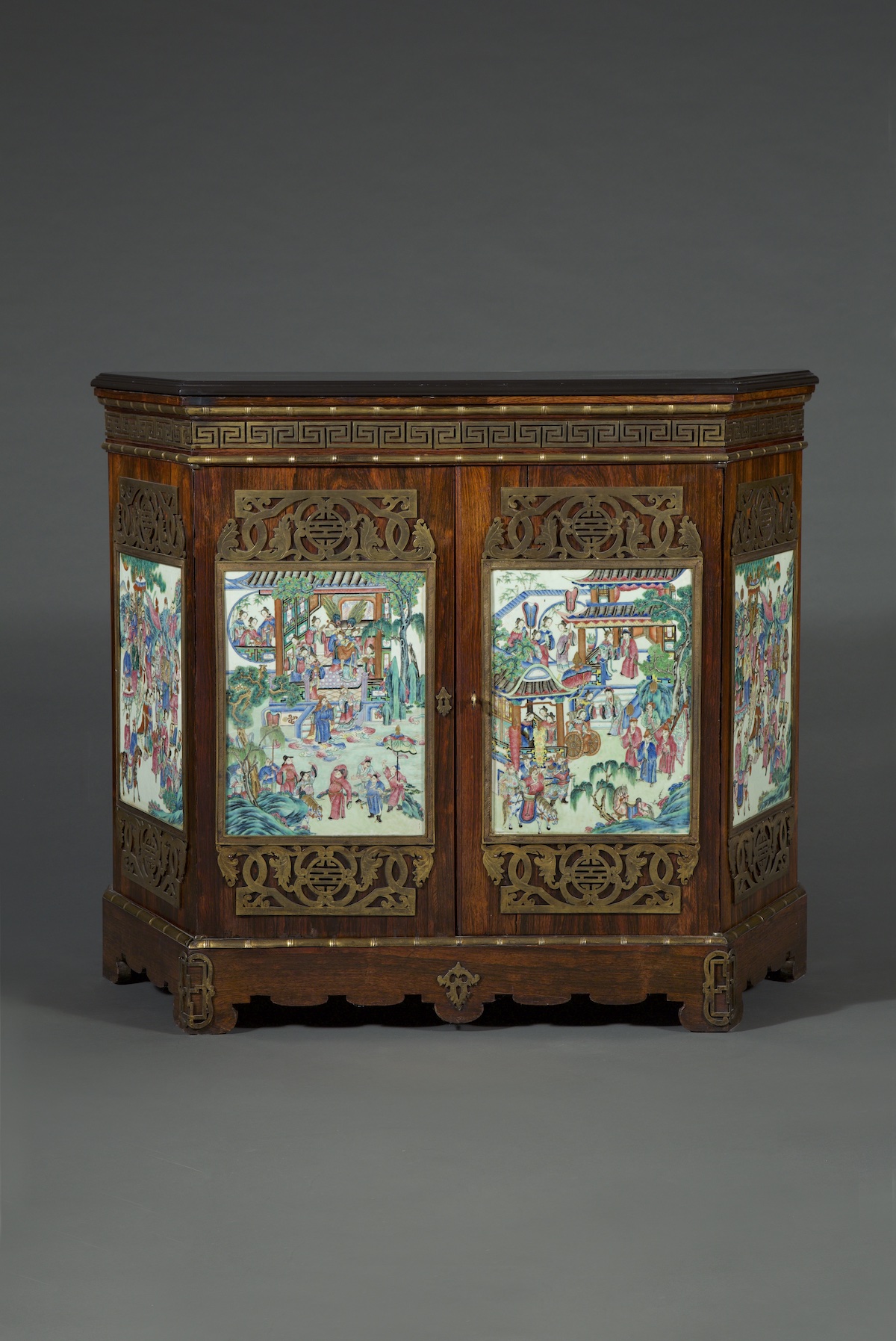
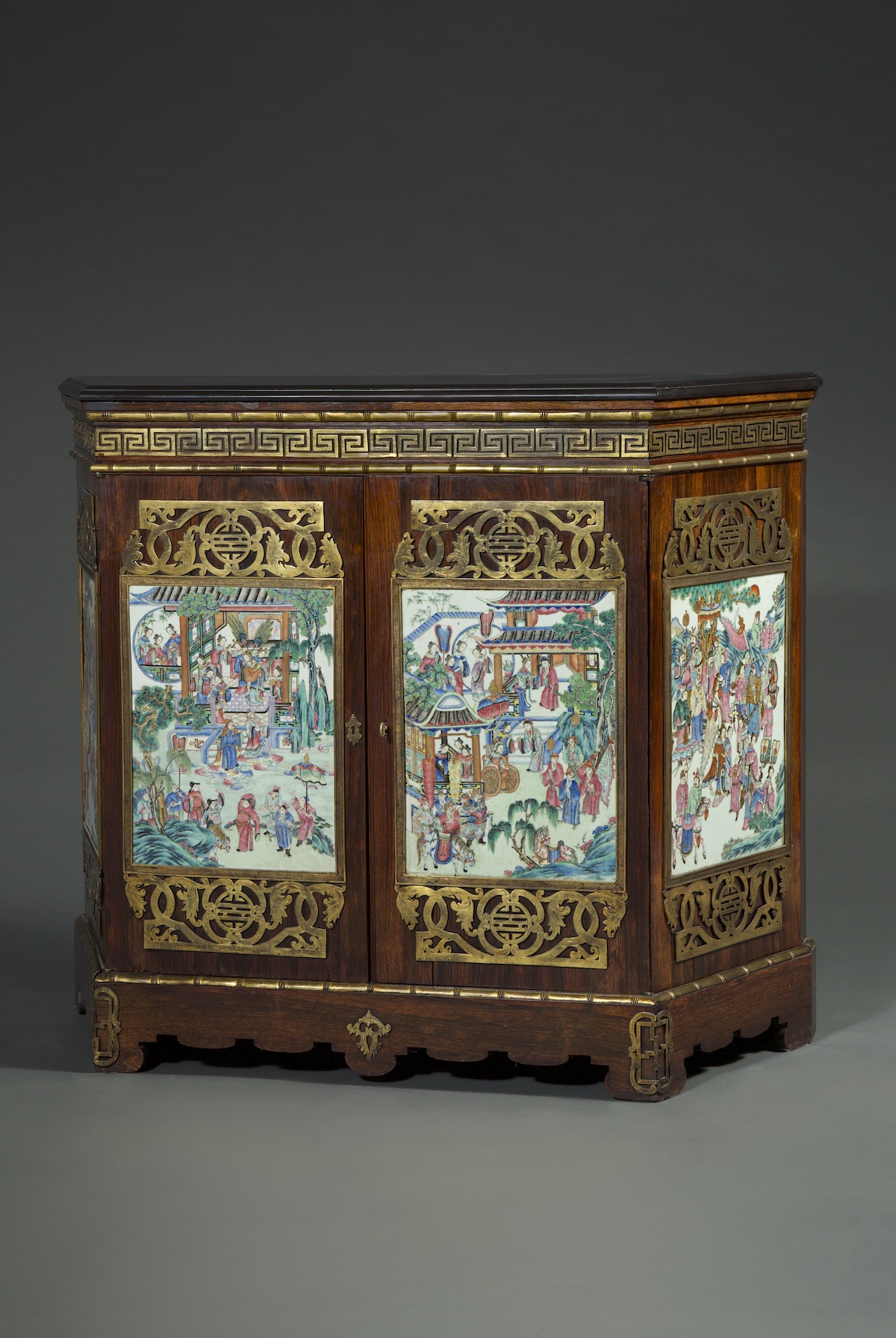
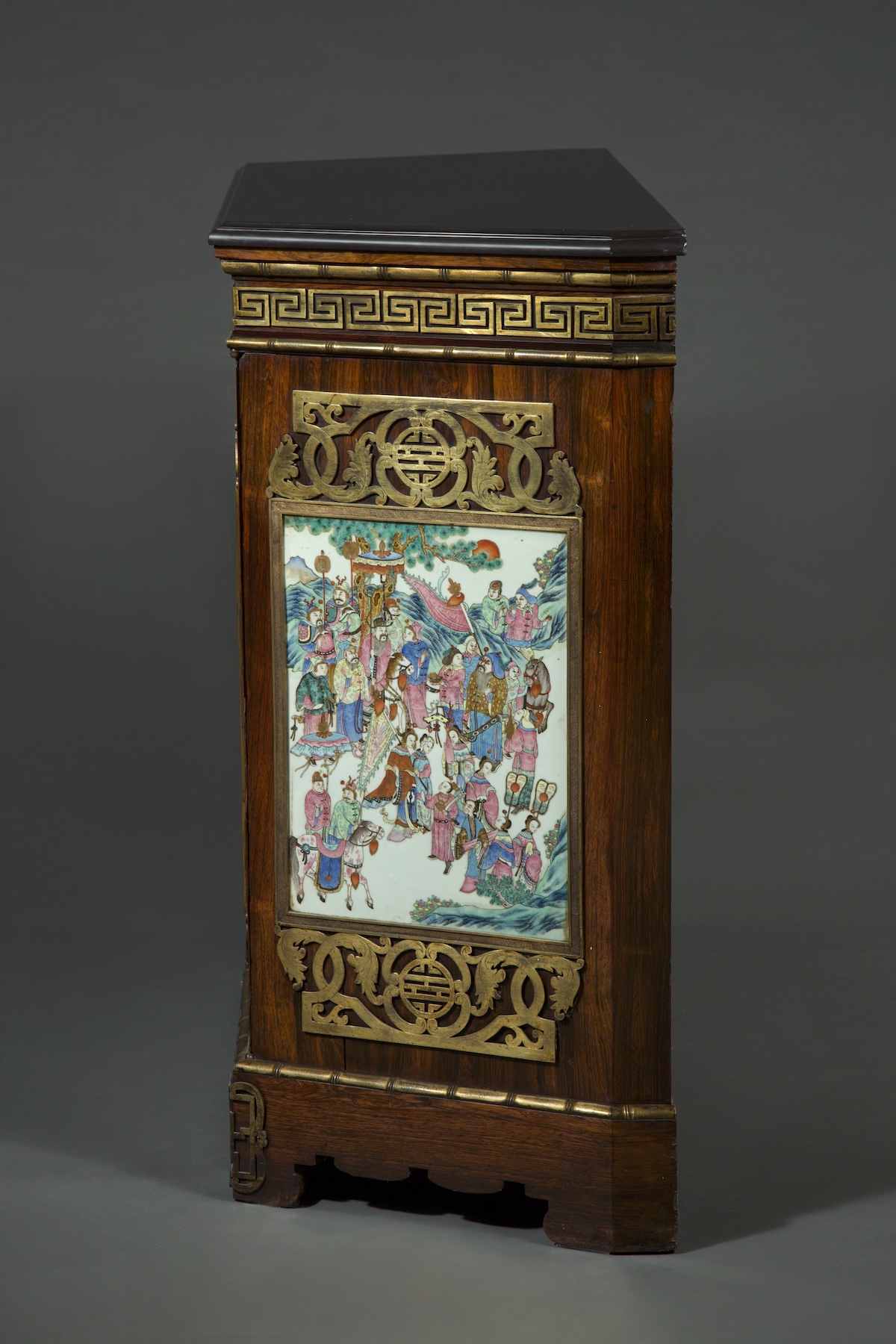
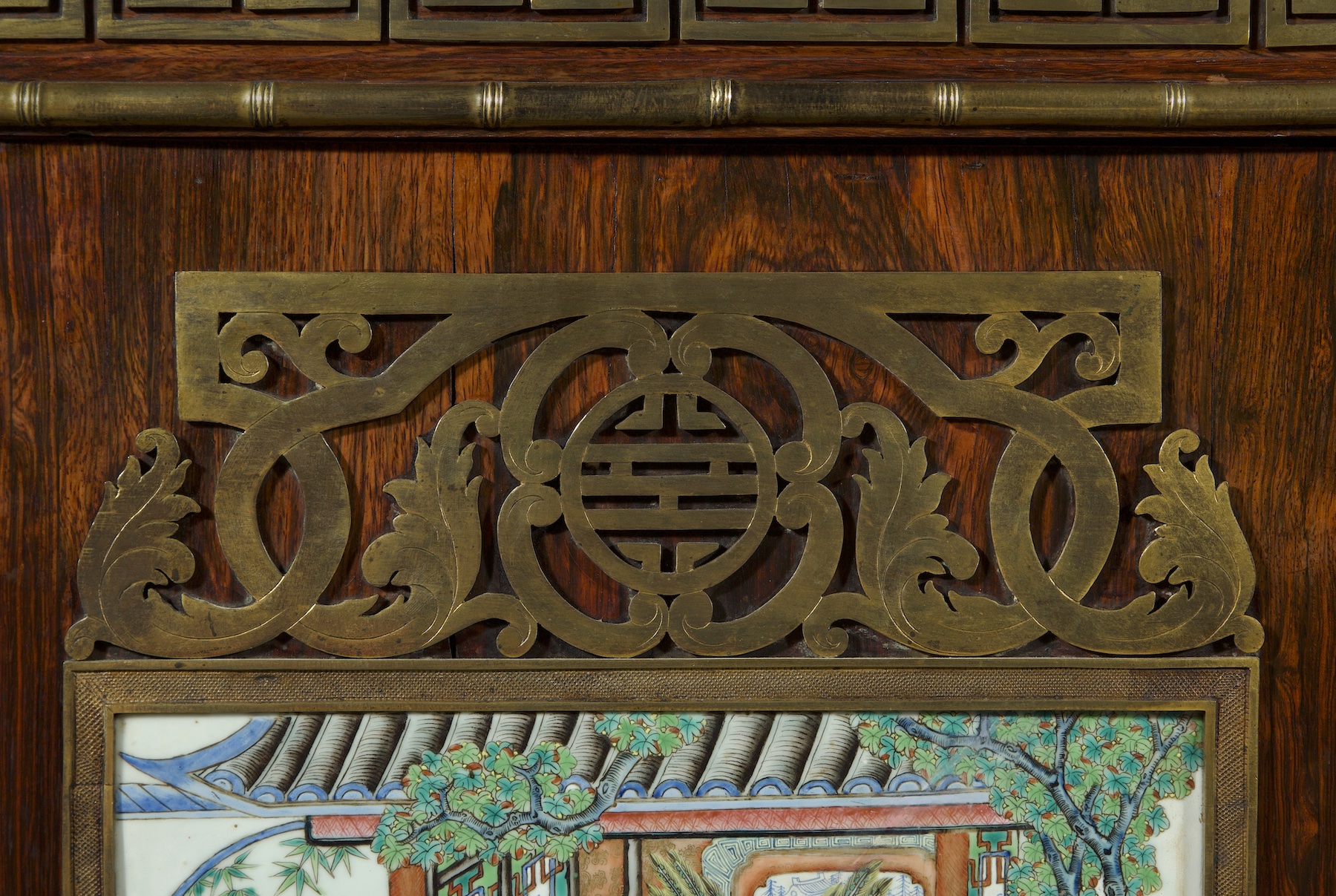
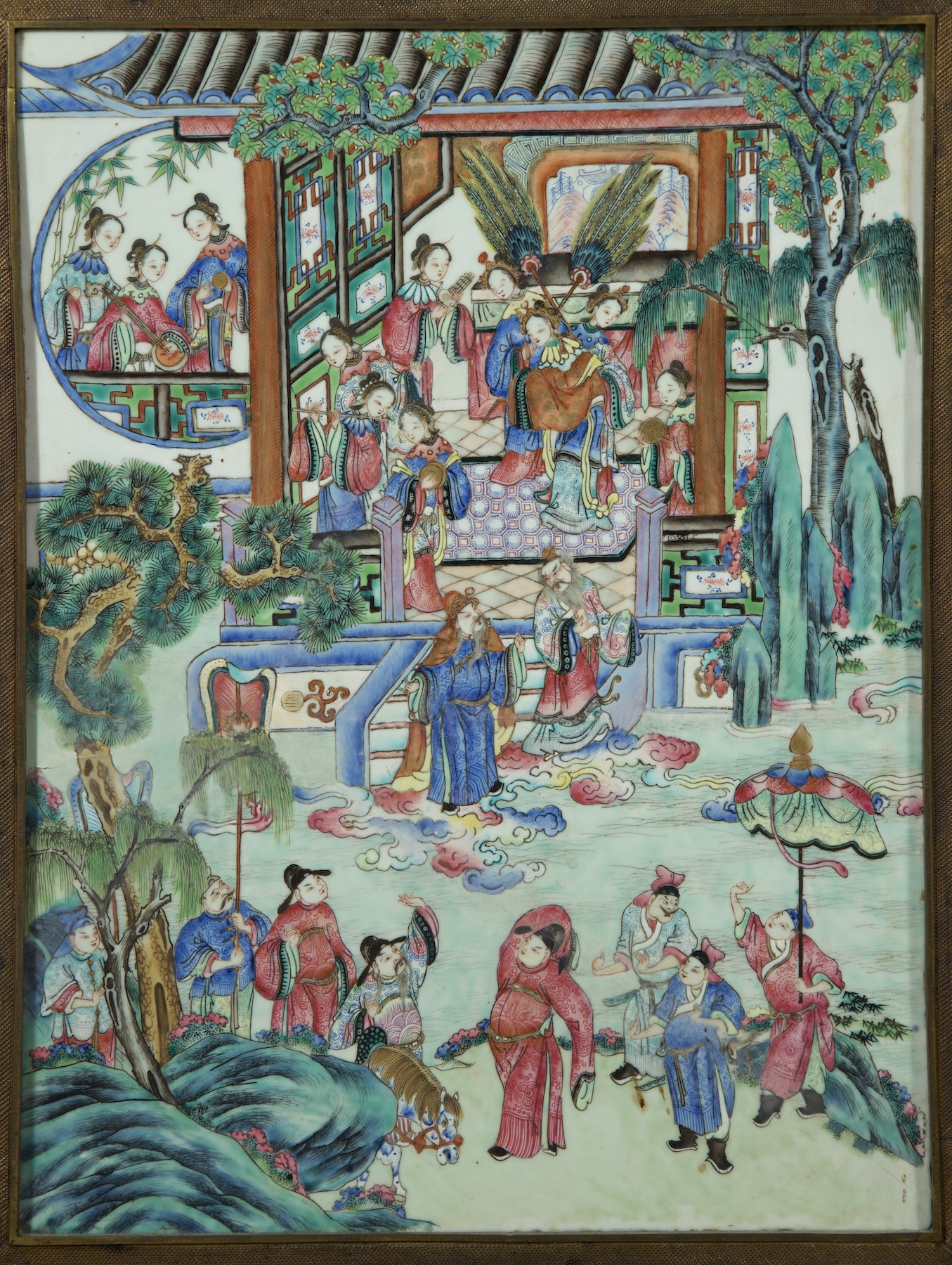
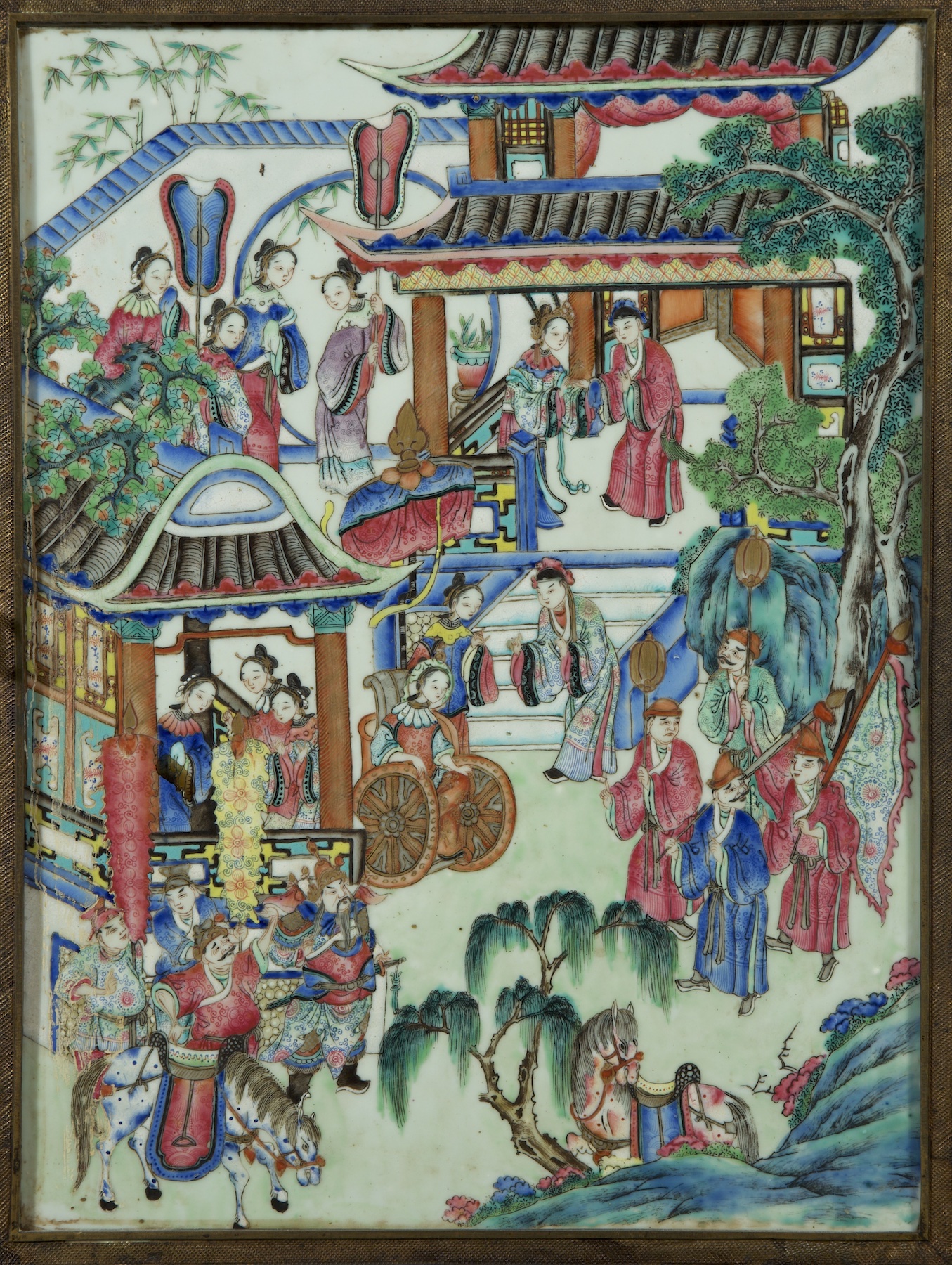
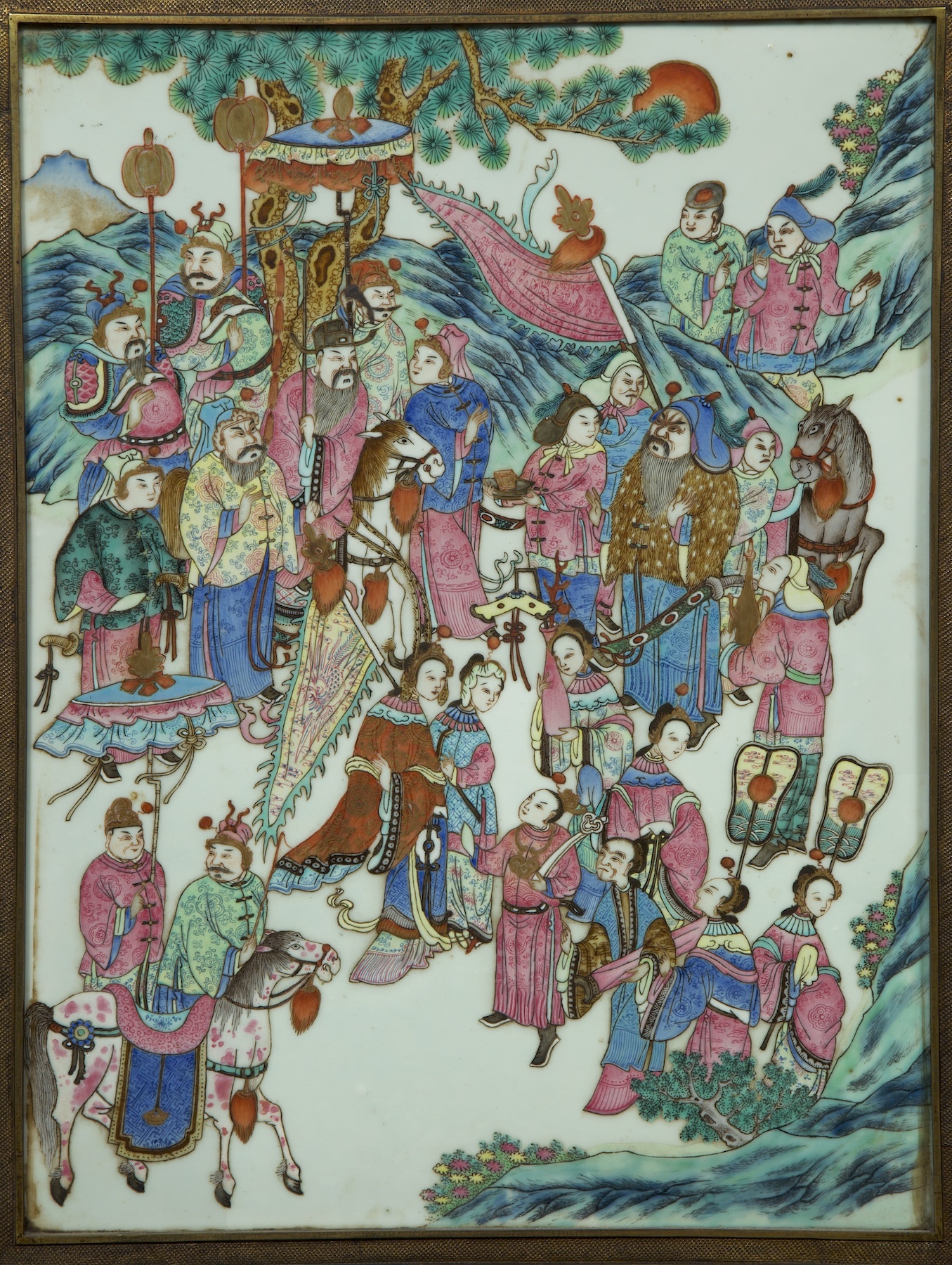
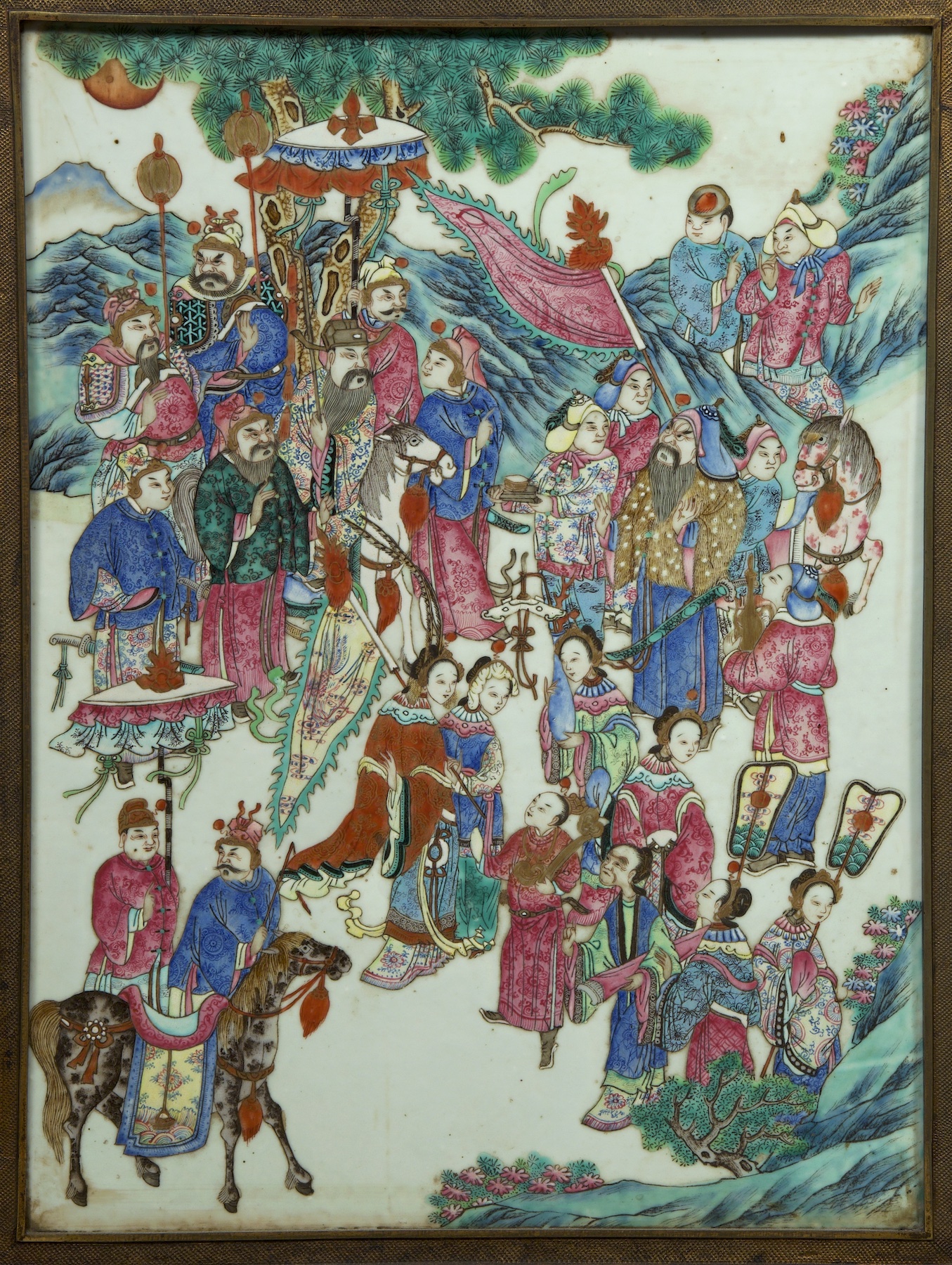
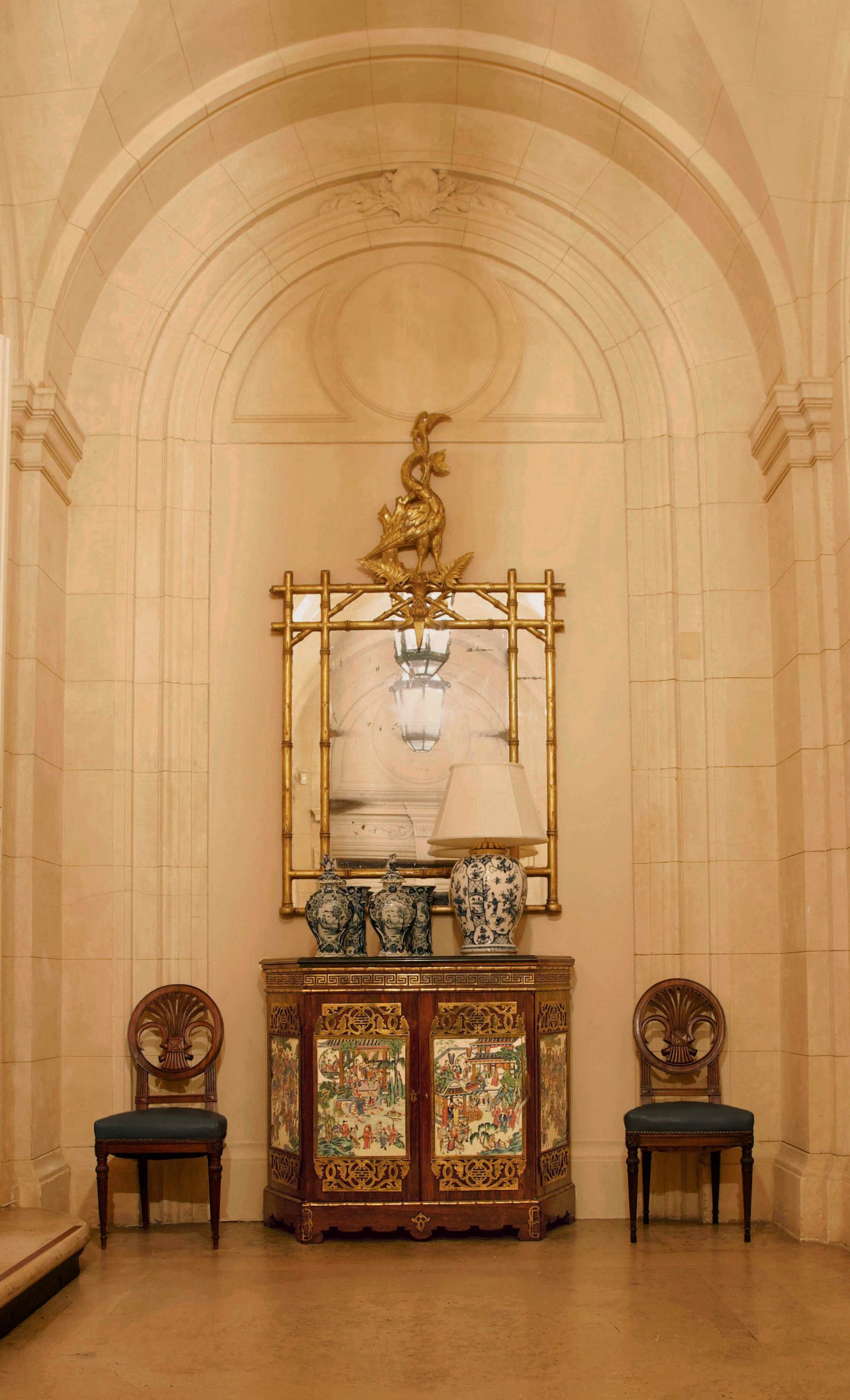
Of palisander, gilt-bronze mounts, and Famille Rose panels. The original repaired Belgian black marble top with molded edge about a frieze with a continuous Chinese meander pattern mount, set between runs of molding formed as bamboo. The two doors set with floral Chinese form engraved flat mounts above and below large rectangular Famille Rose plaques which are in turn set within channeled frames. The canted sides with identically conforming plaque and mounts. The whole raised on a fretted plinth in the Chinese manner, set with gilt bronze mounts. One porcelain plaque restored.
Provenance:
The Private Collection Of The Late Algernon Rothman Winchester, England.
A Distinguished Private Collection, Park Avenue, New York.
This remarkable gilt-bronze mounted palisander cabinet is much in the manner of the furniture thought to have been designed by John and Frederick Crace for the Royal Pavilion, Brighton.
The vogue for Chinese-inspired interiors in England had been in its heyday in the middle of the eighteenth century, closely associated with the Rococo taste, and was declining in the later part despite some notable projects employing Chinese features, for example Thomas Chippendale’s work at Harewood House and Nostell Priory in the 1770s. However, in the early 19th century the taste had retreated to a point that, as the eminent scholar John Harris remarked in his Regency Furniture and Designs 1803-26, “Sinomania or Hindoo Mania exerted little influence beyond court circles.” It appears that the Prince of Wales began to be interested in the style around 1790, when he commissioned the lavish interiors for the Chinese Drawing Room at Carlton House. From 1801 onwards, he went on to “relieve the chaste (classical) interior of Brighton Pavillion,” where he wished for a “gay and lively scheme of decoration that would be more appropriate for a seaside holiday palace.”
Like much of the decoration at the Pavilion, the present cabinet’s design shows a particularly pure vocabulary of Chinese ornament throughout, incorporating both the large famille rose porcelain panels, materials imported from China, and design elements directly and deliberately chosen from Chinese prototypes.
Full research report available on request.